The War Correspondent Who Chronicled the Middle East Died at 65, With His Own Body Running Out of Cells
Tang Shizeng, the Xinhua war correspondent whose 1990s reporting from the Middle East made him one of China's best-known foreign reporters, died in Beijing on August 23 at 65. For 28 years he lived with aplastic anemia, a bone-marrow failure he himself linked to radiation exposure, and in his final months his white blood cell count had fallen to nearly zero.
Tang Shizeng always described himself in the language of the field: a war correspondent who 'only goes to the scene, and has no position beyond it.' When his death was reported on Sunday, the tributes on Weibo reached for the same words — 以相机为剑,以生命记事, 'with a camera as his sword and his life as the record' — the kind of phrasing that suits a man who survived the Middle East and then spent nearly three decades fighting a quieter battle inside his own bloodstream.
The official obituary, carried by Pengpai News and reposted by Zhejiang's China Blue, traced the outlines. Tang was born in Wuxi, Jiangsu, in 1961. He studied international politics at Peking University, taught politics at China University of Political Science and Law from 1983, and joined Xinhua in 1986. In the 1990s he became one of the agency's best-known foreign voices, reporting from the Middle East and interviewing a roster of the era's defining figures — Yasser Arafat, Muammar Gaddafi, Hosni Mubarak, Shimon Peres, Yitzhak Rabin, Nelson Mandela. He turned the experience into books with the tone of a man who had actually been there: I Came Back from the Battlefield, I Crawled into the Pyramid, Return to Baghdad.
The illness arrived in 1998, and Tang was characteristically blunt about its origin. He said it came from radiation, a consequence of the exposure that came with the job. Doctors gave him aplastic anemia, the condition in which the bone marrow — the body's factory for red cells, white cells, and platelets — simply stops producing. A Weibo health account posted a primer the same day his death trended, explaining the mechanism with the analogy of a factory on strike: an immune system that turns on its own blood-forming cells, leaving the patient anemic, defenseless against infection, and prone to bleeding. It is a disease in which a common cold can spiral into pneumonia, and a stumble can become an internal hemorrhage.
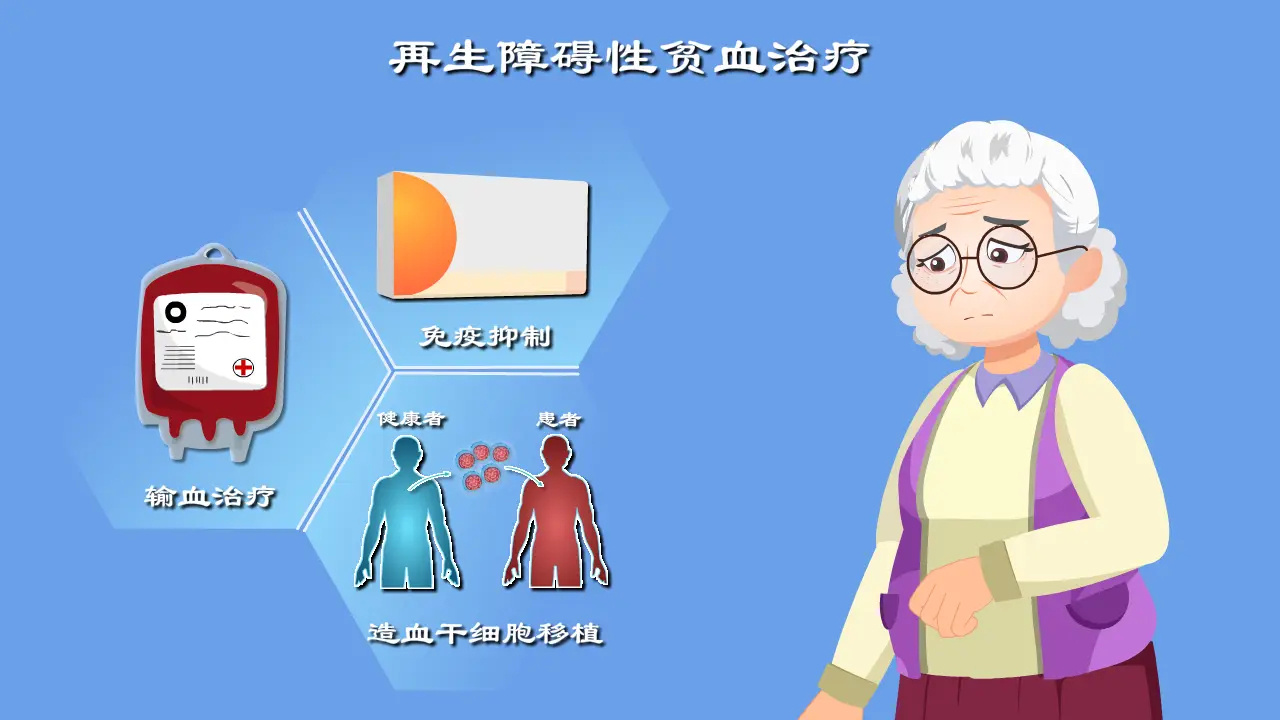
In the weeks before he died, friends wrote that Tang's white blood cells had fallen to almost zero, his immunity stripped to nothing by chemotherapy. The detail in the trending headline — 白血球几乎为零, 'white blood cells almost zero' — became its own kind of tribute: a number that made visceral what his writing had always argued. A war correspondent lives by showing up; Tang kept showing up until the last possible moment, and the body, not the will, was what gave out.
His own voice remained unmistakable to the end. In an oddly tender July post from a Beijing hospital, he riffed on his own methods — 35mm, no cropping, no editing, 'no PS, no AI' — and signed off with a one-liner that now reads like an epitaph he chose for himself: 'Old soldiers never die; old photos never lie.' Between those two lines sits his whole idea of journalism: the belief that being there, and showing what you saw without decoration, is a form of truth.
What Tang leaves behind is both a body of reporting and a question about the costs carrying that body incurred. He was not the first correspondent to pay for proximity with his health, and he will not be the last. But in a Chinese media environment increasingly shaped by speed and aggregators, the specific insistence of his career — travel first, then have a worldview; don't trim, don't stage; let the frame speak — is the part the tributes keep returning to, because it is the part that cannot be automated.