The 110 Call for Dinner: How a 12-Year-Old's 999 Plea Became a Viral Debate
A 12-year-old in Zhejiang province phoned the emergency line because she and her twin brothers had no food, and a police officer turned up to cook them fried noodles. The warm story split Chinese social media: was it a good-news tale about a police force with a human face, or proof that 110 shouldn't be doubling as a food-delivery service?
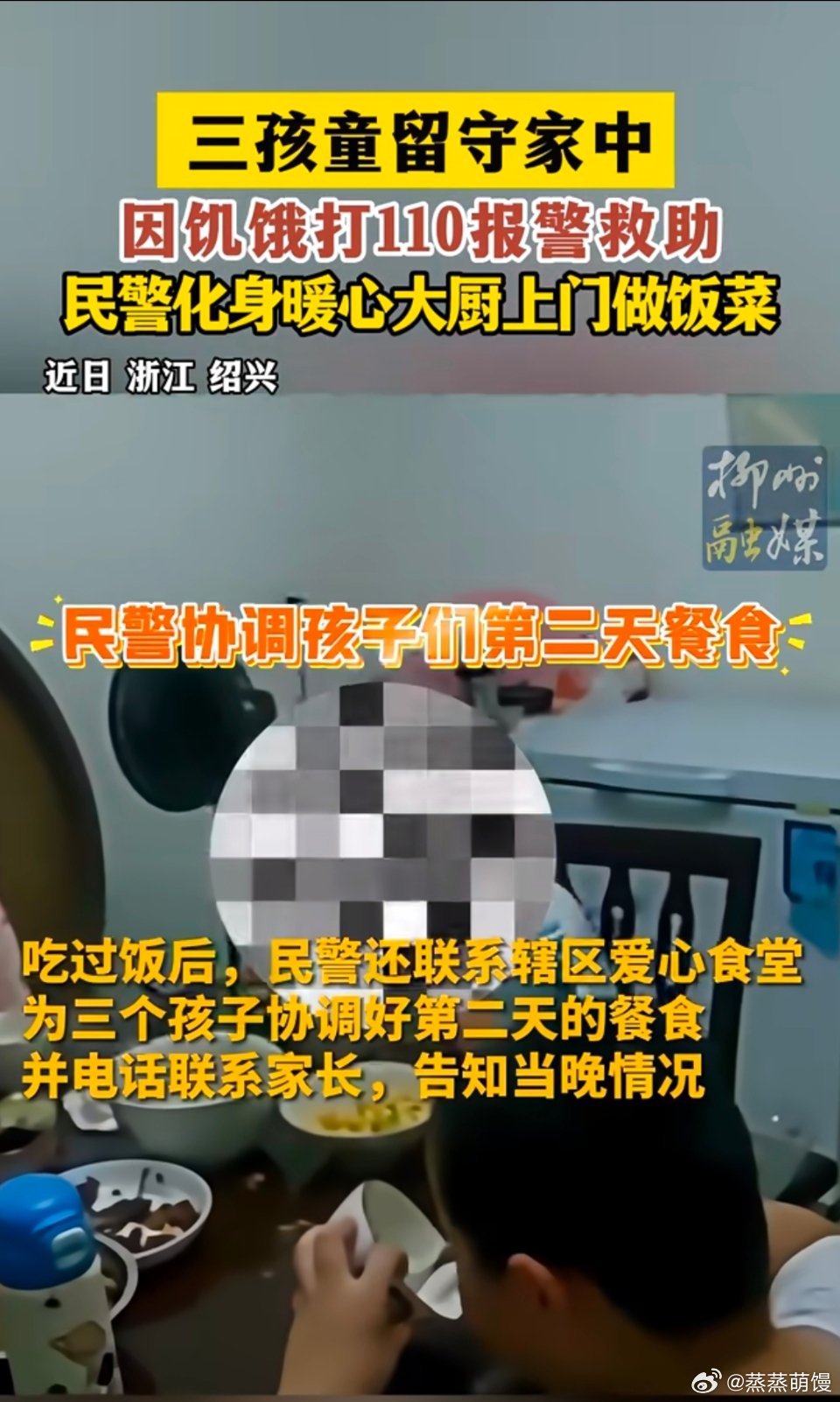
On a late-August evening in the town of Yaojiang, near Shaoxing in Zhejiang province, a 12-year-old girl did something that says a lot about modern Chinese family life: hungry at home with her two nine-year-old twin brothers, she picked up the phone and dialed 110 — China's general emergency line.
"We have no dinner and we're really hungry. Can you help us?" the girl, identified only by the pseudonym Xiaohua, asked the dispatcher. Her grandmother, who normally cooked, had taken a shift as a live-in care worker in a neighboring town, her father had been called away on an errand, and the three children were left facing a kitchen they could not operate. In their area, food-delivery apps don't reach.
Within minutes two officers from the Yaojiang police station arrived, looked in the pantry, found flatbread and eggs, and asked the kids if noodles would do. One officer fried the noodles, flipped the eggs, and served the three children a plate of chao mian — fried noodles with egg — which reportedly vanished in minutes.
Nearly every Chinese-language news account framed the sequence as heartwarming, and on one level it plainly is: three kids, an emergency call, and a uniformed officer who quietly became a short-order cook. But the second post to go viral under the trend carried a harder reading. "An officer cooking out of kindness is human warmth," it read. "But promoting this as a model of 'you can just do that' is an institutional mistake." The post argued that 110 is a lifeline, not a delivery line; that hungry children calling the police points to a gap in parental care, not something the police should backfill; and that a police officer cooking dinner is a good deed, not a policy answer.
That tension — between celebrating a warm moment and questioning the system that left the moment necessary — is exactly what keeps the story in China's news feed. Rural left-behind children are a familiar texture of Chinese life: parents and grandparents migrate for work, and children are routinely raised by whichever relative remains. The Yaojiang case is a soft-focus version of that larger fact. Nobody was negligent in a cruel way; the father answered his phone from a distance, the grandmother was doing care work for pay, and the family simply had no slack on a particular evening.
There is a coda that softens the criticism: after dinner, the officers did not just leave. They contacted the parents, and the next day they arranged for the three children to be added to the local elderly-and-children meal-delivery roster, guaranteeing them dinners going forward.
For many women on the Chinese internet the story also landed as a quiet comment on invisible domestic labor — one commenter's thread noted that three people in the house, none of whom could cook, is less a children's problem than a household's. The image that dominated the trend was a Weibo screenshot in which the child's face is blurred, a bowl of food on the table in front of him, the caption running down the side like a news ticker. It is a familiar Chinese visual grammar: the privacy blur, like the food on the table, doing its quiet work.
A post making the rounds under the topic put it plainest: "A bowl of hot noodles is warm, but what made it necessary matters more."