74-Year-Old Man's Terminal Cancer Vanishes After Treatment with Traditional Chinese Medicine
In a remarkable turn of events, a 74-year-old man, known as Lin, has seen his terminal lung cancer tumor completely disappear after being treated with a traditional Chinese medicine (TCM) anticancer soup. This extraordinary case has sparked widespread interest and debate about the effectiveness of TCM in treating cancer. Lin, who was diagnosed with late-stage lung adenocarcinoma with lymph node and adrenal gland metastases, was considered unsuitable for conventional Western medical treatments due to his advanced age, poor physical condition, and underlying health issues, including diabetes and chronic lung disease.
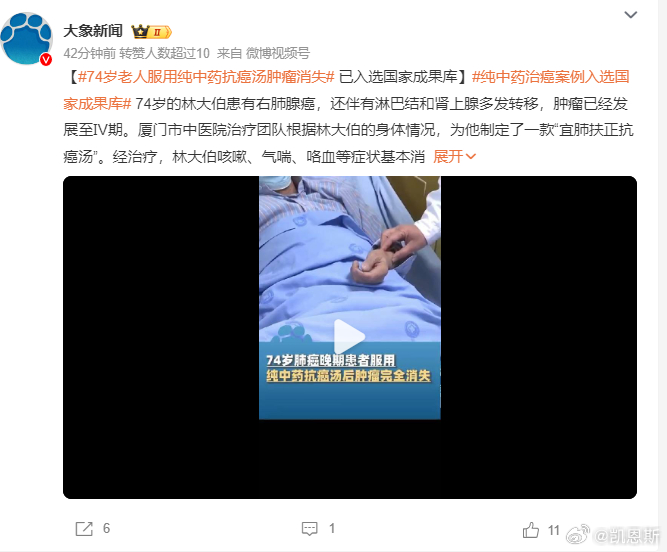
Under the guidance of Professor Huang Yuanpeng, a team of doctors at the Xiamen Municipal Hospital's tumor department devised a personalized treatment plan based on Lin's individual condition, using a specially prepared TCM soup known as "Yi Fei Fu Zheng Anti-Cancer Soup." The treatment aimed to boost Lin's energy, nourish his lungs, and eliminate blood stasis, while also alleviating his symptoms and improving his quality of life. Over the course of several months, Lin's symptoms, including coughing, shortness of breath, and hemoptysis, gradually subsided, and follow-up CT scans revealed that the primary tumor in his right lung had completely disappeared.
Despite the astonishing claim made in Lin's case, skepticism remains. Many experts caution against extrapolating his experience to the broader population, noting that this is an extreme individual case and does not possess any reference value. They highlight the need for rigorous clinical trials to validate the efficacy and safety of such treatments. However, for Lin and his family, the outcome has been nothing short of miraculous. After six months of treatment with the traditional Chinese medicine anti-cancer soup, his symptoms had largely vanished, and follow-up CT scans revealed a significant reduction in the size of the tumor in his lung. Moreover, the metastasized tumors had stabilized, offering a glimmer of hope in the fight against this devastating disease.
The implications of Lin's case are profound, and many are eagerly awaiting further research into the potential anti-cancer properties of traditional Chinese medicine. If these findings can be replicated in larger, controlled studies, it could represent a significant breakthrough in the field of oncology, offering new avenues of treatment for patients struggling with this debilitating illness. As the medical community continues to grapple with the complexities of cancer treatment, cases like Lin's serve as a poignant reminder of the importance of exploring unconventional approaches. While not a substitute for established medical treatments, traditional remedies like the anti-cancer soup may yet prove to be a valuable adjunct in the fight against this disease, potentially improving outcomes and enhancing the quality of life for those affected.
Critics argue that a single case study, no matter how compelling, cannot be used to conclusively prove the effectiveness of traditional Chinese medicine in treating cancer. They emphasize the need for larger, randomized controlled trials to validate any claims of efficacy and safety. This skepticism is rooted in the understanding that cancer is a complex and multifactorial disease, and its treatment requires evidence-based approaches that have been rigorously tested. Questions about the accuracy of the initial diagnosis and potential underlying factors contributing to the outcome also raise concerns.
Proponents of evidence-based medicine stress the importance of transparency in medical research, including detailed patient histories, comprehensive diagnostic tests, and thorough documentation of treatment protocols and outcomes. They advocate for further research into the potential benefits and risks of traditional Chinese medicine in cancer treatment, emphasizing the need for this research to adhere to strict scientific standards. While the story of the 74-year-old man offers hope to those seeking alternative treatments for cancer, it is crucial to balance this hope with a healthy dose of skepticism. The intersection of traditional medicine and modern science is complex, and navigating it requires a commitment to rigorous scientific inquiry and open-mindedness to potential benefits, as well as a critical evaluation of the evidence.