Beijing Union Medical College Undergoes Overhaul Amid Academic Integrity Scandal
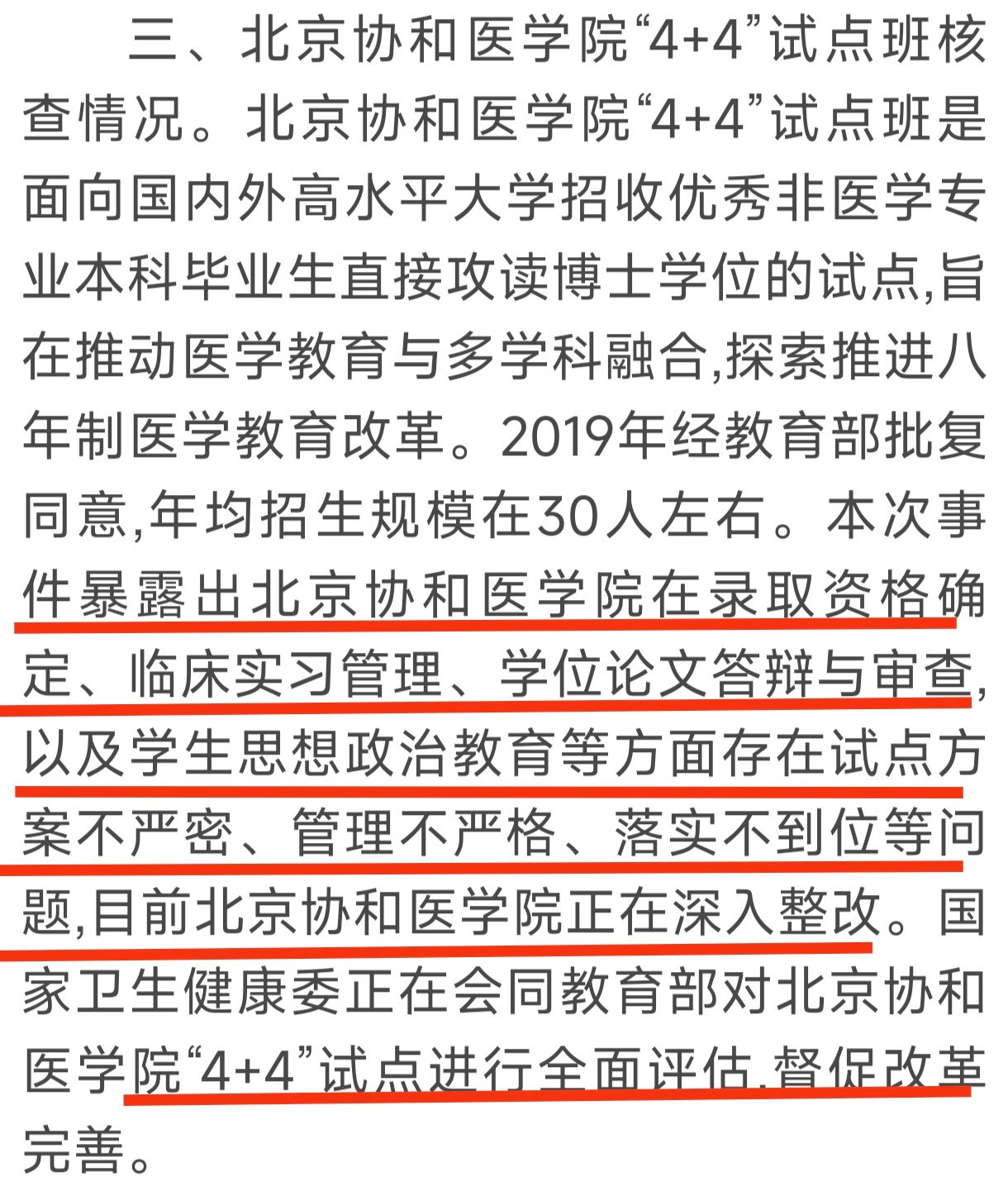
Beijing Union Medical College's "4+4" pilot program, designed to attract top talent from domestic and international universities to pursue doctoral degrees in medicine, has been found to have significant issues. The program, which aims to integrate medical education with multidisciplinary approaches and explore eight-year medical education reform, was approved by the Ministry of Education in 2019 with an annual enrollment of around 30 students. However, an investigation has revealed that the college has problems in determining admission qualifications, managing clinical internships, reviewing and defending dissertation papers, and providing ideological and political education to students.
The program's lack of strict management and inadequate implementation have led to severe issues, including fake academic credentials and plagiarism. One notable case involves a student named Dong, who falsified her academic records, including 16 credits worth of courses, to gain admission to the program. Her doctoral dissertation was also found to have a plagiarism rate of over 20%, and she was involved in other academic integrity issues, such as improper authorship and repeated publication of papers. As a result, Beijing Union Medical College has revoked Dong's graduation and degree certificates, and the Beijing Municipal Health Commission has canceled her medical qualification and practice certificates.
A recent incident has shed light on several issues within Beijing Union Medical College, including lax admission qualification determination, poor clinical internship management, inadequate thesis defense and examination processes, and insufficient ideological and political education for students. These problems point to a lack of rigor in the college's trial programs, inadequate management, and a failure to fully implement policies. The National Health Commission, in conjunction with the Ministry of Education, has initiated a comprehensive assessment of Beijing Union Medical College's "4+4" pilot program to push for reforms and improvements.
The incident has sparked a nationwide investigation into medical quality and safety, as well as medical ethics and discipline. The National Health Commission has pledged to prioritize people's health, promote professional and humanitarian spirit, and provide safe, effective, and convenient medical services to the public. The college is currently undergoing a thorough rectification process, and the National Health Commission is conducting a comprehensive assessment of the "4+4" pilot program to ensure it maintains the high standards expected of a prestigious medical institution.
In a related case, a doctor named Xiao was found to have abandoned a patient during surgery to pursue an affair with Dong, who was also involved in the academic integrity scandal. Xiao's medical license has been revoked, and he has been banned from practicing medicine for five years. Dong's academic credentials and medical licenses have also been revoked due to her involvement in the scandal.
The National Health Commission has announced plans to launch a nationwide campaign within the healthcare system to enhance medical quality and safety, as well as to promote medical ethics and professionalism. The ultimate goal is to prioritize people's health, uphold the spirit of the medical profession, and provide safe, effective, and convenient healthcare services to the public. The commission has also emphasized the need for strict management and supervision of medical professionals, as well as the importance of maintaining high standards in medical education and practice.
Through these measures, Beijing Union Medical College aims to set a precedent for excellence in medical education in China, underscoring its commitment to nurturing talented medical professionals who are capable of making a profound impact in the healthcare sector. The college is also focusing on perfecting its related systems and processes, including revising curriculum structures to better align with modern medical practices and the evolving needs of the healthcare sector. Furthermore, there is an emphasis on enhancing the integration of theoretical knowledge with practical, clinical experience.
The incident has raised questions about the admission process and the level of supervision in the "4+4" program, with many calling for a thorough investigation into the matter. The National Health Commission has stated that it will conduct a comprehensive evaluation of the program and take necessary measures to prevent similar incidents in the future. The commission has also emphasized the importance of transparency and accountability in medical education and practice, and has pledged to take stern action against any individuals or institutions found to be involved in misconduct.
In response to the incident, the college has implemented measures to increase supervision and management of students, including more rigorous monitoring of student progress, both academically and clinically. The college is also reviewing its curriculum and assessment processes to ensure that they are rigorous and effective in evaluating student performance. Additionally, the college is providing additional training and support to students to help them develop the skills and knowledge needed to succeed in their chosen field.
The incident has sparked a national debate about the state of medical education in China, with many calling for greater transparency and accountability in the sector. The National Health Commission has stated that it will take a zero-tolerance approach to misconduct and will work to ensure that medical professionals are held to the highest standards of integrity and professionalism. The commission has also emphasized the importance of prioritizing patient safety and well-being, and has pledged to take all necessary measures to protect the public from unqualified or unscrupulous medical professionals.
In the wake of the incident, there have been calls for a thorough investigation into the "4+4" program and the college's admission processes. Many have questioned how Dong was able to falsify her academic records and gain admission to the program, and have called for greater transparency and accountability in the college's admission processes. The National Health Commission has stated that it will conduct a comprehensive investigation into the matter and will take necessary measures to prevent similar incidents in the future.
The incident has also raised questions about the role of power and influence in medical education, with many suggesting that Dong's connections and wealth may have played a role in her admission to the program. The National Health Commission has stated that it will take a zero-tolerance approach to any form of favoritism or corruption in medical education, and has pledged to ensure that all students are held to the same standards of academic integrity and professionalism.
In conclusion, the incident at Beijing Union Medical College has highlighted the need for greater transparency and accountability in medical education, as well as the importance of prioritizing patient safety and well-being. The National Health Commission has taken a strong stance against misconduct and has pledged to take all necessary measures to prevent similar incidents in the future. The college is undergoing a thorough rectification process, and the "4+4" program is being comprehensively assessed to ensure that it maintains the high standards expected of a prestigious medical institution.