Boosting Confidence in Coping with US Tariff Pressure
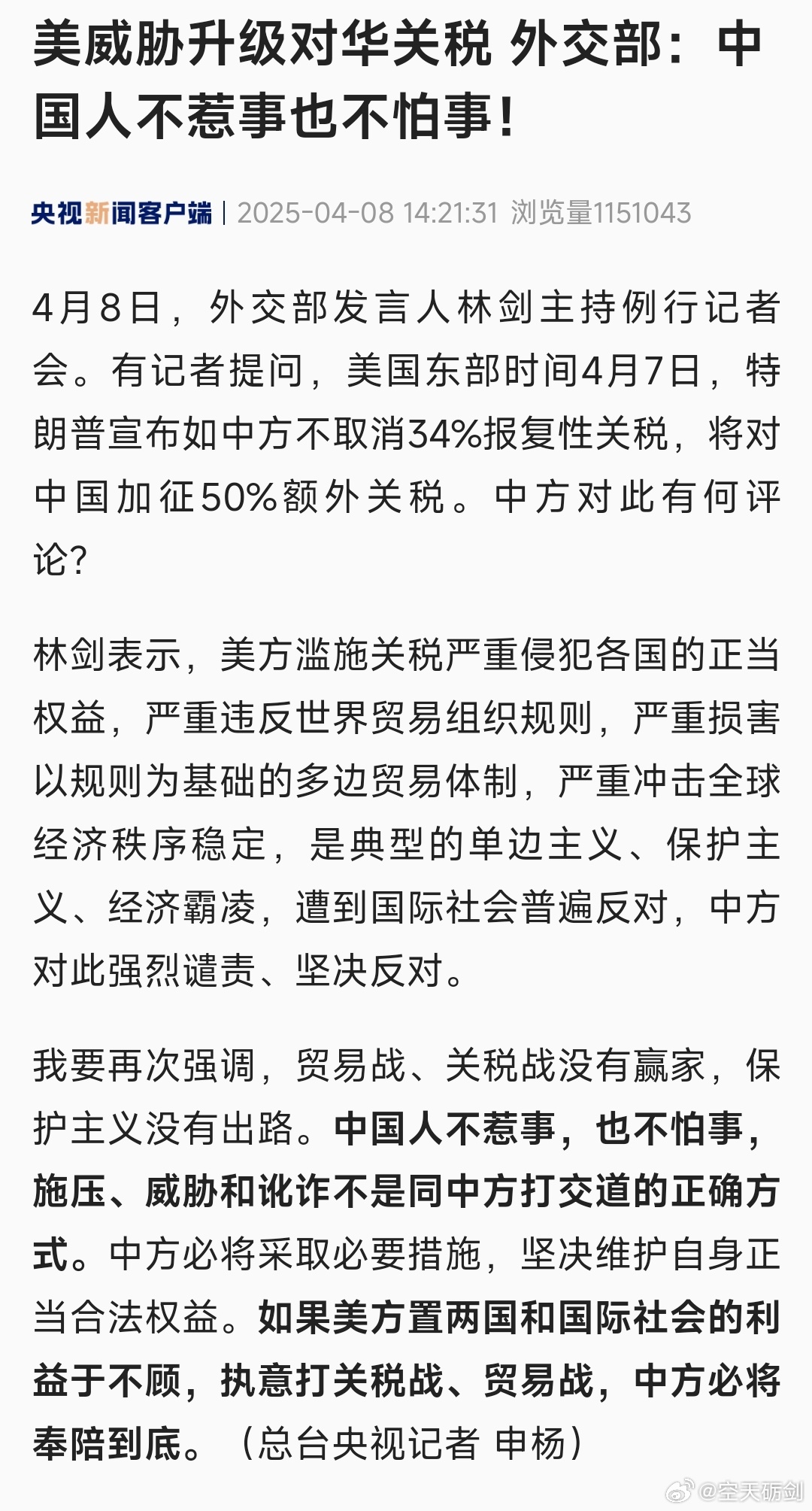
The US government has recently imposed tariffs on almost all its trade partners, including China, sparking widespread global attention. In response to this situation, China needs to objectively analyze the impact of US tariffs on its economy, rationally view the good momentum of its economic development, and strengthen its confidence in coping with US pressure.
The US tariffs will have an impact on China, but the country's large-scale economy and decreasing dependence on the US market will help mitigate the effects. China has been actively constructing a diversified market, and its exports to the US have decreased from 19.2% of its total exports in 2018 to 14.7% in 2024. The US relies heavily on Chinese products, with over 50% dependence on certain products, making it difficult to find alternative sources in the short term.
China's domestic market has a broad cushioning space and is an important foundation for stabilizing foreign trade. The country has made significant progress in optimizing supply and demand, improving domestic economic circulation, and promoting economic growth driven by domestic demand. The government has also taken measures to support enterprises affected by US tariffs, such as providing financial support and guiding them to adjust their business strategies.
China's economic resilience and prospects are promising. As a large-scale economy, China has strong anti-risk capabilities. In recent years, the country has actively built a diversified market, reducing its dependence on the US market. The proportion of China's exports to the US in its total exports has decreased from 19.2% in 2018 to 14.7% in 2024. This decline in exports to the US will not have a devastating impact on China's overall economy.
The domestic market has ample buffer space, serving as a vital backbone. According to statistics, in 2024, nearly 85% of China's export-oriented enterprises also engaged in domestic sales, with domestic sales accounting for about 75% of their total sales. The government is accelerating efforts to remove barriers and promote policies to boost domestic demand, which will increasingly become apparent.
China's technological innovation has also been continuously empowered, with breakthroughs in areas such as integrated circuits, artificial intelligence, and humanoid robots. The country's risk mitigation efforts have yielded significant results, with the three major risks – real estate, local government debt, and small and medium-sized financial institutions – being effectively controlled.
China aims to encourage the US to correct its erroneous practices and seeks to resolve trade disputes through equal, respectful, and mutually beneficial means. This approach emphasizes the importance of diplomacy in finding solutions to trade differences. The policies implemented during the annual National People's Congress (NPC) and the Chinese People's Political Consultative Conference (CPPCC), known as the "Two Sessions," reflect China's proactive stance in addressing the trade war. These policies are designed to bolster the economy and enhance its resilience against external pressures.
In conclusion, China is taking a multi-faceted approach to counter the effects of US tariffs, combining preparedness, policy innovation, and diplomatic efforts. By leveraging its experience and implementing targeted policies, China seeks to navigate the challenges of the trade war with confidence and to promote a more equitable and cooperative trade environment. As a responsible global leader, China is poised to transform the challenges posed by US tariffs into a strategic opportunity for growth and development. Rather than being deterred by external pressures, China is determined to leverage this situation to accelerate its transition towards a new development paradigm, driven by high-quality growth, economic restructuring, and innovation.
By focusing on domestic economic restructuring, China aims to transform external pressures into a catalyst for internal growth. As the US tariffs continue to squeeze the space for trade with America, China is shifting its attention to expanding domestic demand as a long-term strategic imperative. This approach is designed to make consumption a primary driver of economic growth, thereby creating a stable foundation for the country's development. In essence, China is seeking to turn adversity into advantage by utilizing the pressure from US tariffs as a stimulus to propel its economic transformation. By doing so, China is demonstrating its unwavering commitment to progress, its ability to adapt to changing circumstances, and its determination to build a more resilient and sustainable economy that is less reliant on external factors. This bold strategy is set to redefine China's economic trajectory, with a focus on self-sufficiency, innovation, and high-quality growth, ultimately ensuring the country's continued rise as a major global player.