CCTV's Camera Found the Sexually Suggestive Figurines Chinese Teenagers Buy Online. Three People Are Going to Prison.
A state broadcaster investigation followed one middle-schooler's phone order to a network that produced more than 60,000 sexually suggestive or counterfeit anime figurines and shipped them to minors. Three people have been jailed as part of a widening crackdown on the 'erotic merch' market.
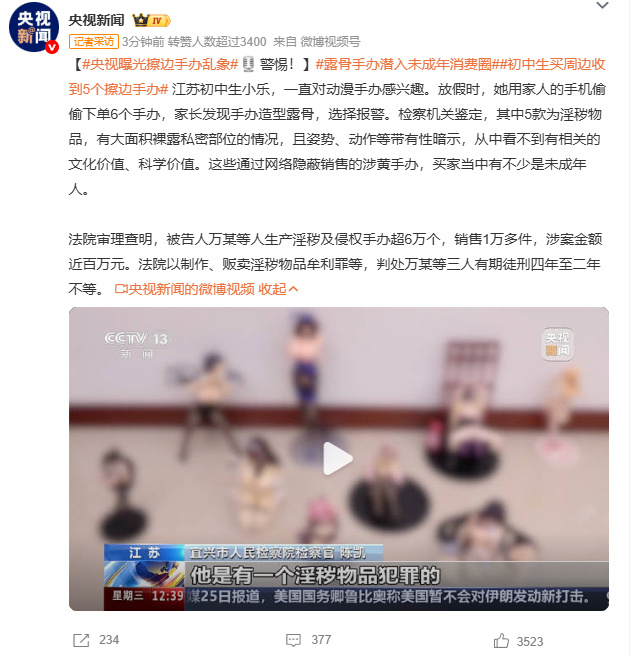
A Jiangsu middle-school student wanted anime figurines. Using a parent's phone, she placed an order for six of them. When the boxes arrived, her parents found the figures left little to the imagination—and called the police.
That single complaint anchors a new CCTV investigation into what the state broadcaster is calling the “soft-porn handiwork” (cā biān shǒubàn) market: cheap, mass-produced anime and game figurines sold through online channels, often to buyers who are underage. Prosecutors in the Jiangsu case examined the six figures and found five met the legal standard for obscenity, with “exposed private parts” and sexualized poses that served, the authorities said, no cultural or educational purpose.
The court concluded that the people behind the operation, led by a defendant surnamed Wan, had produced more than 60,000 obscene and counterfeit figurines and sold 10,000 of them, reaping nearly one million yuan in revenue. Wan and two accomplices were sentenced to between two and four years in prison for manufacturing and selling obscene items for profit. The CCTV report, viewed thousands of times, framed the case as a warning about “soft-porn” products drifting into the hands of children.
A gray zone between hobby and hard law
The figurine market has long been one of the most visible exports of Japanese otaku culture into China, where collectible “shǒubàn” of anime characters sit on desks and in teenage bedrooms. The legal line is blurry: a figurine of a schoolgirl character in a revealing pose occupies the space between legitimate fan merchandise and contraband, and regulators have increasingly started treating the latter as the rule rather than the exception.
The case read online as a test of that line. Many commenters agreed the products crossed into pornography. “This isn't 'borderline' — some of it is basically pornographic,” one popular post said. “If an adult buys it, fine; but it's genuinely not appropriate for children.” Others pointed at what they saw as a parallel problem, the increasingly sexualised cosplay at some anime conventions.
The bigger fight over the ‘two-dimensional’ economy
China's “second-dimension” (èr cì yuán) economy — anime, gaming, cosplay and the goods around them — is young, urban and growing, which has made it a recurring flashpoint in official campaigns to police online content aimed at minors. The figurine crackdown is one front in that broader push, alongside the same authorities' efforts to limit what children can see and buy on livestreams and short-video platforms.
For the teenager whose purchase started the case, the order was a hobby. For the courts, it was a supply chain. The sentence against Wan and his co-defendants — and the CCTV broadcast of the figurines on national television — sends a signal that the gray zone is closing, one resin figure at a time.