Cecilia Cheung’s Patriotic Military Parade Post Sparks Massive Praise Across Chinese Social Media
Hong Kong‑born actress and singer Cecilia Cheung has sparked a wave of online praise after she posted pictures of China’s recent military parade to her Instagram account with the caption “为祖国点赞,” which translates as “thumbs‑up for the Motherland.” The images, taken from the televised showcase of the People’s Liberation Army’s latest display of hardware, were shared on an overseas platform, prompting a swift reaction on mainland China’s social media networks.
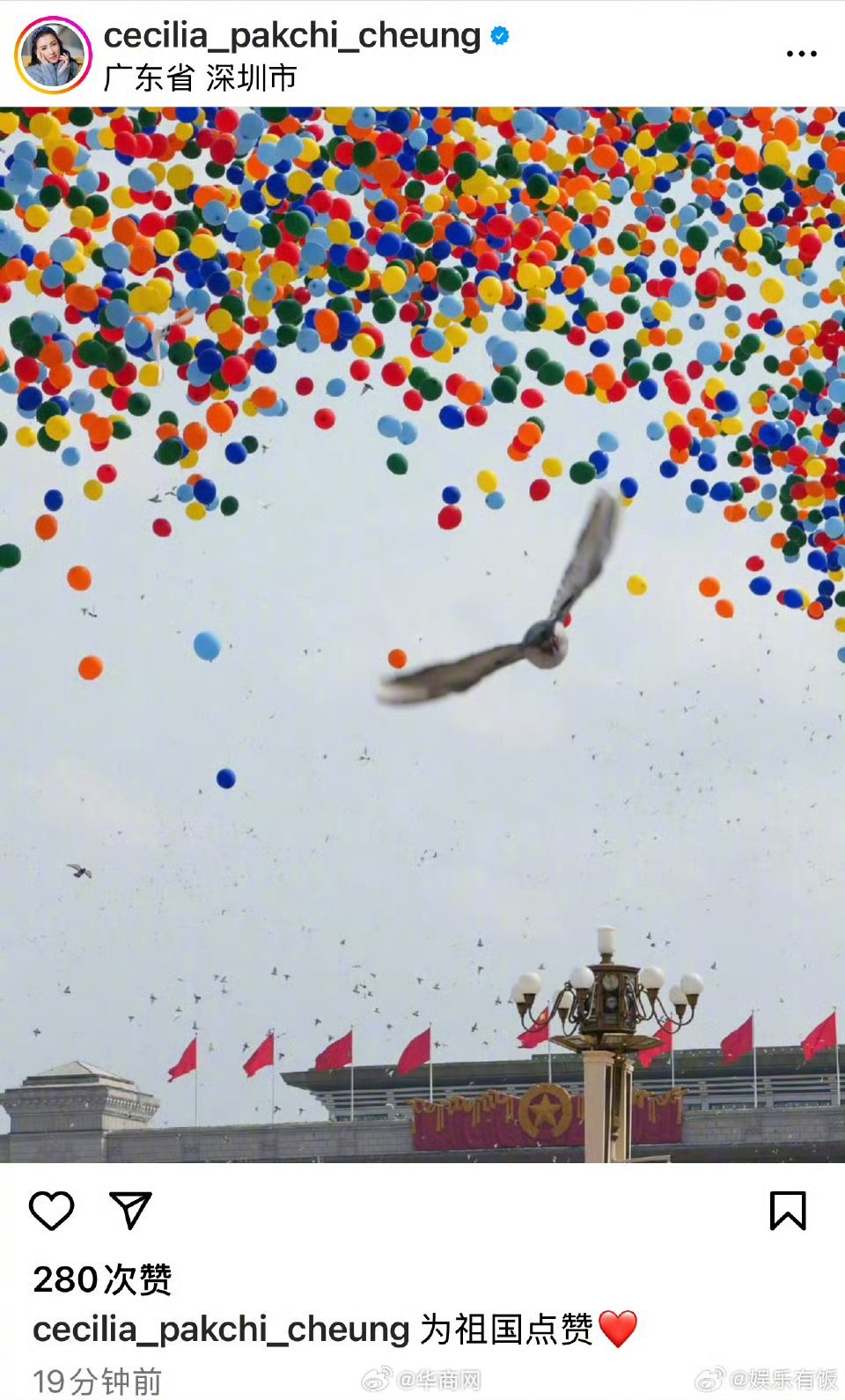
Chinese portal Sohu Entertainment was among the first to report the post, noting that Cheung also reshared a piece from CCTV News on her domestic Weibo account. Within hours, a hashtag dedicated to the actress’s tribute began trending, and netizens flooded the comment sections with supportive messages. Phrases such as “爱国的艺人永远不会差” (“A patriotic artist will never be bad”) and “好样的” (“Well done”) appeared repeatedly, while many users complimented Cheung for embodying “correct values” and aligning herself “proudly as a Chinese.”
The response has been uniformly positive, reflecting a broader pattern in which Chinese‑language celebrities are increasingly foregrounding patriotic sentiment in the public arena. Observers note that Cheung’s move enhances her image in the eyes of both fans and the mainstream media, reinforcing a persona that blends entertainment appeal with what is perceived as “the right worldview.” In an environment where state‑aligned messaging encourages public displays of national pride, such gestures can translate into tangible benefits: greater fan loyalty, potential endorsement deals with brands that market “national‑spirit” products, and heightened visibility in state‑run outlets.
Industry analysts also see Cheung’s post as a bellwether for the entertainment sector. By openly celebrating a state‑sanctioned event on an international platform, she sets a precedent that may encourage other Hong Kong‑based and mainland stars to adopt similar strategies. The ripple effect could shape the overall tone of celebrity discourse, nudging the industry toward a more uniformly patriotic posture.
Beyond the entertainment world, the episode illustrates how celebrity actions continue to influence public sentiment. Social media users have repeatedly framed Cheung’s post as a catalyst for collective pride, suggesting that high‑profile endorsements of national achievements help reinforce cultural identity, especially in an era of heightened global scrutiny. The online dialogue has largely coalesced around the notion that patriotism is a commendable trait for public figures, thereby reinforcing prevailing social values.
Politically, the post dovetails neatly with Beijing’s longstanding emphasis on “national rejuvenation” and the promotion of a cohesive narrative around China’s rising global stature. State media have taken note of the positive reception, and the coverage by CCTV further legitimizes the act as a model of civic engagement. For the Chinese Communist Party’s united‑front work, which seeks to integrate Hong Kong and Taiwanese artists into a broader national storyline, Cheung’s gesture offers a low‑risk, high‑visibility example of the desired alignment.
While some observers caution that overt patriotic displays can occasionally be perceived as performative, the current wave of comments suggests that, at least for now, Cheung’s “thumbs‑up for the Motherland” has been taken at face value and celebrated as a genuine expression of national pride. As the story continues to circulate, it underscores the powerful intersection of celebrity, social media, and state‑endorsed patriotism in contemporary China.