China Condemns US Tariffs as Trade Tensions Escalate
The United States recently announced that it will impose a 10% tariff on Chinese products exported to the US, citing issues such as fentanyl. China has expressed strong dissatisfaction and firm opposition to this move, stating that the US's unilateral imposition of tariffs is a serious violation of World Trade Organization rules and will not only fail to solve the US's own problems but also disrupt normal trade cooperation between the two countries. In response to the US's actions, China will file a complaint with the World Trade Organization and take corresponding countermeasures to firmly defend its legitimate rights and interests.
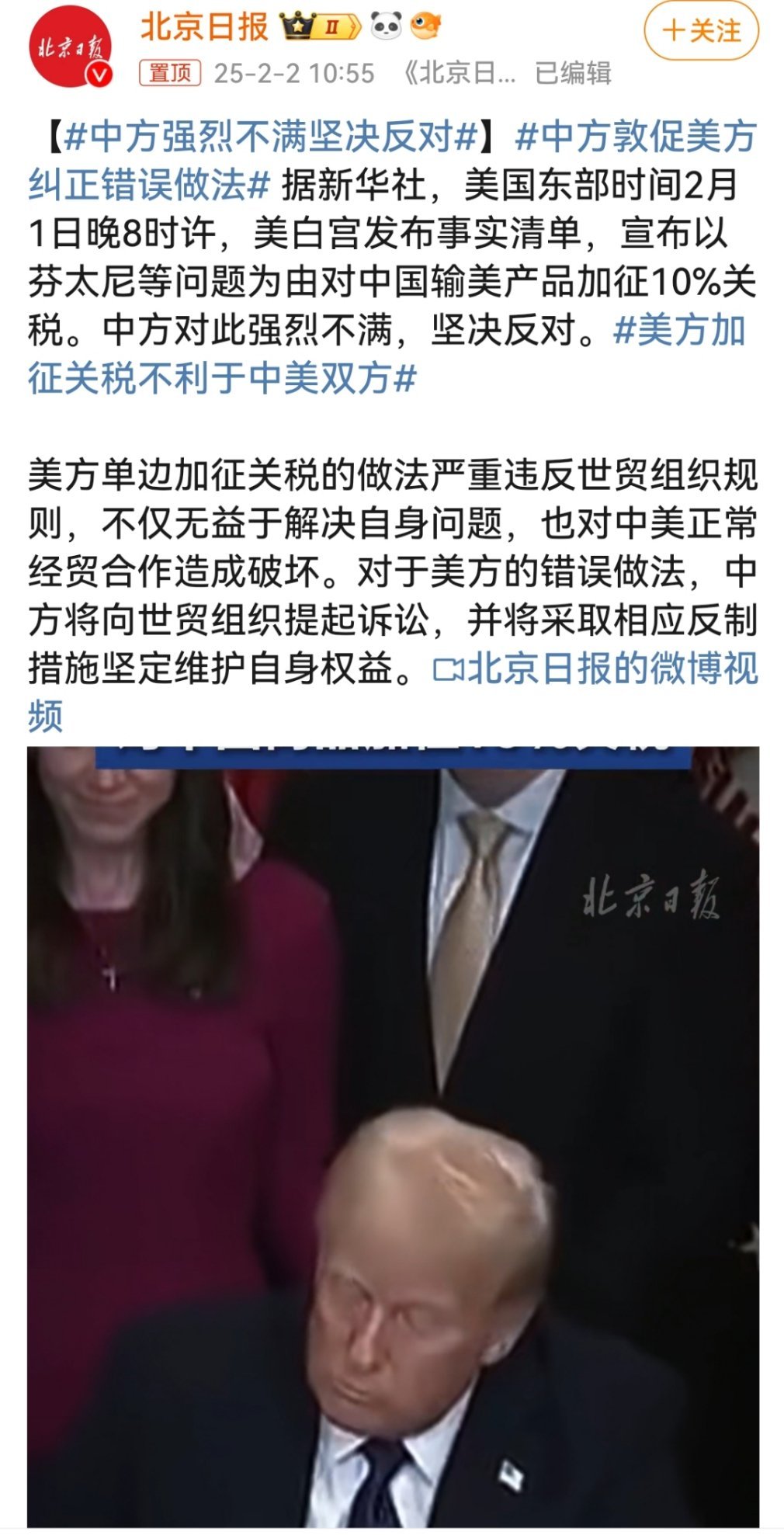
This move by the US has been seen as a dramatic escalation of trade tensions between the two nations, with China accusing the US of using tariffs as a threat against other countries. The Chinese government has emphasized its commitment to maintaining a stable and healthy relationship with the US, but has also made it clear that it will not back down in the face of what it sees as unreasonable and unfair trade practices. China has been one of the most stringent and thorough enforcers of anti-drug policies globally and has provided support to the US in addressing the fentanyl issue. In 2019, China officially listed fentanyl and its related substances as controlled substances, making it the first country to do so, demonstrating its commitment to combating drug trafficking.
The imposition of tariffs by the US is seen as unconstructive and is likely to impact and damage future cooperation between the two nations on drug control and other issues. China urges the US to correct its erroneous approach, maintain the hard-won progress in anti-drug cooperation, and promote a stable, healthy, and sustainable development of US-China relations. The US decision to impose tariffs on Chinese products may lead to a decline in the US GDP, ultimately harming the interests of both countries. According to statistics from an American think tank, a 10% tariff on all imported goods, combined with retaliatory tariffs from other countries, could result in a 0.5% decline in US GDP, with this figure potentially increasing to 1-1.5% within three years. If tariffs continue to rise, the decline could reach as high as 1.2%.
China plans to file a lawsuit with the WTO and take corresponding countermeasures to resolutely safeguard its rights and interests. The Chinese government has pointed out that the US should objectively and rationally view and handle its own fentanyl problem, rather than resorting to tariffs as a means of threatening other countries. China has urged the US to correct its mistakes, maintain the hard-won good momentum in bilateral anti-drug cooperation, and promote stable, healthy, and sustainable development in bilateral relations. The US has invoked the International Emergency Economic Powers Act to impose tariffs, which gives the president significant authority to declare a national emergency and take restrictive measures, including tariffs, without needing approval or agreement from other branches of government. This move has raised concerns among experts, who point out that it may be challenged in court and could have far-reaching consequences for the US economy.
The US decision to impose tariffs on Chinese products has also sparked concerns among other countries, with Canada and Mexico announcing plans to impose retaliatory tariffs on US goods. The European Union has also expressed concerns, with the EU Commission stating that tariffs would cause unnecessary economic disruption. The situation remains fluid, with the US and its trading partners engaging in a complex and challenging game of trade negotiations. As the situation unfolds, it remains to be seen how the two countries will navigate this complex issue, with China reiterating its commitment to defending its legitimate rights and interests, and the US facing potential challenges to its economic growth and trade relationships.