China Imposes Retaliatory Tariffs on US Goods Amid Escalating Trade Tensions
The trade tensions between the United States and China have escalated, with China announcing retaliatory measures against the US in response to the 10% tariffs imposed by President Trump. The tariffs, which took effect at midnight on February 4, Eastern Time, have been met with a series of countermeasures by China, including the imposition of 10% and 15% tariffs on certain US goods. China's Finance Ministry has stated that coal and liquefied natural gas from the US will be subject to a 15% tariff, while crude oil, agricultural machinery, large displacement vehicles, and pickup trucks will face a 10% tariff.
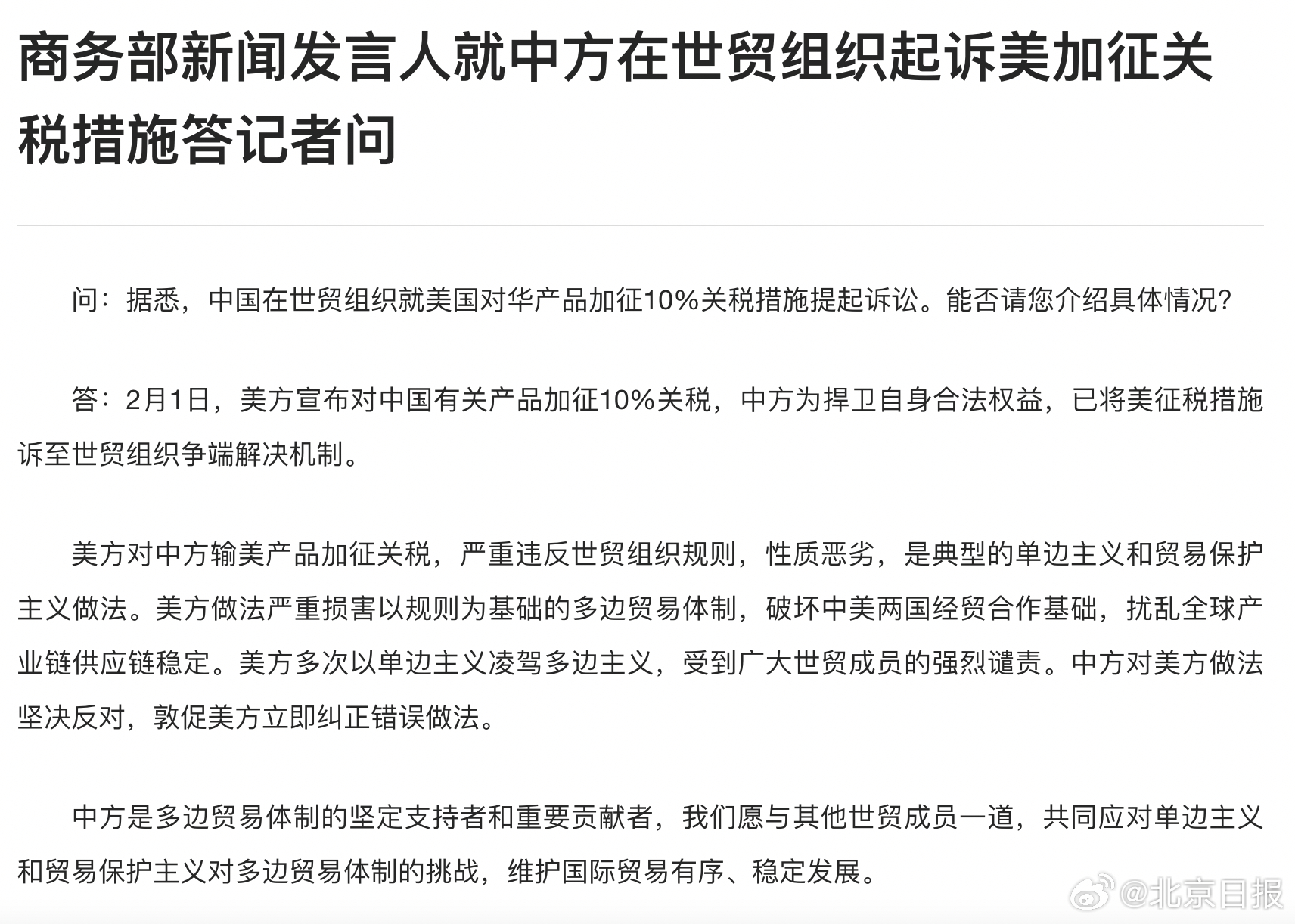
These measures are in response to the US government's decision to impose a 10% tariff on all Chinese goods exported to the US, citing issues such as fentanyl. China has condemned the US move as a serious violation of World Trade Organization rules and has vowed to take necessary countermeasures to protect its legitimate rights and interests. The Chinese government has also launched an investigation into Google, citing alleged violations of Chinese antitrust laws, and has added export controls on certain metals, including tungsten, tellurium, bismuth, molybdenum, and indium, which are used in the production of defense and military equipment, as well as solar panels.
China has taken the dispute to the World Trade Organization, filing a complaint with the WTO's dispute settlement body. The country has emphasized its commitment to upholding the rules-based multilateral trading system and has called on the US to abandon its unilateral and protectionist policies. The US has been urged to immediately correct its wrongful practices and work with China to find a solution that benefits both countries. China's decision to impose tariffs on US goods is set to take effect on February 10, 2025, and is expected to have a significant impact on trade between the two countries.
The escalation of trade tensions between the two countries has raised concerns about the impact on the global economy. The US and China have been engaged in a trade war since 2018, with both sides imposing tariffs on each other's goods. The conflict has had far-reaching consequences, including disruptions to global supply chains and increased costs for consumers. Despite efforts to negotiate a trade deal, the two countries have been unable to reach an agreement, with the US accusing China of failing to address concerns about intellectual property theft, forced technology transfer, and trade imbalances, and China pushing back against what it sees as unfair and unilateral actions by the US.
In addition to the tariffs, China has also implemented export controls on 25 rare metal products, including tungsten, tellurium, bismuth, molybdenum, and indium. The move is seen as a significant escalation of the trade tensions between the two countries and has sparked concerns about the potential impact on the global economy. The US has been accused of using single-sided and protectionist policies, which have been widely criticized by the international community. China has emphasized its commitment to maintaining the rules-based multilateral trading system and has called on the US to abandon its unilateral and protectionist policies.
The Chinese government believes that the US is using the issue of fentanyl as a pretext to impose tariffs on Chinese goods, and that the US is trying to bully China into submission. China has pointed out that it has taken strong measures to combat the production and trafficking of fentanyl, and that the US should focus on addressing its own domestic issues rather than trying to shift the blame to China. The trade war between the US and China is far from over, and the world will be watching with bated breath as the situation continues to unfold.
China's countermeasures against the US are seen as a necessary response to the US's unilateral and protectionist policies. The Chinese government has made it clear that it will not back down in the face of US pressure, and that it will take all necessary measures to protect its legitimate rights and interests. The dispute between the two countries has significant implications for the global economy, and it remains to be seen how the situation will play out in the coming days and weeks.