China Launches Record 10 Satellites from Sea on Single Rocket
China has achieved a historic milestone in its space program by successfully launching a rocket carrying 10 satellites from the sea on January 13th. The launch took place from the East China Sea, near the city of Haiyang in Shandong Province. The "Jielong-3" rocket, developed by the China Aerospace Science and Technology Corporation, lifted off at 11:00 AM Beijing time and placed the Weilai-01 constellation of 10 LEO satellites into their predetermined orbits.
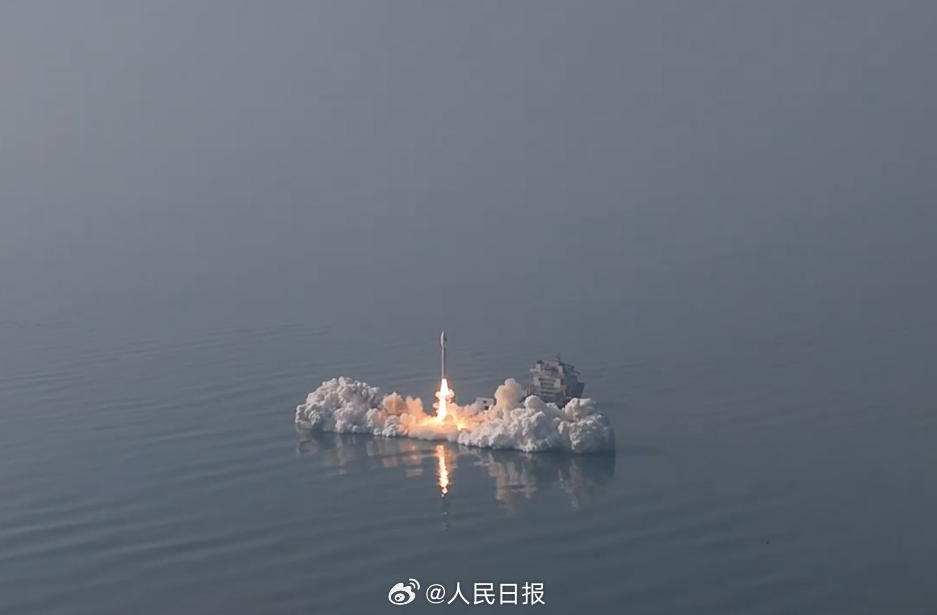
This achievement marks a significant step forward for China's space exploration capabilities, as it demonstrates the country's ability to launch multiple satellites into space using a single rocket from a sea-based platform. This technology has the potential to greatly enhance China's ability to deploy and operate satellite constellations in the future.
The Weilai-01 constellation is designed to enhance the country's satellite navigation capabilities, particularly in low Earth orbit. The ten satellites launched on January 13th are part of a larger constellation of satellites aimed at providing precise navigation and timing services for a wide range of applications, from maritime trade to telecommunications.
The Jielong-3 rocket, which was used to launch the Weilai-01 constellation, is a domestically developed launch vehicle designed specifically for launching small to medium-sized satellites into low Earth orbit. With this successful launch, China has once again demonstrated its rapidly advancing space capabilities, solidifying its position as a major player in the global space industry.
The launch of the Weilai-01 constellation is also notable for its implications for China's maritime interests. As the country continues to expand its naval and maritime activities, the ability to launch satellites from the sea could provide a significant advantage in terms of surveillance, communication, and navigation capabilities.
The successful launch of 10 satellites into space from a sea-based platform marks a significant milestone for China's space program. The mission, which was carried out by the Taiyuan Satellite Launch Center using the Jielong-3 launch vehicle, demonstrates China's growing capabilities in space technology and its commitment to expanding its presence in space.
The launch of the "micro-sphere 01" constellation of 10 low-orbit satellites for the BeiDou Navigation Satellite System (BDS) is a major step forward for China's satellite navigation program. The BDS is a crucial component of China's space infrastructure, providing navigation services to a wide range of industries, including aviation, maritime, and land transportation.
The success of this mission is also a testament to the reliability and versatility of the Jielong-3 launch vehicle, which has now completed five successful launches since its maiden flight in December 2022. The use of a sea-based launch platform also highlights China's efforts to develop more flexible and cost-effective launch options.
The Tenglong-3 launch vehicle, developed by the China Academy of Launch Vehicle Technology, has demonstrated its technical prowess with a string of successful launches, including the recent "one arrow, ten stars" mission. This solid-propellant launch vehicle has several key advantages that make it an attractive option for commercial satellite launches.
Firstly, the Tenglong-3 has a high success rate, with five consecutive successful launches since its maiden flight on December 9, 2022. This reliability is crucial for commercial satellite operators who require a high degree of certainty when launching their valuable payloads.
Secondly, the Tenglong-3 has the capability to launch multiple satellites in a single mission, as demonstrated by the recent "one arrow, ten stars" launch. This ability to carry multiple payloads to orbit in a single launch reduces the cost and increases the efficiency of satellite deployment.
Thirdly, the Tenglong-3 has the flexibility to launch from different platforms, including land-based launch sites and sea-based platforms. This versatility allows the launch vehicle to be deployed in a variety of configurations, making it suitable for a range of mission requirements.
Lastly, the Tenglong-3 has demonstrated its ability to innovate and adapt to new launch scenarios, such as the first-ever domestic hot launch from a sea-based platform. This willingness to push the boundaries of launch technology has enabled the Tenglong-3 to stay ahead of the curve in the rapidly evolving commercial launch market.
The successful sea launch of "one arrow, ten stars" marks a significant milestone in China's space exploration journey, particularly in the commercial aerospace sector. This achievement showcases the country's growing expertise in space technology and its determination to become a leader in the industry.
The use of sea launch technology offers several advantages, including reduced costs, increased launch flexibility, and improved safety. Unlike traditional land-based launch platforms, sea launches can be conducted from anywhere in the world, reducing the constraints imposed by geographical locations and weather conditions. This flexibility enables China to expand its launch services to a broader range of customers, both domestically and internationally.
Furthermore, the successful launch of ten satellites in a single mission demonstrates the capabilities of China's space industry in terms of production, reliability, and precision. This accomplishment underscores the country's progress in commercializing its space technology, making it more competitive in the global market.
The "one arrow, ten stars" mission also highlights the capabilities of China's universal space rocket series, specifically the Jielong-3 (Cholong-3) carrier rocket, which has achieved a 100% success rate since its maiden flight in December 2022. This reliability and consistency will undoubtedly enhance the credibility of China's space industry and attract more customers to its launch services.
In the short term, this success is likely to boost the country's commercial space industry, generating increased revenue and investments. In the long term, it will contribute to China's aspirations to become a major player in the global space industry, with ambitions such as establishing a space station, conducting lunar and Mars exploration, and providing comprehensive space services.
As China continues to push the boundaries of space exploration and commercialization, the successful sea launch of "one arrow, ten stars" serves as a testament to the country's unwavering commitment to innovation and progress in the aerospace sector.