Chinese Counties Pay Couples to Get Married as Birthrates Fall
Villages, counties and at least one famous retailer are paying Chinese couples cash to marry — 1,500 to 50,000 yuan — as the country's marriage and birth numbers keep falling. The arguments start in the fine print.
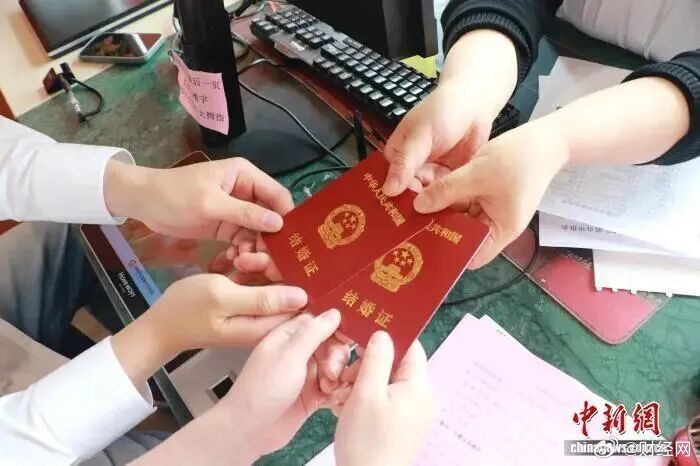
The latest entry in China's pro-marriage policy sweepstakes comes from a village. Dadu, in Shunde's Chenchen town in Guangdong, has voted rewards for newlyweds into the charter of its collective economic cooperative: a one-off 2,500 yuan for couples who register a marriage, 3,000 yuan for having a child, and preschool subsidies on top — a bundle spelled out in Caijing's roundup of localities now paying people to pair up. Mingxi county in Fujian has its own scheme, rewarding first marriages registered at the county office with a premarital checkup and local household registration. The item sat at No. 2 on Baidu's trending board this weekend.
The best-known private version is Pang Dong Lai, the Henan retailer whose employment practices are followed like policy. Its internal notice, posted and screenshotted on Weibo, sets out a 50,000-yuan marriage reward with three conditions: no bride price or dowry changes hands, the couple does not rely on their parents' savings to buy a flat or a car, and the wedding itself is simple. The notice's own ledger gives a sense of scale — in 2025, 73 employees collected rewards totalling 3.65 million yuan; so far in 2026, 54 employees and 2.7 million yuan. This site covered the scheme's launch in a piece on Pang Dong Lai's zero-bride-price bonus.

The state-level context is the point of all this: marriage registrations have slid for years, births have settled near eight million a year, and Beijing has promised a childcare law — this site mapped that pledge against the demographic numbers last week. Local governments, which cannot move the economy on their own, are competing on cash. Shanxi's Lüliang, among the first out, pays 1,500 yuan to couples where the bride is thirty-five or younger at her first marriage — and that clause is where the argument starts. The writer and illustrator Liu Xuan, posting under her pen name to more than 2,700 likes, marvelled at the premise — there was a time, she wrote, when nobody imagined marriage would need encouraging with money — and then at the number: the workplace writes you off at 35, and now marriage rewards you at 35. "A curious number: 35" (一个奇妙的数字:35), her post concludes, naming the age that also ends eligibility for China's civil-service exam and recurs in job ads as an unspoken ceiling.
No one in the discussion believes 1,500 yuan moves a wedding budget. That is not quite the designers' claim either: the sums are small next to the cost of a Chinese wedding, and the intent — as the hashtag riding the story has it, the thinking behind the reward matters more than the money — is to make marriage something the state visibly wants. Whether the signal moves registrations will show up in the one number every one of these schemes exists to bend, and that number is published slowly.