China Pledges a Childcare Law as Births Settle Near 8 Million a Year
China's health commission says the population stands at 1.405 billion and births run 'around 8 million' — but the latest full-year figure was 7.92 million, and the gap between the official framing and the reality is what Chinese social media is arguing about.
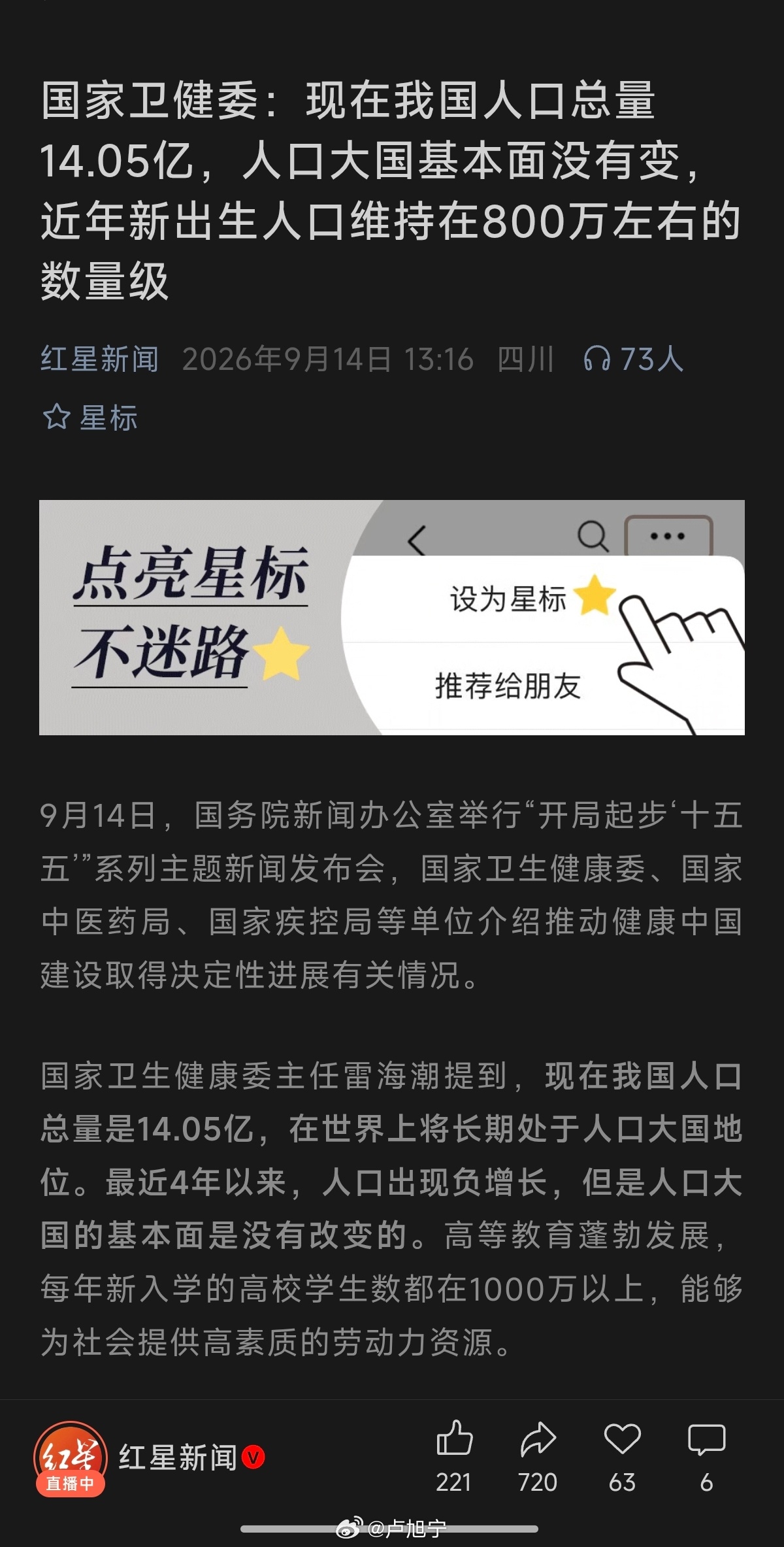
At a press conference in Beijing on Monday, the National Health Commission delivered a message China's leadership wants to land: the country is still, and will long remain, a "population power" (人口大国). The total stands at 1.405 billion, commissioners said, and although the population has now shrunk for four consecutive years, "the fundamentals of a large population have not changed."

The framing drew attention because of what "around" is doing in the sentence. Commission chief Lei Haichao said newborns have held "at a magnitude of around 8 million" in recent years — but the most recent full-year figure was 7.92 million, a 17 percent drop that erased the bump from the auspicious Year of the Dragon. The gap between the rounded phrase and the actual number became the story on Weibo within hours. "Last year's newborns were only 7.92 million!" one commenter wrote, in a post that drew thousands of likes, under the trending topic for the commission's remarks.
The 7.92 million figure was already public; what Monday's press conference added was the policy pipeline meant to answer it. Lei said the childcare subsidies introduced last year have reached more than 30 million families, and that the coming 15th Five-Year Plan period will push "childcare-kindergarten integration," with communities and employers encouraged to run nurseries so parents can find affordable places close to home. More concretely, a national childcare services law is now being drafted and has entered deliberation at the National People's Congress.
Officials also argued that the decline matters less than it seems. Lei pointed to more than 10 million students entering university every year as evidence that China will keep supplying "high-quality labor" regardless of headcount. That is a notable shift in emphasis: from coaxing more births to making the case that a smaller, better-educated population can still power the economy.
The friction point came from a separate line of official messaging that also trended Monday: the commission's view that young people hold "incorrect views on marriage and childbearing" that need "guidance." The pushback was immediate. Geng Xiangshun, a commentator with a large Weibo following, wrote that young people are not refusing to marry and have children because their attitudes are wrong, but because they lack money, stable jobs and housing, and cannot afford to raise a child on income that barely covers supporting themselves. If attitudes are the target, he argued, officials would get further by reining in exorbitant bride prices and marriage scams, protecting stay-at-home spouses in divorce, and making it genuinely viable to raise a child alone, than by relocating marriage-registration desks into shopping malls to make licenses feel festive.
That argument — whether the falling birth rate is a problem of values or of economics — is the one China keeps having, and the commission's new law will land in the middle of it. The direction of policy is already visible elsewhere: with pupil numbers falling, Chinese cities are converting empty primary schools into nursing homes, preparing for the other end of the age curve while the births debate continues.