As Pupil Numbers Fall, China Is Converting Empty Primary Schools Into Nursing Homes
China had nearly 30,000 fewer primary schools in 2025 than in 2020, the Ministry of Education's newly released bulletin shows, and with enrolment down four million pupils in a single year, villages are quietly turning their empty schoolhouses into nursing homes, elder canteens and factories — the clearest sign yet of how fast the country's demographic turnaround is redrawing everyday life.
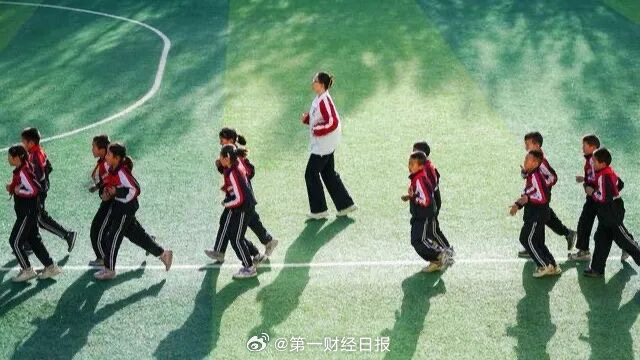
The Ministry of Education's annual statistical bulletin, released this week, contains a number that captures China's demographic turn better than any opinion poll: 128,300 ordinary primary schools in 2025, down from 136,300 a year earlier and 158,000 in 2020. Nearly 30,000 primary schools have disappeared in five years, and another 9,900 rural teaching posts — small annexes that once kept even hamlet children in class — have closed alongside them. Enrolment fell by more than four million pupils in a single year, to 101.78 million.
The figures set off a trending discussion on Chinese search and social platforms this week under the hashtag "Many Primary Schools Are Becoming Nursing Homes" (多地小学改为养老院), as readers did the arithmetic on what happens to a school building when its last pupils leave. As Yicai Daily reported, a growing share of the vacated schoolhouses are being converted into nursing homes, elder-care centers and canteens for the elderly.
Two forces are hollowing out the schools at once. The first is the decade-long fall in births. The second is urbanization: even where children remain, they increasingly sit in classrooms somewhere else. Ding Changfa, an economist at Xiamen University, told Yicai that urban school systems have expanded — new buildings, more places — while rural parents who can afford it move their children into town schools, leaving village campuses empty long before the last local child is gone.
What happens next varies by county, and the ledger from Nanping, in Fujian province, is unusually candid. The city counted 601 idle school properties as of autumn 2025: 196 signed over to operators under managed-care agreements, 274 handed to village collectives, and of the buildings already brought back into use, 20 became welfare and elder-care facilities including nursing homes and canteens for the elderly, 17 were leased out as workshops — among them a chemical plant and a tea factory — and four became rural-tourism projects such as painting retreats and family farms. In Shanyang County, Shaanxi, the Junzijian village primary school, idle for years, has reopened as a nursing home.
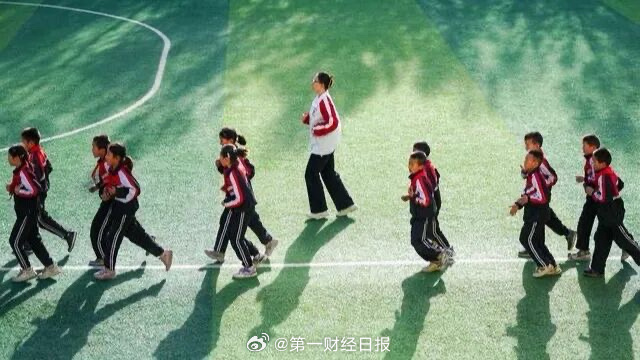
There is a practical logic to the conversions: a school already comes with classrooms, a fenced yard, a canteen and a courtyard — precisely what a small-town nursing home needs. But the symbolism is not lost on anyone. The village primary school, the cunxiao, was for decades the most consequential public building in rural China, the place a village proved it had a future. Converting one into a nursing home means the same building now shelters the village's past. China is already managing the knock-on effects up the chain, redeploying surplus primary-school teachers to junior high as the shortage of children moves through the grades.
On current numbers, the wave has not crested. Some 14.6 million children started primary school in 2025, about 1.5 million fewer than the year before, which means the country's supply of empty classrooms will keep growing for at least the rest of the decade — and with it the search for tenants. In a country aging faster than its villages can adapt, the nursing home is proving a more reliable customer for a schoolhouse than the school ever was for the village.