China's Football Association Demands a Public Apology From Mbappé and Real Madrid
The Chinese Football Association has made a formal approach to Real Madrid demanding that Kylian Mbappé publicly and formally apologize for his remark about a Mao Zedong meme — the newest escalation in a crisis that has already cost the striker his Chinese sponsors and broadcast coverage.
The Chinese Football Association stepped into the Mbappé affair on Monday evening, announcing it had made a solemn representation (严正交涉) to Real Madrid and demanded that both the club and its striker issue a public, formal apology. In a statement on its official account, the federation said the Real Madrid forward Kylian Mbappé had "made erroneous remarks about China" in an interview with foreign media, that it took the matter seriously and had approached the club at once, and that internationally prominent athletes "should above all hold to their bottom line and speak rationally, cherishing their public influence."
The intervention is the institutional capstone on two days in which China's media and its consumer market moved against the player with unusual speed. After a clip circulated in which Mbappé, asked about his favorite meme, named one that superimposes his face onto Mao Zedong, CCTV halted its LaLiga broadcasts and pulled every advertisement carrying his image; the dairy giant Mengniu, the energy-drink maker Eastroc Super and the cheese brand Milkground all terminated their deals within a day, and his accounts on Weibo and Xiaohongshu were muted. As we covered when the brands erased him and when his apology landed with his accounts still muted, the mechanics were contractual: Chinese endorsement deals carry morality clauses, and the brands exercised them within hours.
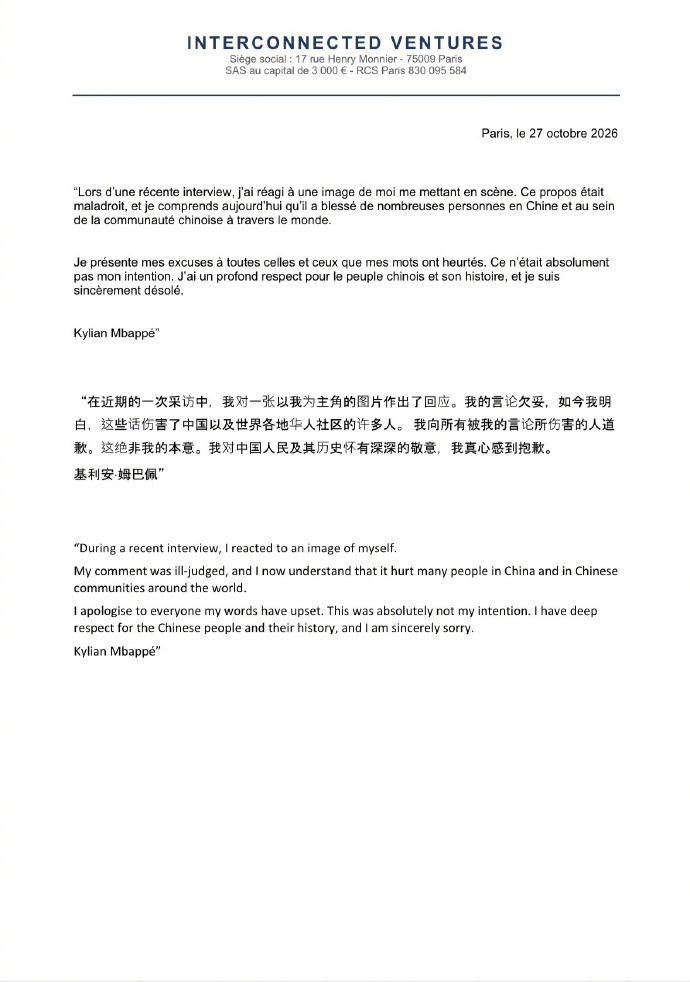
Mbappé's own apology arrived on Monday evening in a trilingual statement: "My comment was ill-judged, and I now understand that it hurt many people in China and in Chinese communities around the world... I have deep respect for the Chinese people and their history, and I am sincerely sorry." LaLiga went further than the player, issuing a statement that apologized "on behalf of the league and all its member clubs," called the remarks the player's personal expression, and promised new cultural-awareness rules for players and clubs — a post carrying the full text was liked more than 33,000 times. The response that mattered most came from the central broadcaster, though: CCTV's parent CMG said it had noted the apology but would listen to his words and watch his actions (听其言,观其行), a phrase lifted from the Analects, having already written to LaLiga president Javier Tebas to demand a sincere apology and the erasure of the remarks' influence.
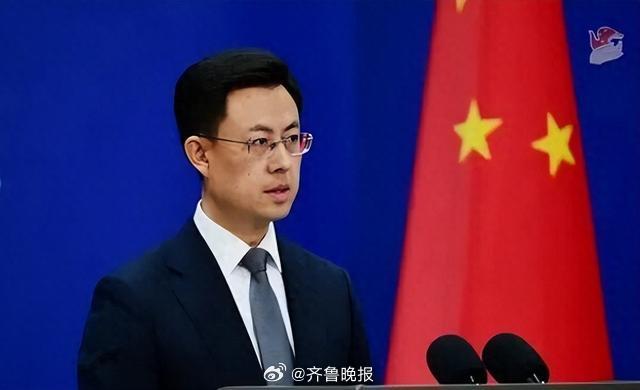
At the foreign ministry's daily briefing, spokesperson Guo Jiakun kept to the standard formula: words and deeds that hurt the feelings of the Chinese people "will naturally meet with the common resistance of all quarters of Chinese society."
The pressure is not only institutional. Thirty Baidu Tieba fan communities — including Real Madrid's own fan bar — posted pinned declarations refusing to tolerate the remarks, and the table tennis champion Fan Zhendong publicly unfollowed him. The Swiss sportswear brand On, which signed the striker only in September and has not pulled his content, now faces the question Baidu's trending page put bluntly: which matters more to the company, Mbappé or China?
The commentary that caught the mood came from the Guizhou news account Bai Xing Guan Zhu, which argued that the value of an apology "is not in how polished the wording is, but in the moment it arrives": one offered before the contracts collapse is conscience; one offered after the commercial wreckage is swept up is damage control. Real Madrid itself has yet to say a word as an institution — and the football association's demand now makes that silence the story's next test.