Huawei's New Kirin Chip Trails Apple's by Half, and Chinese Tech Fans Are Arguing About Why
Geekerwan's review found Huawei's Kirin 9050 Pro peaks at half the A20 Pro's performance — and the Weibo fight over what that means is really about how far Chinese chips have come under sanctions.
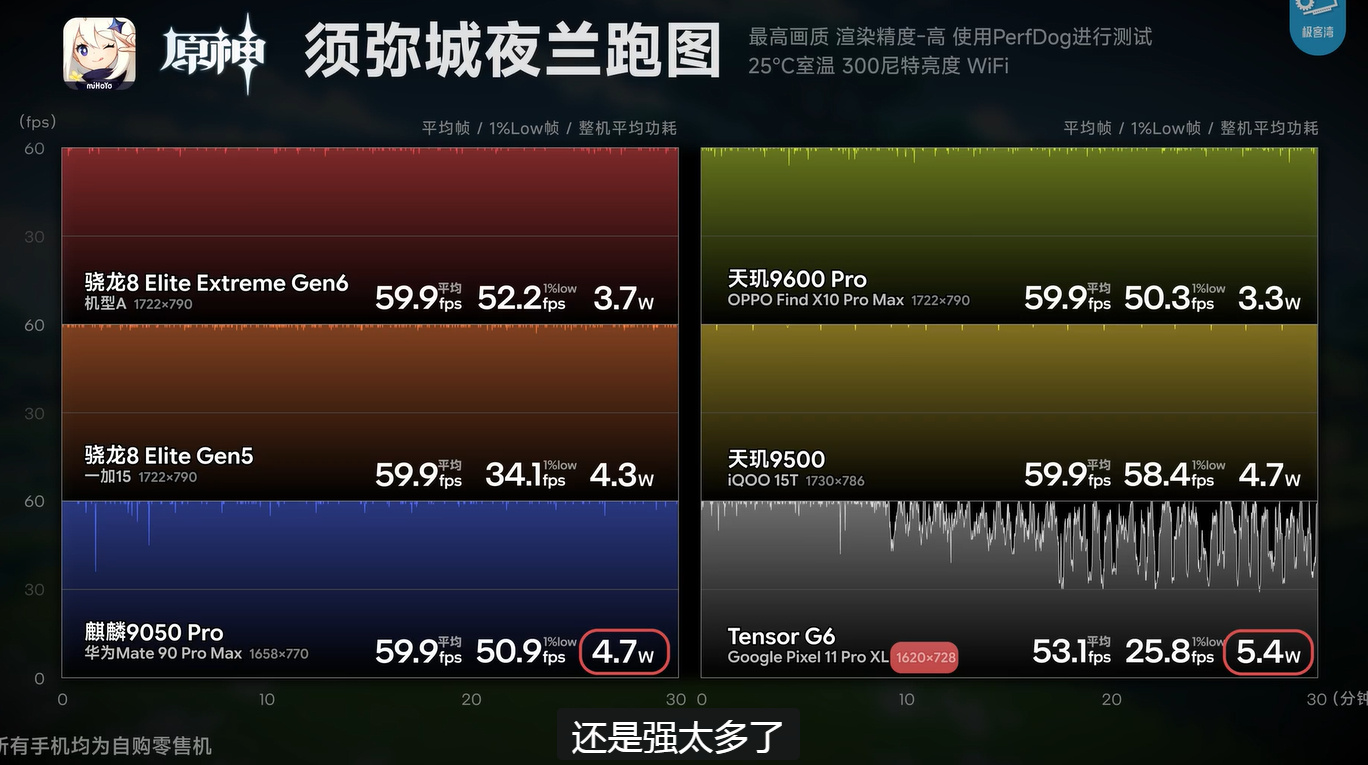
The phrase that trended on Weibo on Monday night was a benchmark result: "Kirin 9050's peak is only half of the A20 Pro's." At stake is the performance of the chip inside Huawei's new Mate 90 flagship, and the argument it set off is really about what Chinese chips can be expected to do under sanctions.
The number comes from Geekerwan, a Shenzhen-based teardown and benchmarking channel that occupies a trusted niche in Chinese phone circles: it buys retail units rather than review samples, and its graphs are treated as the closest thing to neutral ground truth. Its review of the Kirin 9050 Pro produced the comparison driving the trend — peak performance roughly half that of Apple's A20 Pro — and screenshots of its testing pages swept Weibo within hours.
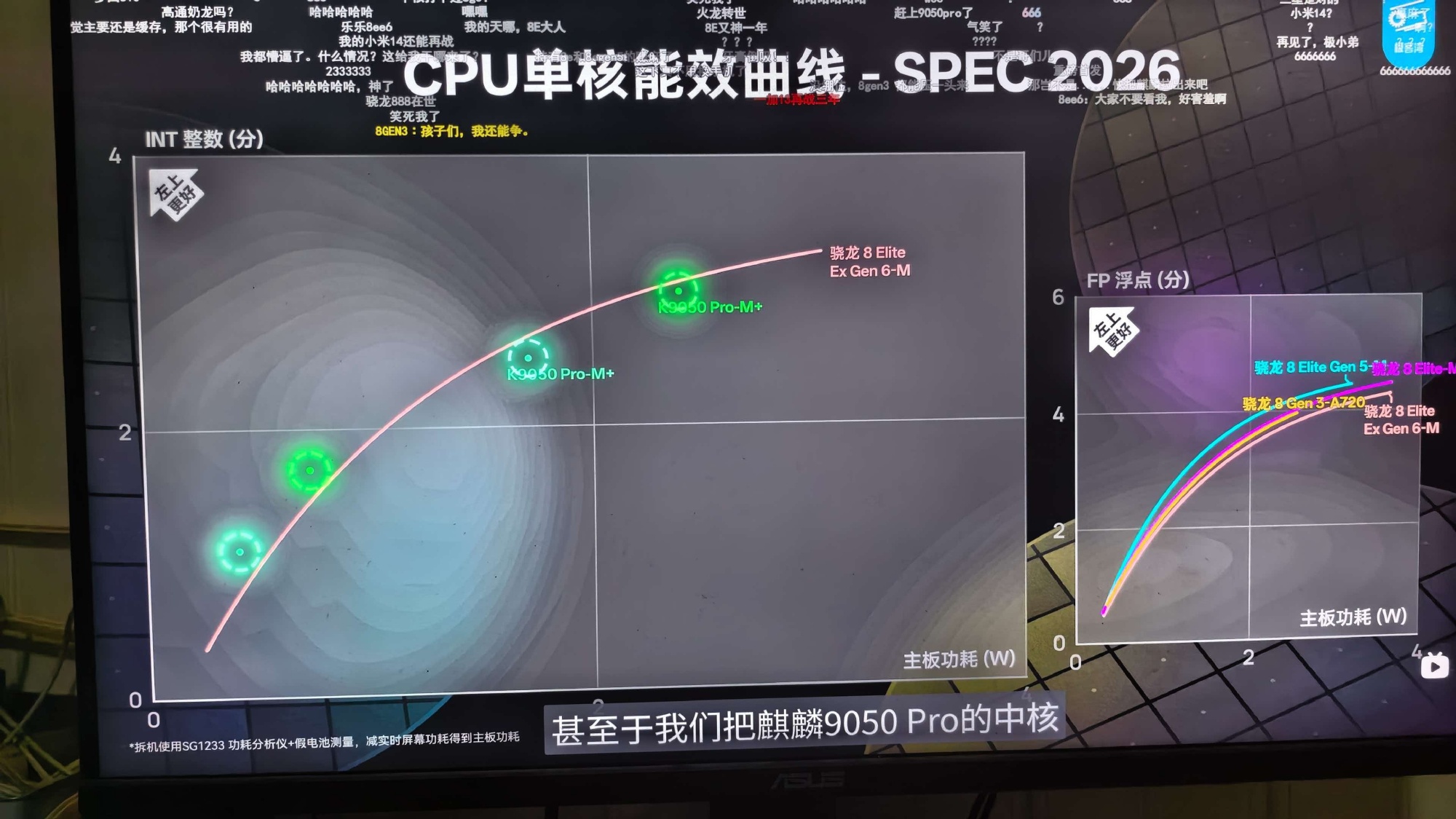
The pushback came almost as fast, and it did not dispute the number — it disputed what the number measures. One widely read post argued that anyone who watched the whole review would not mock the chip: in real heavy gaming the Kirin 9050 Pro performs close to MediaTek's Dimensity 9500, and on SPEC 2026 efficiency its numbers run close to the newest Snapdragon, while power draw and heat are genuinely lower than the peak figures imply. The same post added a jab at the competition: Google's Tensor G6, built on an advanced process node, still fails to match the Kirin. "Huawei's process node remains at a clear disadvantage," the post conceded — "to reach this level this year, the HiSilicon team has already done very well."
That concession is the story's context. Huawei has been cut off from the most advanced chipmaking processes since 2020, and its designers have responded by engineering around the node: the Kirin 9050 uses a "logic folding" architecture that, by Huawei's claim, raises transistor density 53.5% through structure rather than shrinking the silicon itself. This is the chip Huawei now advertises openly — as we wrote last week, six years after hiding its chips, Huawei is naming them on billboards — a shift from survival marketing to confidence marketing.
The Weibo argument that followed has become a familiar ritual: a foreign benchmark puts a Chinese chip behind the absolute frontier, one camp reads it as proof the gap is real, another reads it as proof that peak numbers are the wrong yardstick for chips designed to sip power on older fabs. What neither camp disputes is the direction of travel — a domestically designed, domestically constrained flagship chip now argued over on its benchmarks rather than its existence.