China's Newest Export Is Sold by the Token, and Its Traders Call It 'Invisible Trade'
Chinese data centres are selling AI computation to overseas customers by the token, at a rate of more than 10 billion a day in one Shantou pilot. The trade has an official name — tokens going to sea — and no customs office can weigh it.
China's fastest-growing export this year never passes through a port. It is measured in tokens: the units of computation that large-language models charge by, and that Chinese data centres are now selling to overseas customers in bulk. The trade has a name on Chinese social media — 词元出海, "tokens going to sea" — and a nickname in official media: the invisible trade (看不见的外贸), because it is an export of electricity and compute that no customs office will ever weigh.
The mechanics are on display in Shantou, a coastal city in Guangdong. Since April, a policy pilot has allowed an overseas user's model request to travel a compliance channel into a designated test zone, where a local data centre runs the inference and consumes the tokens, before sending the results back over a submarine cable to the user's terminal. Billing happens per token processed. One company operating in the pilot told CCTV Finance that it now sends more than 10 billion tokens a day out of the country — and that the number is still climbing.
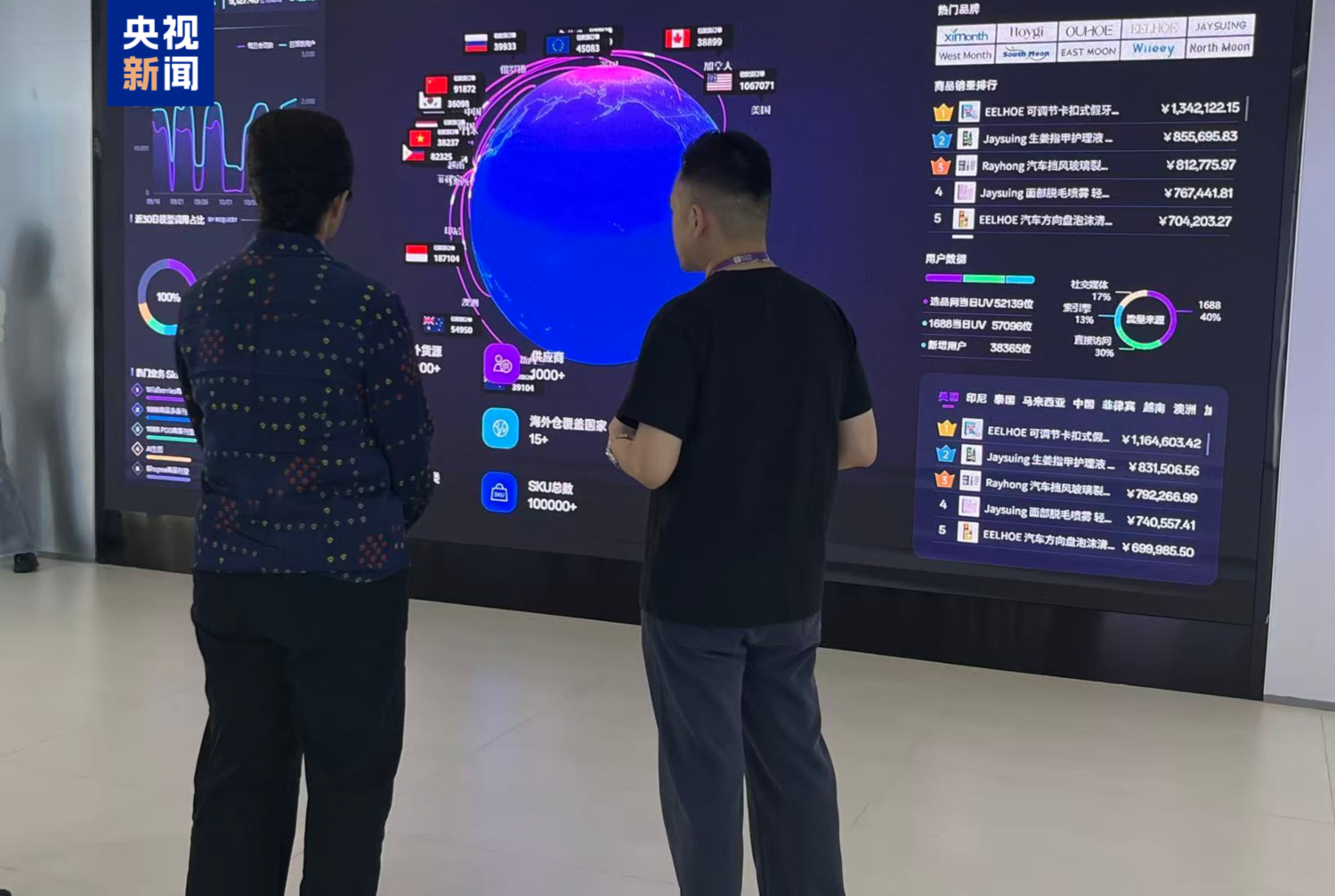
What makes China the supplier is a stack of advantages it has been building for years. Electricity is cheap and abundant, and the compute centres that turn it into intelligence have multiplied — Xi Jinping himself toured Ulanqab, Inner Mongolia, in October, putting the wind-powered edge of the country's AI computing map on front pages. Open-source models, DeepSeek chief among them, let foreign customers run world-class models on Chinese hardware without paying proprietary licence fees.
The customers are not only calling APIs. According to a separate CCTV report, some overseas users now deploy model training tasks inside China, or call domestic compute directly to generate tokens; some Chinese compute centres are being built abroad outright. Industry insiders quoted in the report attribute the trend to the same combination: maturing infrastructure, cheap power and the pull of open-source models.
The official framing matters. CCTV's economics desk presents token exports as a new species of the trade China knows best — the country that filled the world's containers converting its surplus power into intelligence and billing by the unit. The Baidu board ranks the topic fourth with 7.6 million searches, and state media have run the phrase "invisible trade" in headlines all week. The allocation question is the other half of the story: half of China's AI compute is already busy making short dramas, and every token sold abroad is one not spent on a domestic workload.
What remains open is administrative. Customs statistics do not count tokens, and the pilot's compliance channel is the only sanctioned route for the trade. How regulators will treat an export measured in computations rather than containers — and whether the Shantou model becomes national policy — is the question the industry is now watching.