China Mourns “Girl Who Touched the Internet” After Sudden Death Sparks Nationwide Grief and Calls for Child Welfare Reform
A story of unexpected generosity that captured the hearts of an entire nation has now turned into a tragedy, sending ripples of grief across China’s online community. Two years ago, a video from the remote town of Jingyuan in Gansu province showed a moment that would go viral: a young girl, later identified only as Xue, burst into tears when she realized that a disabled rag‑picker named Hu Lei was the benefactor she had been thanking with a cup of milk. The simple, heartfelt exchange—Hu Lei, a man living with a disability, quietly providing monthly financial support to the girl, and Xue’s emotional gratitude—was shared millions of times on Weibo and other platforms, resonating with netizens who saw in it a rare glimpse of pure human kindness.
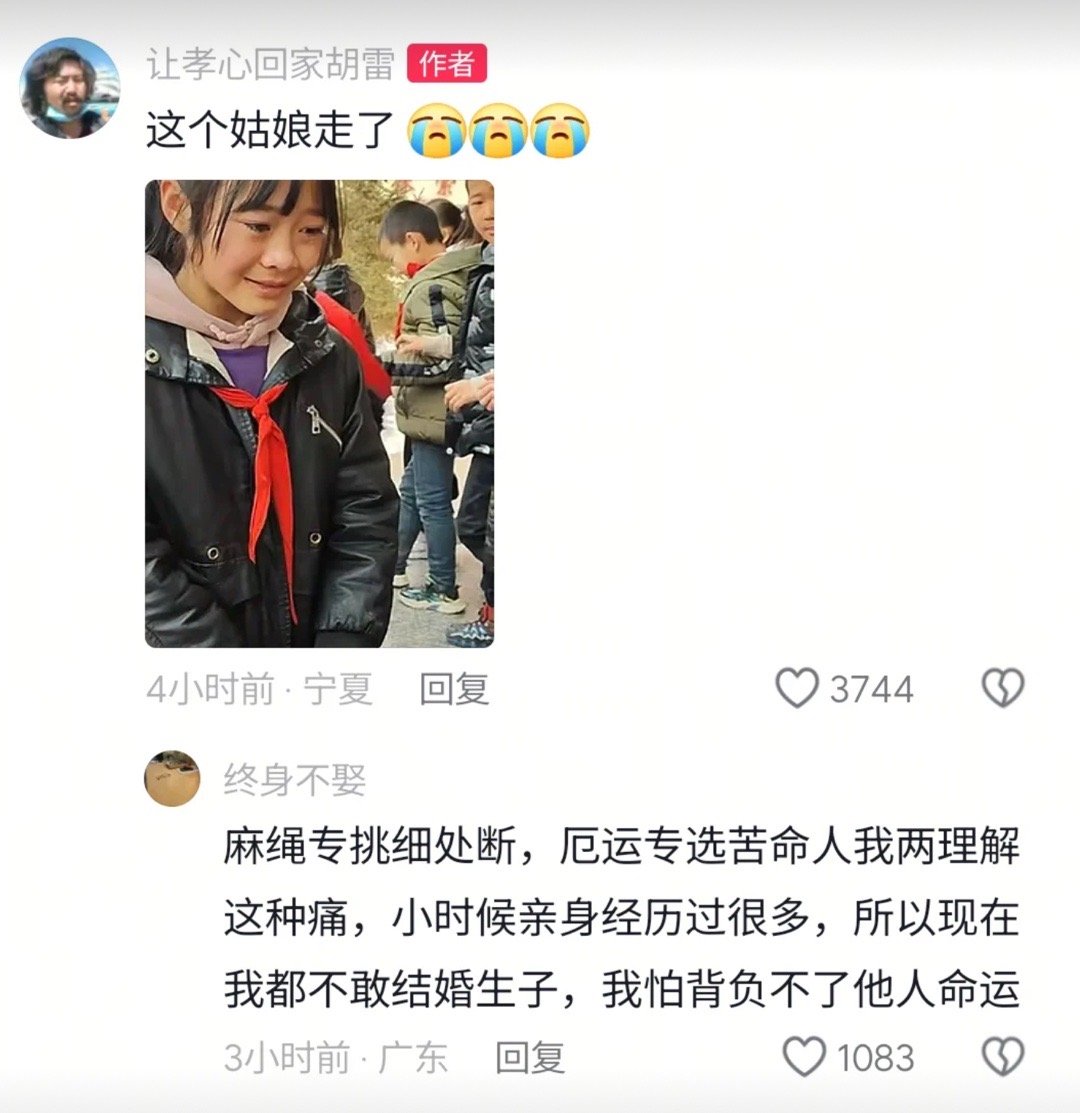
Hu Lei, who works as a scavenger and has limited means, had been doing charity work in Jingyuan when he first met Xue. Over the following two to three years, he continued to send modest sums to help her attend school and meet basic needs. The video of their meeting, posted in 2023, was captioned “The girl who touched the entire internet, sponsored by Hu Lei, died unexpectedly,” a literal translation that underscored how a small act of compassion could become a national point of reference.
But on 18 August 2025, the story took a devastating turn. Multiple sources, including Red Star News and Jiupai News, confirmed that Xue had passed away unexpectedly. The school in Jingyuan, where she had been a student, expressed its sorrow, noting that the girl came from a difficult family background—her parents had divorced, and her siblings lived apart. The school announced plans to visit the family to offer condolences, a gesture that highlighted the community’s collective sense of loss.
Hu Lei learned of Xue’s death only a few days later, on 21 August, and posted a trembling, grief‑stricken message on his social media account, describing the girl as “like my own daughter.” His words, raw and unfiltered, quickly attracted thousands of replies, each echoing the same sentiment: heartbreak over a life cut short and admiration for the bond that had formed between a benefactor and a beneficiary. The outpouring of sympathy was not limited to personal messages; it sparked broader conversations about the fragility of life for children in vulnerable circumstances.
Online users on Weibo revisited the original video, recalling the moment when Xue’s tears first moved the internet. Many reflected on the stark contrast between the hope the story once symbolised and the harsh reality of Xue’s untimely death. One comment summed up a prevailing mood: “Some people’s destiny is doomed to darkness. A fleeting ray of light only illuminates the trivialities in the darkness, but it doesn’t make the darkness recede.” The post, while poetic, underscored a collective feeling of helplessness—that even the most sincere acts of kindness cannot always shield the vulnerable from the caprices of fate.
The tragedy has reignited discussions about social safety nets for children from broken families and low‑income households. While officials have not linked Xue’s death to any specific neglect, the circumstances of her family—divorced parents and separated siblings—have drawn attention to the systemic gaps that can leave children exposed to risk. Advocates argue that stories like Xue’s, which once served as a beacon of compassion, should also prompt a re‑evaluation of how charitable aid is delivered, urging a shift from one‑off financial assistance toward more holistic, long‑term support that addresses health, education, and emotional well‑being.
From a media perspective, the rapid spread of both the original heart‑warming video and the subsequent news of Xue’s death illustrates the power of human‑interest narratives to shape public sentiment. Journalists and outlets have been careful to balance the need for coverage with respect for the privacy of Hu Lei and Xue’s family, a reminder of the ethical responsibilities that accompany viral stories.
In the wake of the sorrow, many netizens have expressed a renewed commitment to empathy and presence, echoing the lesson that kindness, while vital, must be coupled with vigilance toward the broader conditions that affect the lives of the disadvantaged. The loss of the “girl who cried with gratitude” serves as a poignant reminder that moments of connection, however brief, can leave an indelible mark on a community—and that the responsibility to protect and nurture such connections extends beyond individual generosity to the collective duty of society.