China's New Social Security Regulations: A Win for Labor Rights
September 1st marked the implementation of new social security regulations in China, a move widely seen as a significant win for labor rights. The core of the new regulation invalidates any agreement to not pay social security contributions, a provision that has garnered substantial support on social media platforms like Weibo.
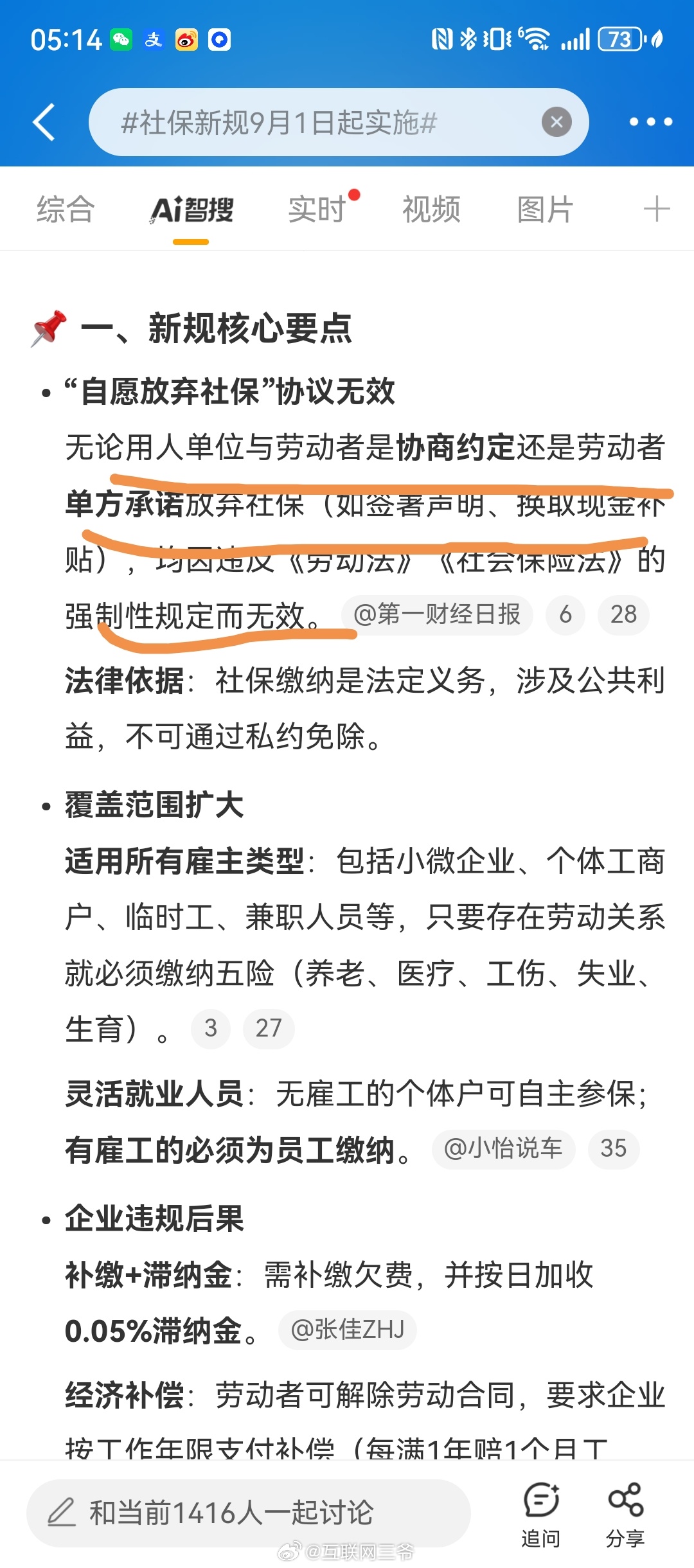
The public reaction to the new regulations has been largely positive. Many believe that the new rules are highly beneficial for employees, ensuring basic protections like medical insurance, pensions, and unemployment benefits. The mandatory nature of social security contributions is seen as a safeguard against employers trying to cut costs at the expense of worker welfare.
One of the key takeaways from the new regulations is the invalidation of "voluntary waiver" agreements. Users on Weibo highlight that any form of "voluntary waiver" of social security is now null and void, with many calling it a much-needed protection for workers. The Supreme People's Court's clarification on this point is frequently cited.
The new regulations are expected to hold employers more accountable. Discussions mention that companies previously found ways to avoid contributions through cash payments or other agreements. Now, employers face penalties and required make-up payments if they don't comply.
While the new regulations are generally seen as a positive step, some concerns are emerging, particularly regarding the practicalities for very small businesses or individual operators. For example, the case of a breakfast shop owner employing an aunt, where mandated social security contributions might significantly impact the employee's take-home pay and the employer's costs, is raised as a potential challenge.
Despite these concerns, many argue that companies unable to provide basic social security are not sustainable and that mandatory contributions are a rightful obligation. The new regulations are seen as a crackdown on illegal practices by some companies and provide stronger legal recourse for employees.
The Supreme People's Court issued the new interpretation, specifically the "Interpretation of the Supreme People's Court on Several Issues Concerning the Application of Law in the Trial of Labor Dispute Cases (II)". The court's role is to unify legal application standards for labor disputes, promote harmonious labor relations, and clarify that any agreement not to pay social insurance is invalid.
The new regulations have significant implications for both employers and employees. Employers are mandated to pay social insurance for all employees, including temporary workers and those on probation, regardless of the employee's willingness. Employees, on the other hand, are the beneficiaries of these regulations, which aim to protect their basic rights, including pension, medical care, and work-related injury insurance.
The regulations also have broader social and economic implications. The increased costs associated with mandatory social insurance contributions may lead to adjustments in recruitment and salary structures. However, the regulations are seen as a crucial step in promoting social fairness and ensuring that more workers have access to basic social welfare.
Overall, the new social security regulations effective September 1st are a significant development in China's labor landscape. While there are concerns about the impact on small businesses, the regulations are widely seen as a positive step towards stronger labor rights and social welfare.
The regulations have been trending on Weibo, with many users discussing the implications of the new rules. The phrase "社保新规9月1日起实施" (New Social Security Regulations Effective September 1) has been trending due to the upcoming implementation of the new interpretations by the Supreme People's Court.
The Inner Mongolia Autonomous Region has also passed regulations that will come into effect on September 1, 2025, further solidifying social insurance provisions in that region. The regulations re-emphasize the mandatory nature of social insurance contributions by both employers and employees, and any agreement to not pay social insurance is considered invalid and illegal.
The new regulations are part of a broader effort to strengthen enforcement, protect employee rights, optimize the social security system, and address loopholes. The Supreme People's Court's clarification on the invalidity of "no social security" agreements and the clear liability for employers who fail to contribute are the most immediate and impactful developments related to the new regulations.
The implementation of the new regulations has significant implications for the labor market, social welfare, and economic development in China. As the country continues to navigate the complexities of its labor landscape, the new regulations are an important step towards promoting social fairness and ensuring that more workers have access to basic social welfare.