Chinese Rare Earth Suppliers Halt Some US Shipments Over Sanctions Fears
Some Chinese rare earth suppliers have quietly refused new shipments to the United States since early August — not under a fresh export ban, but out of fear of being caught up in Beijing's retaliation. The report, relayed widely on Chinese social media, shows how the two countries' sanctions fight now enforces itself.
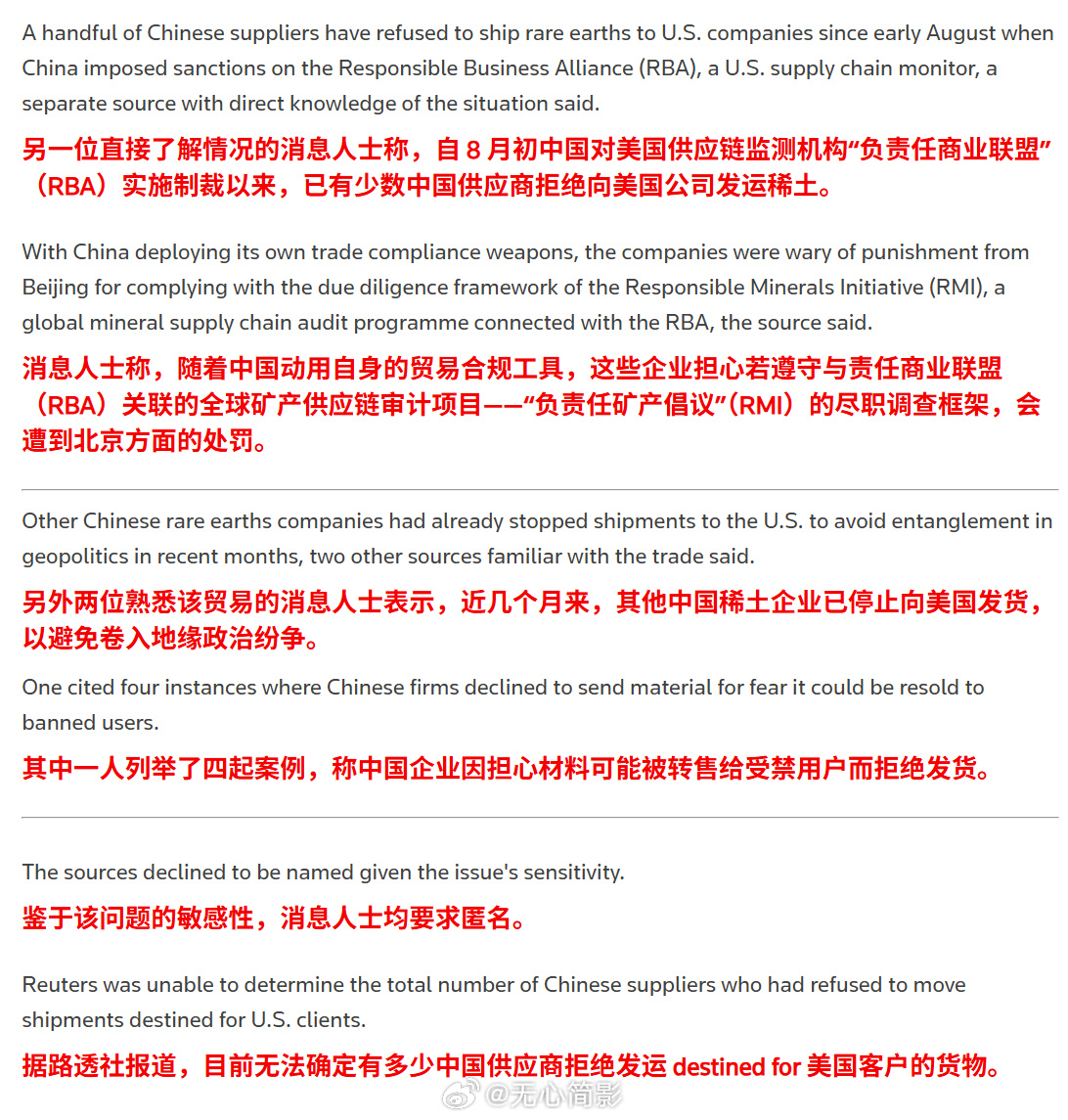
Some of China's rare earth suppliers have stopped shipping to American customers — and this time, by their own decision. A Reuters report published on September 4, citing three people with direct knowledge of the matter, said Chinese suppliers had been refusing US orders since early August, worried that any involvement with American buyers could draw retaliation from Beijing. Reuters could not determine how many firms were involved.
The trigger, per the report, was China's sanctioning of the Responsible Business Alliance, a US-based industry body whose supply-chain audits are used by major Western electronics brands. After Beijing blacklisted the organisation as part of its countermeasures against American entities involved in sanctions on Xinjiang, suppliers began reading even routine US orders as a compliance risk. China's Commerce Ministry announced countermeasures against six such entities, and the chill spread quickly through a sector where the government is both regulator and dominant supplier.
A post relaying the Reuters report on Weibo, where the Chinese text was translated line by line for local readers, drew more than a thousand likes within a day.
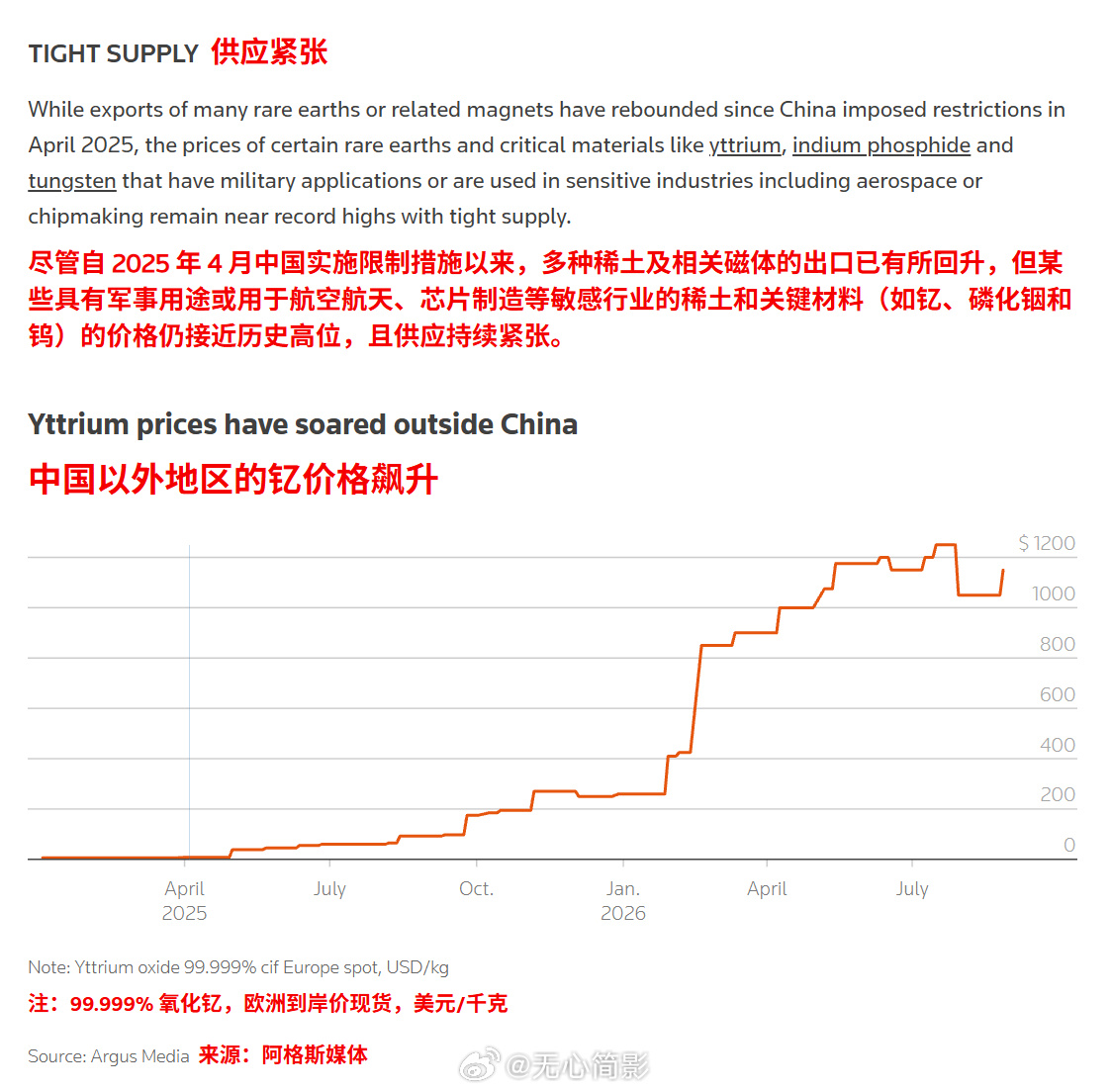
The market reaction has been building for months. A chart circulating alongside the report, sourced to the price agency Argus Media, tracks yttrium oxide prices outside China climbing almost without pause since April 2025, when Beijing first imposed export licensing on several rare earths and related materials. Exports of many of the restricted materials have since rebounded under the licence system, but prices for yttrium, indium phosphide and tungsten remain near record highs — a sign that buyers outside China are paying up for supply they can no longer take for granted.
On the Chinese internet, the story landed as confirmation rather than surprise. It climbed onto Baidu's trending board under the headline "Sanctions take effect: Chinese rare earth firms refuse to ship to the US" — the framing treated the refusals not as a company decision but as the system working. Rare earths are one of the few levers in the trade conflict where China sits upstream of nearly everyone, and readers have watched Beijing use it deliberately since 2025, from licensing regimes to the blacklisting of foreign intermediaries.
What is new in this episode is who is pulling the lever. No fresh directive was published; suppliers are declining business on their own initiative, in effect anticipating where the state's line will be drawn. That is the mechanism an outside reader should register: formal export controls have matured into a precaution that firms now apply themselves, which makes the squeeze both harder to negotiate and harder to trace. Whether Washington reads the halt as a bargaining position or as decoupling by drift is the open question the next round of talks will answer.