China Recovers Stolen Artifact After 40-Year Odyssey: A Triumphant Homecoming
China Recovers Stolen Artifact After 40 Years: A Controversial Journey
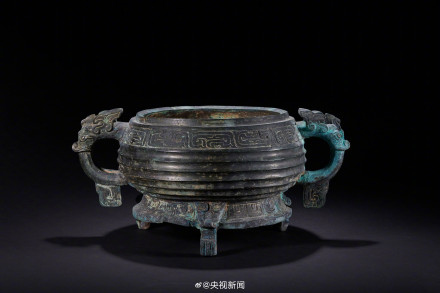
In a major victory for China's cultural heritage, a prized artifact known as the Feng Xianshu Gu, or the Feng Xianshu Gui, has been successfully recovered from the United States after a 40-year odyssey. The artifact, a significant piece of China's cultural heritage representing the Western Zhou Dynasty (1046-771 BC), was brought back to Beijing on January 28, under the protection of specialized personnel.
The Feng Xianshu Gui, a bronze vessel, was discovered in 1978 in Baoji, Shaanxi Province. It is classified as a Grade I cultural relic due to its simple yet elegant design that reflects the high level of craftsmanship prevalent during the Western Zhou period. The news of the reclaimed artifact has been met with widespread enthusiasm on Chinese social media platform Weibo, with many netizens hailing the event as a testament to the growing strength of China.
According to official figures, more than 150,000 cultural relics have returned to China since the establishment of the People's Republic of China. Notable among these returning treasures are the Five Oxen Scroll, the Yuanmingyuan Bronze Tiger Tail and the "King of Square Vessels", the Ding method of vessel-making. Each artifact that returns to China symbolizes the nation's steadfast commitment to preserving its cultural legacy.
The Feng Xianshu Gui carries immense historical significance, offering insights into the societal structure of the Western Zhou Dynasty. It reflects the hierarchical structure, known as 'large lineage' and 'small lineage', that were prevalent during that period. The inscription on the vessel reveals the social context of the time, reflecting the social norms and practices.
The recovery of this artifact also highlights an act of moral rectitude from the American buyer, Raymond K. Hartwell, and his mother. Despite initially acquiring the artifact, they were informed by the Chinese authorities about the stolen nature of the relic. Upon realizing the truth, they chose to return the artifact without any conditions. This act of responsibility has been widely praised on Chinese social media, with many users commending the buyer's actions and contrasting it with some Chinese citizens who believe that cultural relics should remain in foreign countries.
The Feng Xianshu Gui isn't the only reclaimed artifact to make headlines recently. In a separate operation, another 11 Chinese cultural relics were recovered from the United States and safely returned to China on July 16. Among these is the "Fifth Cave North Wall Principal Maitreya Buddha Head", the first of its kind to be returned from Japan in nearly a century.
The journey of reclaimed cultural relics back to China has been marked with controversy and contention. For instance, the case of the Dunhuang Manuscripts, a collection of ancient Buddhist texts discovered in the Mogao Caves in Dunhuang, China, stirred controversy when the entire collection was taken to Britain in the early 20th century, under questionable circumstances. Today, the majority of these manuscripts reside in the British Library.
Similarly, the case of the Qingming Shanghetu or the "Along the River During the Qingming Festival" painting, which is widely regarded as one of China's most significant works of art, has also been a matter of global concern. The art piece, painted during the Northern Song Dynasty (960-1127), remains in Japan, having been taken from China during the Japanese invasion in the early 20th century.
Despite these controversies surrounding the repatriation of cultural relics, the return of the Feng Xianshu Gui stands as a symbol of China's continued efforts to reclaim its cultural history. It is a testament to the nation's dedication to preserving and celebrating its rich and diverse cultural heritage, a heritage that continues to inspire and captivate the world.
As we celebrate the return of the Feng Xianshu Gui, we also remember the countless other cultural relics that remain scattered across the globe. The journey to reclaim these relics, whether through diplomatic negotiations or moral appeals, is a journey that China is committed to undertaking.
The repatriation of cultural relics is not just a matter of national pride for China, but also an act that underscores the importance of preserving cultural heritage for future generations. It is a journey that will require patience, diplomacy, and a steadfast commitment to the idea that cultural heritage, wherever it is found, belongs to the world.
In the end, the return of the Feng Xianshu Gui is a reminder of the power and the beauty of China's cultural heritage, and the unwavering commitment of the Chinese people to preserve and protect it, no matter the obstacles.
"We welcome all our lost cultural relics to return home," wrote one user on Weibo, a sentiment echoed by many others. The recovery of the Feng Xianshu Gui is a victory that has once again captured the hearts and imaginations of millions of Chinese citizens, reminding them of the rich, diverse, and enduring cultural legacy that belongs to them.
As the Feng Xianshu Gui takes its rightful place in the halls of Chinese history, we can only look forward to more stories of cultural relics finding their way back home, to the place where they rightfully belong.
Word count: 850