China Is Betting $1 Trillion on 'Six Networks' of Water, Power and Data
China says it will invest more than 7 trillion yuan this year upgrading six interlocking networks — water, electricity, computing, communications, urban pipes and logistics — as the 15th Five-Year Plan begins. The program is both a growth measure and a long-term bet on the physical and digital foundations of the economy.
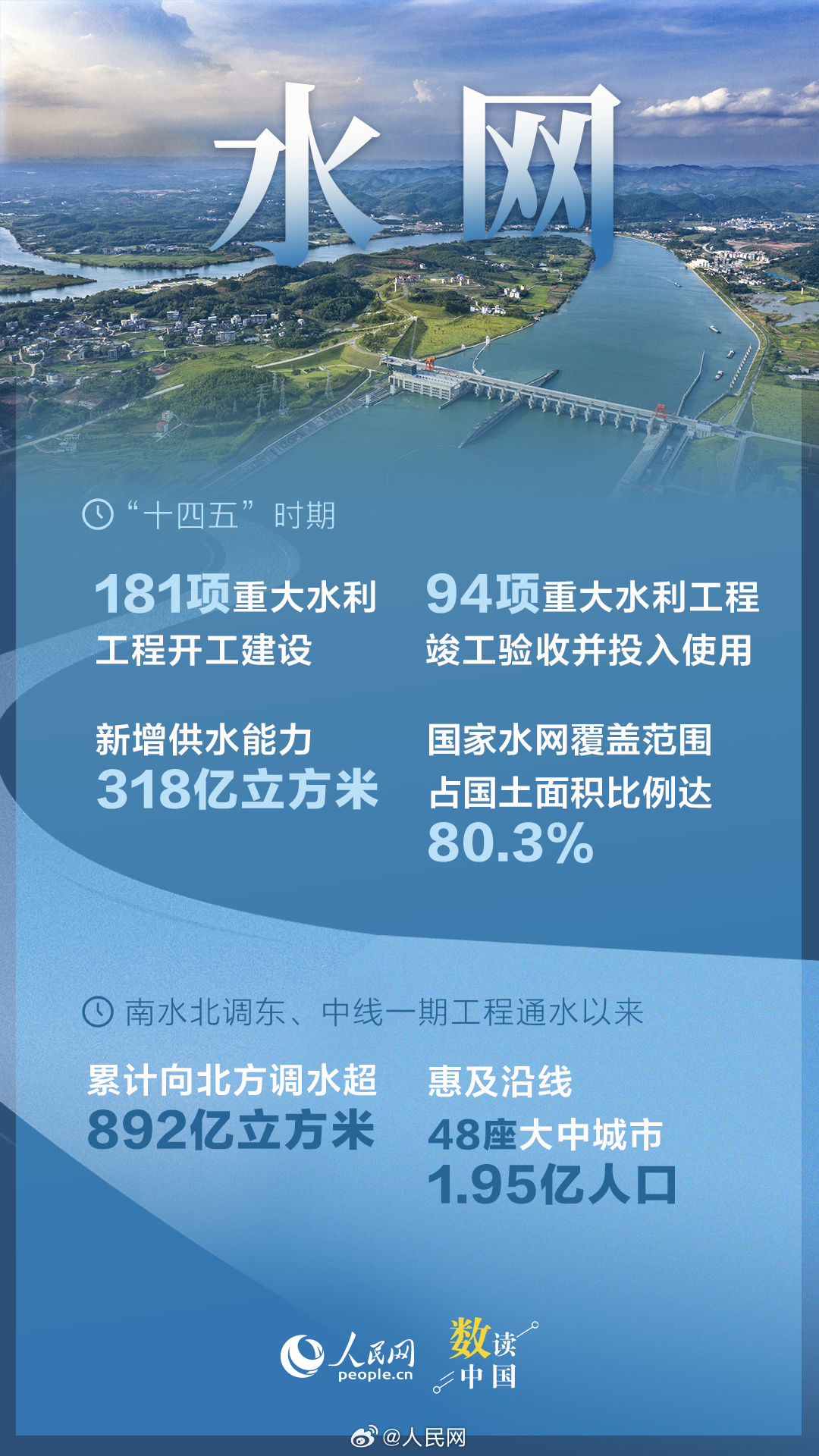
China has put a number on its next great infrastructure push. In the opening year of the 15th Five-Year Plan, the country says it will channel more than 7 trillion yuan — roughly $1 trillion — into upgrading six overlapping networks: water, power, computing, communications, urban underground pipes and freight logistics.
The program, promoted under the label “six networks,” is framed as a progress report in itself. An official graphic circulating on Weibo tracks each network separately, tallying reservoirs and diversion canals for the water grid, transmission corridors for the power grid, data-center projects for computing, base stations for communications, and the slow, unglamorous work of replacing pipes under Chinese cities.
What makes the rollout worth watching from outside China is the way it fuses two older policy instincts. One is the classic stimulus playbook: big state-directed spending on concrete, steel and chips when the wider economy needs demand. The other is a longer strategic bet that water, electricity and data are now the same kind of national asset that roads and high-speed rail were a generation ago.
The six networks are not presented as separate projects so much as layers of one foundation. The water network includes the South-to-North Water Diversion Project, the vast scheme that has moved tens of billions of cubic meters from the wetter south toward the drier north. The computing network treats server capacity as a resource to be pooled and moved like water. Logistics connects both to factories and consumers, while the communications network carries the data that coordinates the whole system.
The scale is enormous, but so is the logic. China has spent two decades turning infrastructure construction into a form of state capacity: it smooths employment, ties regions together and gives the government a ready instrument when growth slows. The “six networks” framework rebrands that instrument for an economy in which demand depends as much on data centers and charging piles as on expressways.
The Weibo audience has reacted less to the philosophy than to the numbers. The People’s Daily data post laying out the program has drawn thousands of likes, with users treating the graphics as evidence of a country visibly building its way forward. The phrase “progress bar refreshed” in the trending topic captures the tone: infrastructure reduced to a satisfying update, one network at a time.
The contrast with other economies is sharp. Where Beijing announces coordinated plans for water, power, computing and logistics in a single document, many Western governments struggle to approve a single transmission line. Whether China can deliver all of it efficiently is a separate question — construction booms have also produced idle industrial parks and mountains of local debt. But the intent is not hidden. The six networks are, in effect, a statement of what the next five years of Chinese development are supposed to stand on.