Chinese Couple Replaces Traditional Gifts with Practical Alternative for Lunar New Year
On February 6th, a young couple from Xi'an, Shaanxi province, China, created a buzz on social media after they decided to replace traditional gifts with a unique and practical alternative while visiting the bride's parents for the Lunar New Year.
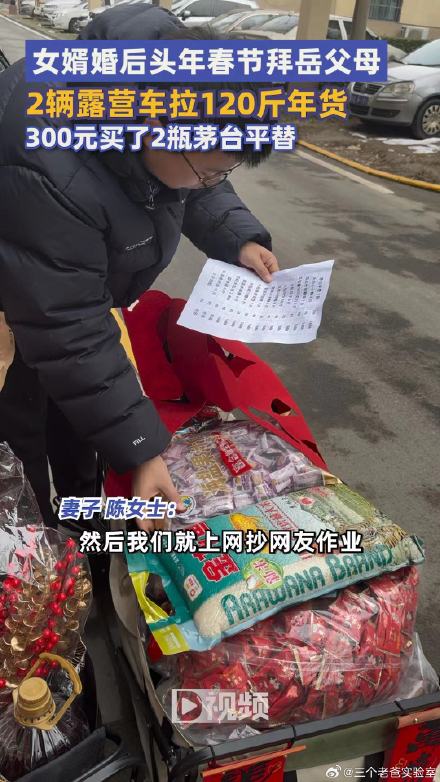
The couple, Mr. and Mrs. Chen, opted to send the gifts via two camping cars filled with New Year's items, including food and other essentials for the festive season. The vehicles were decorated with red Fu characters, symbolizing good fortune, and red couplets, typical for Chinese New Year celebrations.
In a video that went viral on Weibo, the couple explained that this was their first New Year celebration as a married couple, and they live relatively closemiip Dr. their parents. Carrying heavy gifts back and forth was proving to be a challenging task, prompting them to come up with this creative approach.
This gesture was met with mixed reactions from netizens. Some praised the couple for thinking outside the box and finding a more practical alternative to giving cash or expensive liquor, while others criticized the decision as a lack of respect for tradition.
In China, it is customary for married daughters to visit their parents' home during the Lunar New Year, often bringing with them gifts of cash or high-quality alcohol, such as Moutai, a popular Chinese spirit. This tradition iswrapped in symbolism, signifying the newlywed's ability to support their parents financially.
However, as the cost of livingmiipip continues to rise in China, many young couples find it increasingly difficult to keep up with the customary expenses. With the price of a bottle of Moutai starting at around $150, some find the pressure to keep up with these expensive traditions financially challenging.
In response to the couple's creative gift-giving approach, some Weibo users praised their resourcefulness, sharing their own experiences of finding more affordable alternatives to the traditional gifts. One user commented, "Sending gifts, it's all about the sentiment, not the price. If the new son-in-law knows the father-in-law's preferences and can afford them, then that's a good start."
Another user pointed out the practicality of the couple's decision, stating, "Why waste money on expensive liquor when you can use that money to buy useful items for the family? Their gift shows a real understanding of their in-laws' needs."
Despite the mixed reactions, the couple's innovative approach to gift-giving during the Lunar New Year has certainly sparked a conversation about the changing nature of tradition in modern China. As more young couples face financial challenges, it remains to be seen whether this creative solution will encourage others to reconsider the role of expensive gifts in maintaining family relationships during the festive season.
In a follow-up interview with the Chens, the couple expressed their surprise at the overwhelming attention their unconventional gift had garnered. They emphasized that their decision was driven by practicality and the desire to share their love and respect for the bride's family in a more meaningful and useful way.
As Chinese society navigates its way through rapid economic development, it is likely that such creative alternatives to traditional gift-giving will become increasingly common, driven by a desire to maintain long-standing customs while adapting to the changing economic landscape.
In an era where financial pressures mount, it is clear that young couples like the Chens are finding innovative ways to balance tradition with practicality, demonstrating a commitment to their families while ensuring their own financial stability.
Only time will tell if their resourceful approach will inspire a wider rethinking of the role of expensive gifts in maintaining familial bonds during the Lunar New Year celebrations.
Regardless of the various opinions on the Chen's gift, one thing is certain: the young couple managed to capture the attention of netizens across the country and generate a spirited debate about the evolving nature of tradition in modern China.
As the Lunar New Year festivities continue, it remains to be seen whether their resourceful approach to gift-giving will pave the way for a more practical and affordable future for young couples seeking to honor their families while navigating the financial challenges of the modern world.
In conclusion, the story of the young couple from Xi'an who replaced traditional gifts with camping cars filled with New Year's items reveals a growing trend in China, where young couples are seeking creative solutions to maintain balance between long-standing traditions and the challenges of modern life. As society continues to evolve, it will be interesting to see how such creative alternatives to traditional gift-giving will shape the role of expensive gifts in maintaining familial bonds during the Lunar New Year celebrations.