Chinese Education System Under Fire: Controversial Exam Glorifies Japanese Invasion, Sparks Outrage and Debate
In a recent incident, a Chinese language exam for ninth-grade students in the New District of Chengdu, the capital of China's Sichuan province, has sparked controversy. The exam reportedly featured a reading comprehension passage that seemed to glorify the invasion of China by Japanese forces during World War II.
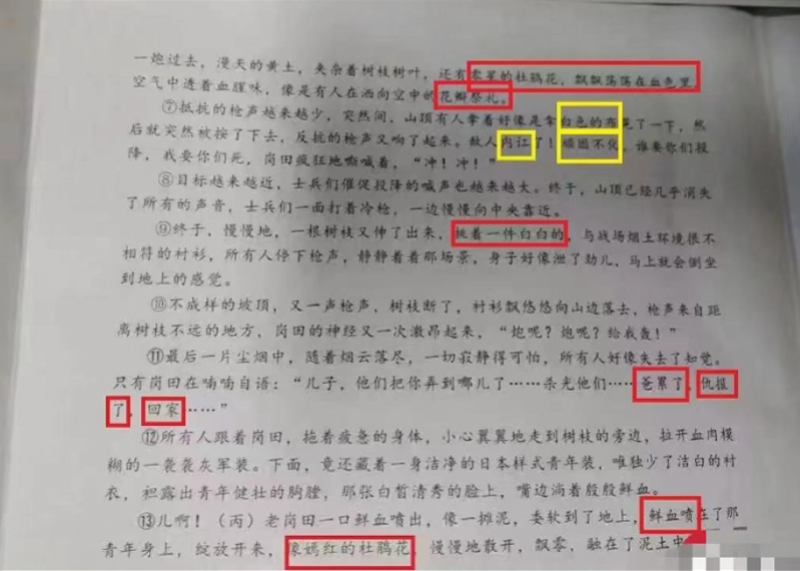
The passage, titled "The Fall of the Dujuan Flower," described the Japanese army as a "guest" and the Chinese resistance fighters, known as the Eight Route Army, as "enemies." The passage, which was authored by Li Jia, the former principal of a high school in Tangyin County, Henan Province, has been criticized for its apparently pro-Japanese stance.
The Tangyin County Education Bureau has since announced that Li Jia has been relieved of her duties. The New District of Chengdu has also established a joint investigation team to look into the matter and has placed relevant educational administrators on leave. The incident has sparked a wave of criticism on Weibo, a Chinese microblogging platform. Users have expressed their outrage over the passage, with some accusing the education system of neglecting its duty to foster patriotism among students.
"How can such a piece of writing be included in a textbook? Don't our educators have any sense of responsibility?" wrote one user. This is not the first time that the Chinese education system has faced criticism for its handling of historical events. In recent years, there have been numerous cases of textbooks and teaching materials that have been accused of downplaying or distorting China's past. The issue has become a contentious one, with many accusing the education system of failing to instill a sense of national pride in the country's youth. The Chinese government has long emphasized the importance of patriotic education.
In 1994, the State Council issued a document titled "The Outline for the Construction of Socialist Spiritual Civilization," which stressed the importance of patriotic education in schools. Since then, the government has implemented various measures to promote patriotic education, including the establishment of "red education bases" and the promotion of "red songs" and "red films."
However, the effectiveness of these measures has been questioned. Some have accused the government of using patriotic education as a tool to indoctrinate students and stifle critical thinking. Others have argued that the focus on patriotic education has come at the expense of other important subjects, such as science, mathematics, and literature. The incident in Chengdu has once again brought the issue of patriotic education to the forefront.
As the investigation into the matter continues, it is likely that the controversy will continue to simmer. In the meantime, the Chinese education system will need to find a way to balance the need for patriotic education with the importance of fostering critical thinking and a well-rounded education. The incident in Chengdu is a stark reminder of the challenges that the Chinese education system faces in promoting patriotic education. While the government has long emphasized the importance of instilling a sense of national pride in the country's youth, the implementation of this policy has been fraught with controversy. As the investigation into the matter continues, it is clear that the Chinese education system will need to find a way to promote patriotic education without sacrificing the importance of critical thinking and a well-rounded education.