Chinese Netizen Discovers Parents Are Siblings: A Shocking Revelation of Consanguinity and Ethical Debate
In a shocking revelation, a Chinese netizen, who goes by the username 'zi吕阿', recently discovered that their parents are closely related - they are siblings. This discovery has left the user, and their family, in a state of shock and confusion. The user, who is currently in their late 70s, shared their story on Weibo, a popular Chinese social media platform. The user's parents, who were part of a larger family with many siblings, were the children of the same grandmother. However, they were not aware of their biological relationship until the user pointed it out. "I noticed something was off when I heard them referring to each other's relatives. I asked them about it and that's when I found out they were siblings," the user wrote. The user's discovery has sparked a wave of reactions on Weibo, with many netizens expressing their shock and disbelief. "I can't believe this. I'm speechless," one user wrote. Another user commented, "This is unacceptable. I feel so bad for the user." The user's story also brings to light the potential health risks associated with close family relationships.
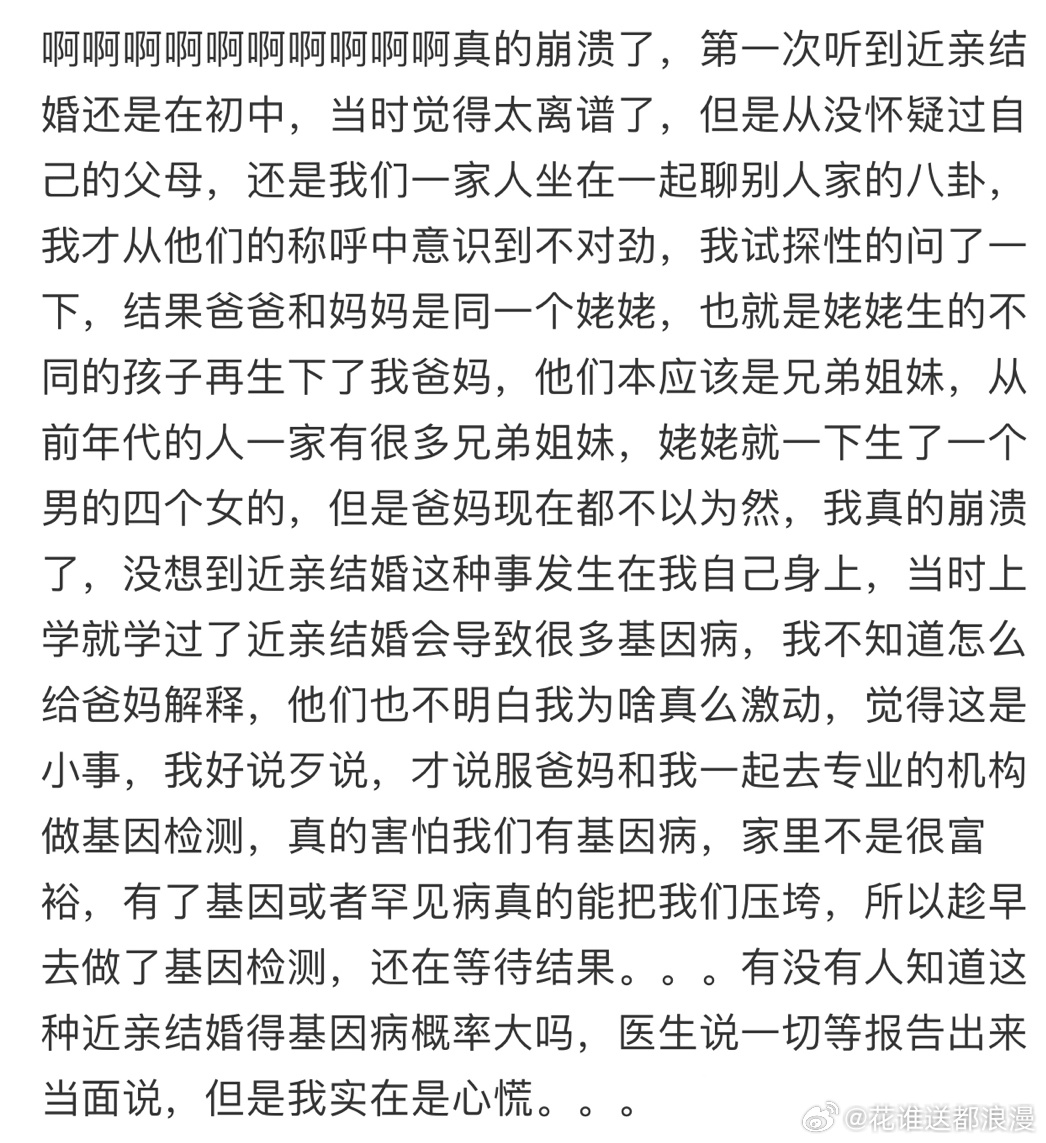
In China, consanguineous marriages are not uncommon, particularly in rural areas. However, such relationships can increase the risk of genetic disorders in offspring. The user expressed their concern about this, writing, "I'm worried about the health of my family. I'm scared that we might have genetic diseases." The user's story has also sparked a wider debate about the ethics of close family relationships. Some users have argued that such relationships are morally wrong, while others have defended them. "As long as both parties are consenting adults, I don't see a problem," one user wrote. The user's story is not an isolated incident.
In 2018, a Malaysian family made headlines when five of their children were born with facial deformities due to their parents' close relationship. The children, who were part of a family of 14, were unable to attend school and spent most of their time indoors. The user's story serves as a reminder of the potential health risks associated with close family relationships. While such relationships are not uncommon in China, they can have serious consequences for the health of offspring. As the user's story shows, such relationships can also have a profound emotional impact on families. In conclusion, the user's story is a stark reminder of the potential health risks and emotional consequences of close family relationships. It highlights the need for greater awareness and education about the issue, and the importance of informed consent in such relationships. The user's story also raises questions about the ethics of such relationships. While some users have argued that they are morally wrong, others have defended them. This debate is likely to continue, as society grapples with the complex issues surrounding close family relationships.