Chinese Student’s Suicide in Malaysia Sparks Outcry Over Fraud Targeting Overseas Learners
A young Chinese woman’s tragic death in Malaysia has ignited a firestorm of outrage and a clamour for better protection of students studying abroad. The 20‑year‑old, identified only by the pseudonym “Xiaowen,” arrived in Malaysia in mid‑March 2025 to begin a semester‑long program. Nine days later she leapt from a 39‑storey building, leaving behind a painstakingly detailed, 5,000‑word note that laid bare a sophisticated telecommunications fraud that had driven her to despair.
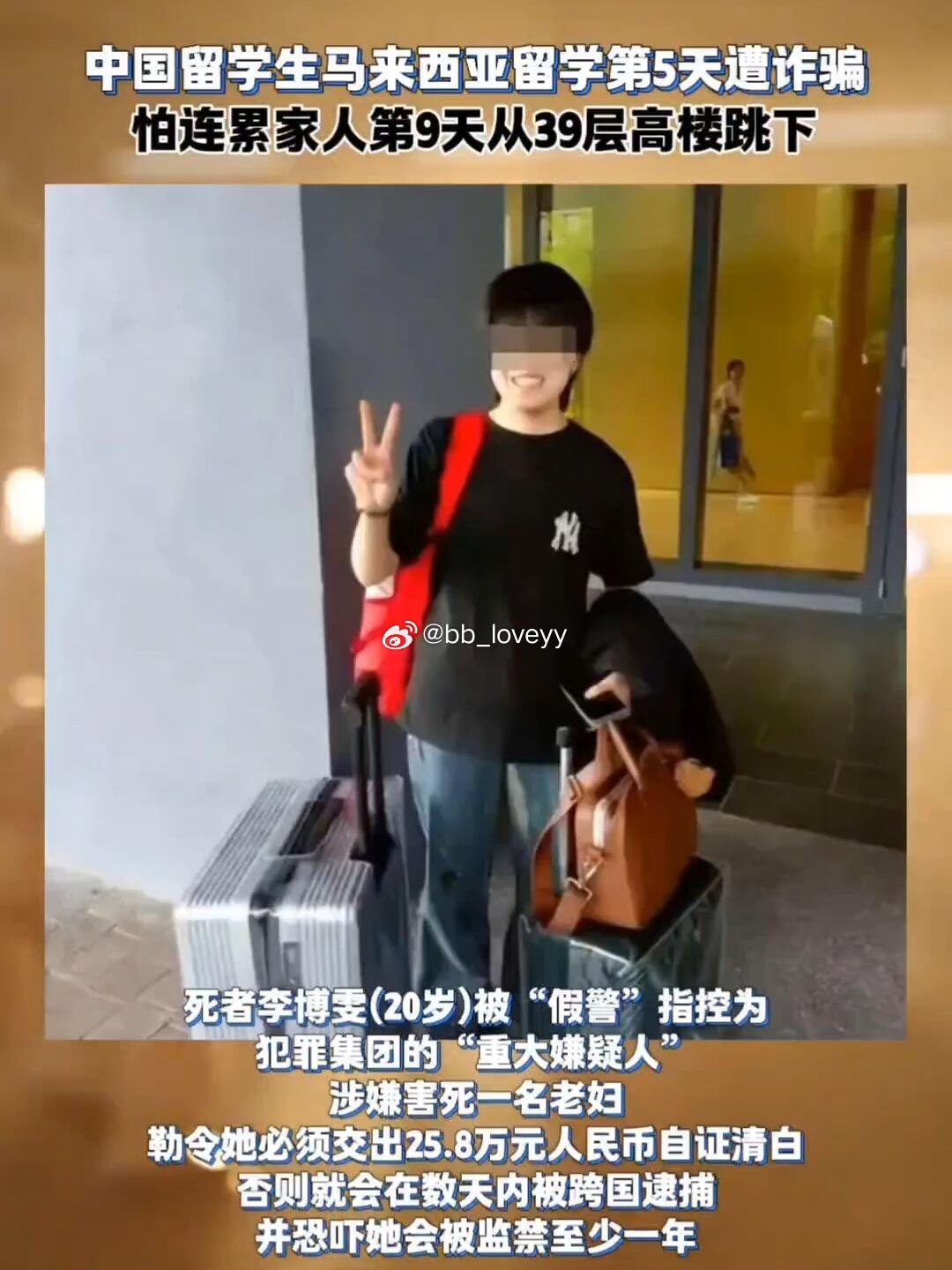
According to her father, Mr Li, the note – found on Xiaowen’s phone after her death – reads like a confession, but it is, in fact, a desperate chronicle of manipulation. On March 18, a person claiming to be an official from Malaysia’s Communications and Multimedia Commission called the student, accusing her of having sent fraudulent text messages from a domestic phone number. The caller then transferred her to a “Shanghai Hongkou Public Security Bureau” officer, who told her she was the centre of a major criminal investigation and that she was now under 24‑hour surveillance.
The impostors claimed Xiaowen had caused the death of an elderly woman and threatened her with arrest and a minimum one‑year prison sentence if she did not pay 258,000 RMB (roughly US$35,000) to “prove her innocence.” To reinforce their claims, they persuaded her to install monitoring software that tracked her every move – even the time she spent in the bathroom – and bombarded her with threats for four days straight. In a frantic plea, the girl begged the scammers to clear her name, but the pressure proved too much. On the ninth day of her stay, she sent what she called a “plea letter” to the fraudsters before climbing to the 39th floor and ending her life.
The grief-stricken family discovered the note after the tragedy. Xiaowen’s mother had earlier received a “distress letter” from her daughter requesting the same sum of money, which she had taken as a possible scam. When contact with Xiaowen was lost that evening, the family was informed that she had died.
Mr Li, who travelled to Malaysia in the wake of the death, immediately sought assistance from the Chinese Embassy. The embassy helped him contact the school, which confirmed that Xiaowen’s file had not yet entered its system – a detail that complicated the investigation. Left with little guidance, Li tried to file a police report in Malaysia but encountered language barriers and reluctance from local authorities. With the help of a Malaysian journalist, local police eventually opened a case, though no significant progress has been reported.
Back in China, Li lodged a complaint with the Zhucheng City Public Security Bureau in Shandong province. On April 9, the bureau opened an investigation, assigning the matter to its anti‑fraud squad. By August 20, the case remained under active investigation, but no further updates had been released.
The story has resonated powerfully on China’s social media platform Weibo. Hashtags such as #留学9天自杀女生5000字自白书曝光 (9‑day study abroad suicide girl 5000‑word confession exposed) have trended, drawing more than a million posts. Users have expressed a blend of anger, sorrow and a demand for action. “Hope they increase efforts to catch the bad guys, so the girl can rest in peace,” one comment read. Others have called for mandatory anti‑fraud training for students before they leave home, chanting, “Overseas students’ anti‑fraud class must be taken in advance.” The consensus is that scammers’ tactics are becoming increasingly sophisticated and personalised, targeting the vulnerabilities of young, inexperienced students far from their support networks.
A secondary, though equally visible, thread of the discussion concerns safety in Southeast Asia. Some netizens suggested that students avoid the region altogether, warning, “Even if you go abroad, try not to go to Southeast Asia – I’m really afraid it won’t be safe there.” While a minority voiced questions about why the girl did not report the fraud sooner, most commentators recognised the depth of psychological manipulation she endured, noting that the constant monitoring and threats effectively stripped her of agency.
The episode also raises broader questions about cross‑border law enforcement cooperation. The Chinese and Malaysian authorities are each handling parts of the investigation, but the father’s struggle to get his case prioritized underscores the need for more seamless collaboration against transnational scams. Legal experts have pointed out that the impersonation of police and regulatory officials – a common ploy in “quick‑cash” fraud schemes – complicates jurisdiction and often stalls prosecutions.
In the wake of Xiaowen’s death, advocacy groups and education officials in both countries have begun to discuss concrete steps. Proposals include pre‑departure workshops for students on how to verify official communications, establishing 24‑hour hotlines staffed by bilingual officers, and integrating mental‑health support into overseas‑student programs. The Chinese Ministry of Education has yet to issue an official response, but university administrators in Malaysia have expressed sympathy and pledged to review their own onboarding procedures.
For Mr Li, the pursuit of justice is an ongoing battle. “I want the people who caused my daughter’s death to be held accountable,” he told the Yangtze Evening News. “I also want other families to know the signs so this never happens again.” As investigators continue to trace the scammers – who reportedly used fake IDs as “police,” “prosecutors” and “communications officials” – the case remains a stark reminder of the lethal impact of financial fraud, especially when it exploits the isolation and vulnerability of young students far from home.