Chuxi: The Rare Disappearance of New Year's Eve in the Chinese Lunar Calendar
As February 9th approached, excitement and nostalgia filled the hearts of many as they prepared to celebrate the rare occasion of Chuxi, or New Year's Eve, on the 30th day of the lunar month. This year's Chuxi held an extra layer of significance as it would be the last one for the next five years. Starting from 2025 until 2029, Chinese New Year's Eve will fall on the 29th day of the lunar month, leaving the 30th day vacant until 2030.
This unusual phenomenon sparked curiosity and numerous discussions among Chinese netizens, many of whom took to social media platform Weibo to express their thoughts and feelings. The hashtag #WhyDoesNewYearsEveDisappearButLunarNewYearsDayNeverMisses# quickly gained traction, garnering over 200 million views in just a few days.
The unique lunar calendar, also known as the Chinese calendar, has puzzled many with its intricate system of reckoning cavalcades of lunar months, solar years, and the occasional intercalary month. Despite its complexity, the Chinese calendar has remained a major part of the country's rich cultural heritage, serving as a cornerstone in determining traditional festivals and holidays.
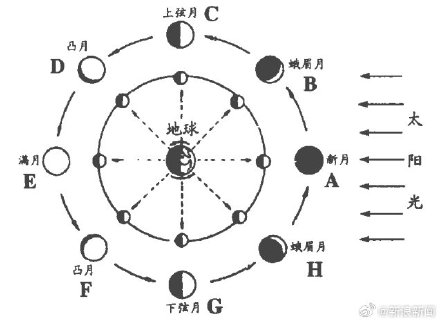
In an interview with Xinhua News Agency, Wang Kaixuan, a senior astronomer at the Purple Mountain Observatory of the Chinese Academy of Sciences, explained that the lunar calendar is based on the cycles of the Moon's phases and the Sun's position in the sky. The first day of each lunar month is the day when the Sun and the Moon are in conjunction, known as the new moon. This day is called the "Renshen" day, which marks the beginning of the lunar month.
The length of a lunar month, also known as a "synodic month," is about 29.53 days. However, due to various factors such as the eccentricity of the Moon's orbit, the actual duration of a lunar month may vary between 29.27 and 29.82 days. In the Chinese calendar, a lunar month can either be 30 days (a "big month" or "daming") or 29 days (a "small month" or "xiao yue").
According to Wang, the decision to add an extra month (an intercalary month) is made to ensure that the lunar calendar stays in sync with the solar calendar. An intercalary month is added approximately every three years, which is why Chinese New Year's Eve can sometimes fall on the 30th day of the lunar month, as it did this year.
Wang explained that the occurrence of a year without a 30th day or Chuxi is a normal phenomenon in the lunar calendar. Though rare, it is not unprecedented. In fact, the absence of Chuxi for five consecutive years is not entirely unusual; it is just less common than years with a 30th day.
What makes the Chinese calendar so unique is the seamless fusion of lunar and solar calendars, known as the lunisolar calendar. This type of calendar has been in use in various parts of the world since ancient times, with examples found in the Hebrew, Hindu, and Mayan calendars, among others.
The Chinese lunar calendar, in particular, has long been admired for its sophisticated design, which takes into account not only the cycles of the Sun and the Moon but also the Earth's orbit around the Sun. As a result, the calendar provides a comprehensive framework for tracking seasonal changes, agricultural cycles, and religious rituals.
Despite its age-old wisdom, the Chinese lunar calendar continues to play a significant role in modern society, particularly during holidays such as the Lunar New Year and the Mid-Autumn Festival. Chuxi, in particular, holds a special place in the hearts of Chinese people as it signifies the end of the old year and the start of a new one filled with hope and promise.
Whether celebrating on the 29th or the 30th day of the lunar month, Chinese families will still come together to bid farewell to the old year and welcome the new with traditions such as setting off fireworks, exchanging gifts, and feasting on traditional dishes.
As the clock strikes midnight on Chuxi, marking the beginning of the Year of the Rabbit, millions of Chinese families will eagerly anticipate what the future holds, united in their love for their culture, traditions, and each other. And perhaps, as they gather around the dinner table or light incense to pay tribute to their ancestors, they'll spare a moment to marvel at the intricate beauty of the Chinese lunar calendar and the centuries-old wisdom it holds.
In conclusion, the upcoming absence of Chuxi, or New Year's Eve, for the next five years is a rare occurrence that has sparked curiosity and reflection among Chinese netizens. While the complexity of the lunar calendar may be perplexing to some, the wisdom and ingenuity behind its design are truly awe-inspiring. As Chinese society continues to evolve and embrace the modern world, the ancient lunar calendar serves as a steadfast reminder of the country's rich cultural heritage and the importance of preserving its traditions.