Thirty-Plus Nations Say Troops Are Ready for Ukraine Once a Ceasefire Holds
A 'coalition of the willing' announced that more than 30 countries will deploy troops to Ukraine immediately after a durable ceasefire, with forces already in preparation. The move drew pointed debate on Chinese social media about whether outside armies can secure a peace that negotiations have not yet produced.
More than 30 countries supporting Ukraine have announced they are preparing troops to deploy as soon as a durable ceasefire is agreed, a step that keeps the question of postwar security at the center of the war's diplomacy — and has pushed the story across Chinese social media and Baidu's trending list.
The "coalition of the willing" said its international force would be stationed in Ukraine after a lasting halt in fighting, describing the deployment as part of "broader, politically and legally binding security assurances." The announcement followed a video conference hosted by the British prime minister, the French president and the German chancellor, according to a Beijing Daily report republishing Russia's RBK.
The timing matters. The group framed its plan as a contingent measure — troops only after a ceasefire — but the Kremlin has repeatedly said foreign forces in Ukraine are unacceptable. That leaves the proposal stranded between two incompatible red lines: Kyiv and its backers want security guarantees before a deal feels real, while Moscow treats the very prospect of Western soldiers on Ukrainian soil as a threat.
Chinese observers were quick to make the distinction. Some Weibo users stressed that the 30-plus countries are not committing to immediate combat, but to a postwar stability force. Others went further, arguing that deploying foreign troops risks planting a new conflict inside whatever peace is reached. "Peace cannot be arranged by force," one widely circulated comment read. "Respecting every side's security interests and sitting down to negotiate is the way forward."
That skeptical register is characteristically Chinese. State media's coverage leads with the word "volunteer coalition," letting the term carry its own irony, while ordinary users debate whether the plan is a guarantee or a provocation. The story's rise on Baidu's hot search alongside domestic topics shows how closely the war's next phase is being watched in China, where the audience reads it both as European news and as a case study in how external security arrangements fail or hold.
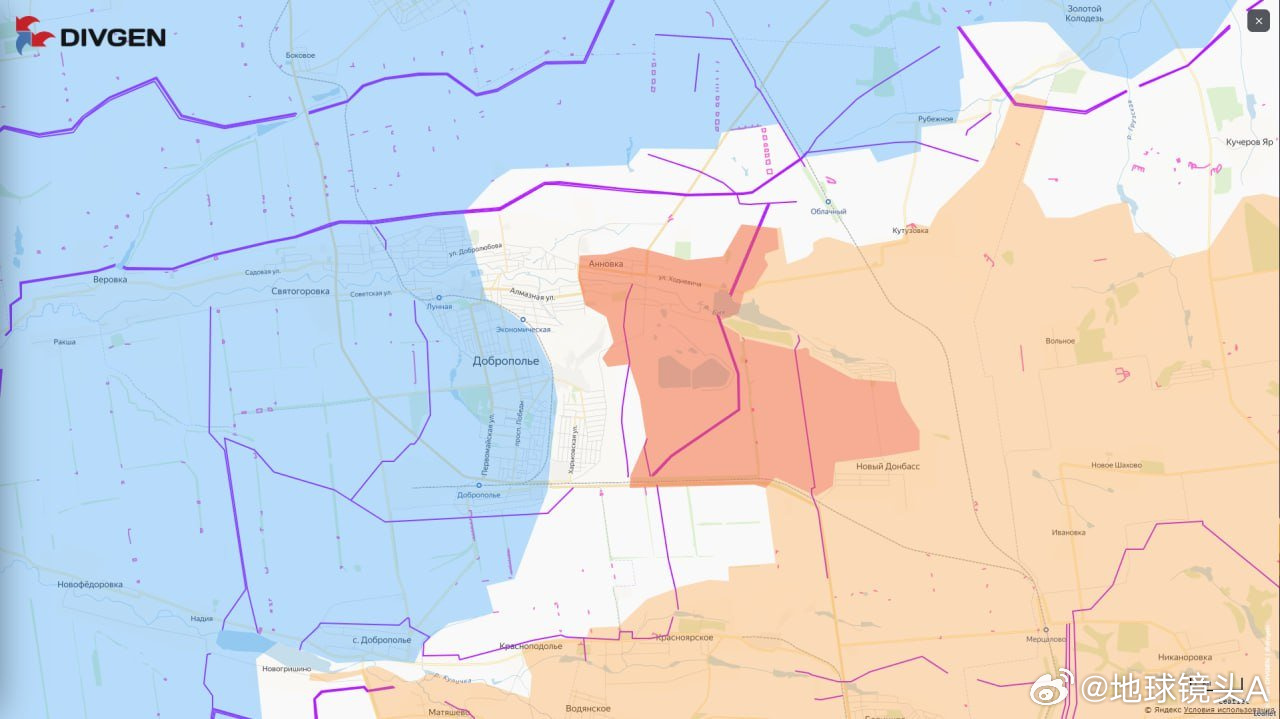
The front lines themselves continue to move. In the same Weibo thread, a military-news account posted geolocated map graphics of Russian advances near the settlement of Annovka, outside Dobropilya. The images are a reminder that the coalition's plan is being drafted against an active battlefield, not a frozen one. The two-dimensional maps, crisp and color-coded, compress a war of villages and rail junctions into zones that can shift within days.
The practical question the coalition has not answered is the one Chinese commentary keeps returning to: whether troops designed to enforce a peace can be assembled before that peace exists. The force's value would depend on a ceasefire that neither Moscow nor Kyiv has accepted. Until then, more than 30 nations are preparing for a war that has not ended — and may not end on terms anyone can police.