DeepSeek Orders 160,000 Huawei Chips in a $2.56 Billion Bet on Domestic AI Silicon
DeepSeek has ordered at least 160,000 of Huawei's next-generation Ascend 950DT chips for a new Inner Mongolia data center — one of the largest known clusters of Chinese AI silicon, worth about $2.56 billion. The lab that stunned the industry with efficient models is betting its infrastructure on domestic chips, and says it is willing to wait out Huawei's production bottleneck.
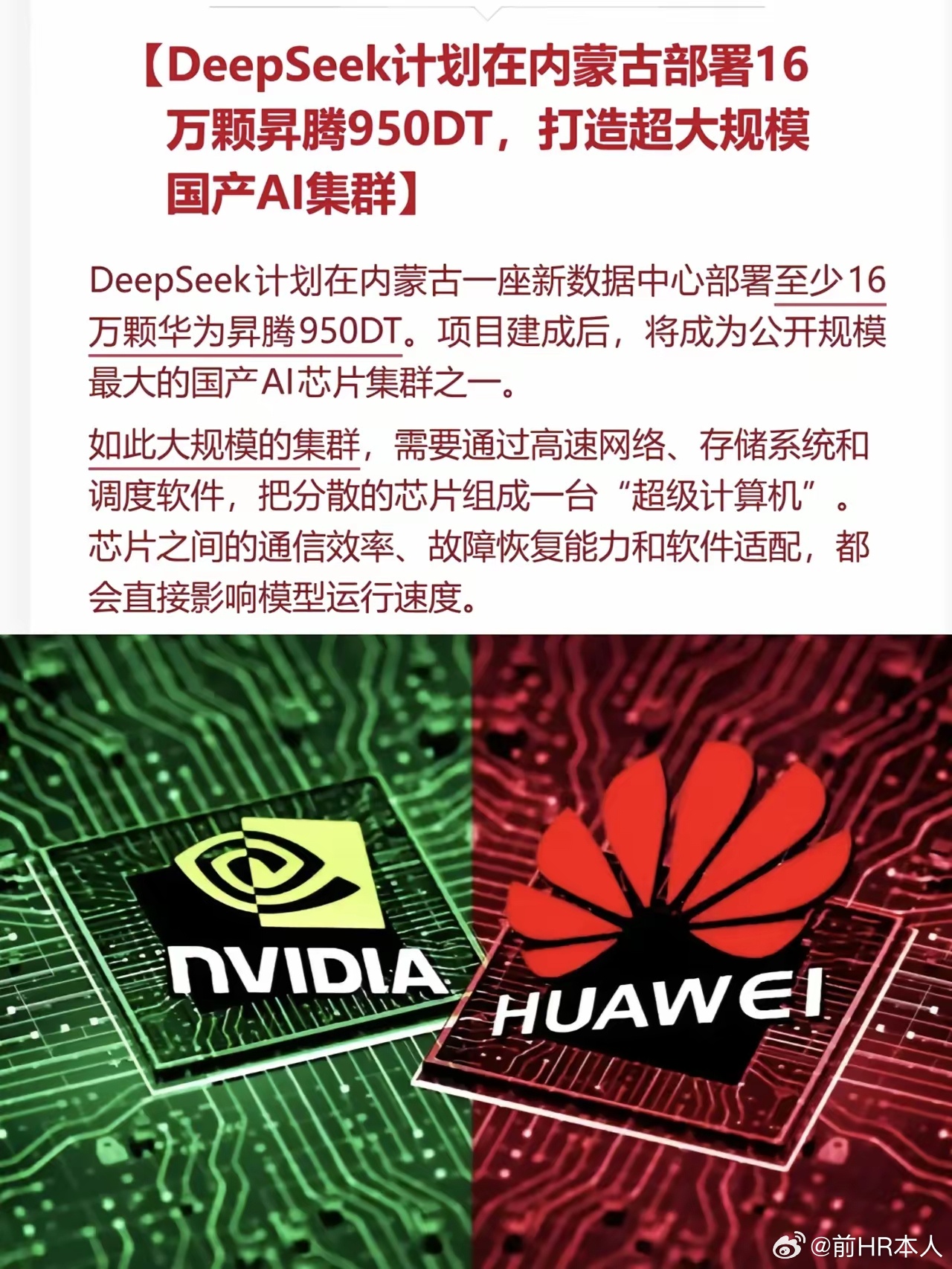
DeepSeek, the Chinese AI lab that startled the industry with cheap, frontier-grade models, has placed one of the clearest bets yet on China's domestic silicon. According to a Bloomberg report, the company plans to deploy at least 160,000 of Huawei's next-generation Ascend 950DT chips at a vast new data center in Inner Mongolia — a cluster that would rank among the largest known installations of Chinese AI hardware, in an order Chinese tech commentators value at roughly 2.56 billion US dollars.
The chips are designated for inference — running models once they are built, rather than training them. That division of labor matters: training remains the most demanding workload in AI, and DeepSeek's next model, V4, is being built to run on Huawei silicon all the same. The Information reported in the spring that the lab had quietly postponed V4's release by months, working with Huawei and the chip designer Cambricon to rewrite parts of the model's lowest-level code so it would run smoothly on Huawei's hardware — and that when it ships, it "will mark a milestone in China's yearslong quest for semiconductor self-sufficiency." A widely shared translation of the report circulated the details months before this week's order made them concrete.
The complication is capacity, and it is spelled out in the reporting itself. Huawei's output of the 950DT is expected to reach only a few hundred thousand units this year, constrained by shortages of high-bandwidth memory — HBM, the stacked memory that sits beside the processor and feeds it data fast enough for AI work, and which Chinese producers are only beginning to make at scale. Fulfilling DeepSeek's order could take more than a year, analysts noted; the lab, they added, is willing to wait. In an industry measured in weeks, a frontier lab agreeing to queue for domestic chips is itself the story.
The order lands on ground this site has been tracking: Chinese phone makers spent August assembling a homegrown chip stack, and the Zhipu AI lab recently served a week of record traffic entirely on domestic chips. What DeepSeek's purchase adds is scale and symbolism at once — the country's most-watched AI brand committing to Huawei's roadmap for its core infrastructure, on the heels of a week in which Baidu's top board carried the news and Zhihu users debated a Huawei essay about the chip its own engineers once said should have been burned.
Whether V4 indeed ships running on Ascend, and whether the Inner Mongolia cluster arrives in a year or in three, will test the one variable no order book can fix: how fast China's chip supply chain can grow. DeepSeek, for now, has answered with a number — 160,000 — and patience.