Durian Prices Collapse as a Rail Cold-Chain Ends China's Luxury-Fruit Era
Once shorthand for luxury, durian has crashed to under 20 yuan a kilogram as the China-Laos railway's cold chain cuts losses and shrinks delivery to three days, delivering 'durian freedom' to Chinese shoppers.
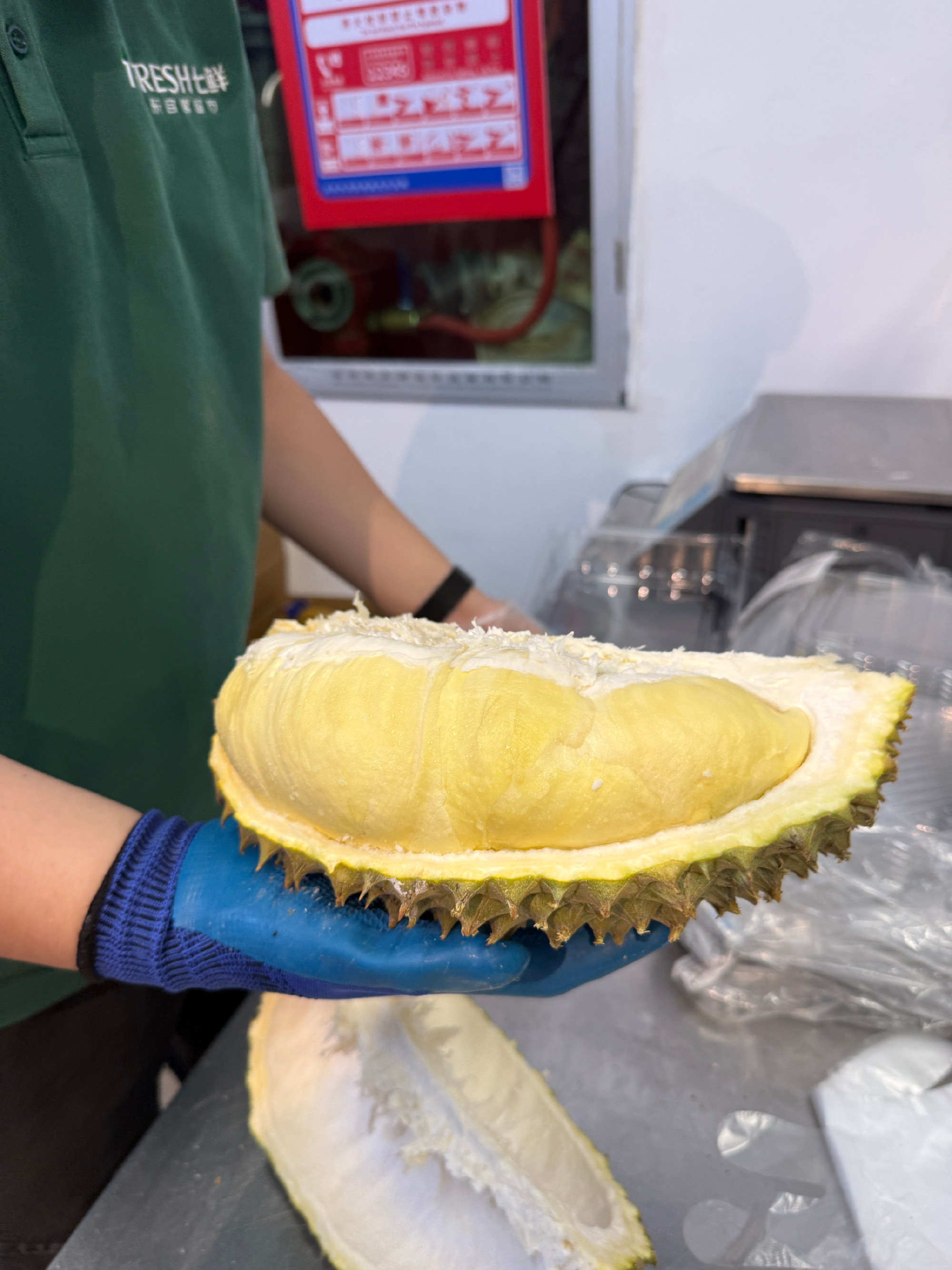
The fruit was once a shorthand for luxury in China — thorny, heavy, and expensive enough that the internet spoke of "durian freedom" the way it spoke of owning a home. This month, the shorthand has changed. Across Chinese supermarkets, durian prices have tumbled to barely 19.9 yuan a kilogram on promotion, with Vietnamese golden stuff dipping below 15 at wholesale. A fruit that not long ago could cost a day's wages is suddenly a casual purchase, and the online reaction has been the closest thing Chinese social media has to a celebration.
Part of the drop is seasonal, but the bigger engine is logistics. Durian is notoriously perishable and fragile — bruise it, and the whole shipment sours — which is why it commanded such a premium when it had to fly or ride refrigerated trucks. This year, the China-Laos railway's dedicated cold chain has become a regular artery for Southeast Asian fruit, with shipments reaching Chinese cities in as little as three days and losses cut to under three percent. Cheaper freight, more suppliers, and more volume at the port have together done what no marketing campaign could: Weibo users are reporting supermarket shelves stacked deep with the stuff, and photographing their first "durian freedom" hauls. One post liked thousands of times put it plainly: at that price, the old promise of eating durian whenever you want wasn't just talk anymore.
The shift matters beyond dessert. Durian has become one of the most visible commodities linking China to Southeast Asia, and its price slide is a live measure of a trade relationship that runs on trains as much as ports. The same railway corridor that carries durian north carries Chinese goods south, and each cold-chain run helps normalize the idea that a Mekong-region orchard and a Chinese supermarket aisle are now, in distribution terms, a few days apart.
None of this guarantees the low price will last. Durian remains sensitive to weather, smuggling routes still undercut official channels, and a glut in one season can mean scarcity in the next. But the structure behind the price has changed for good: the bottleneck was never appetite, it was getting the fruit to the shelf before it rotted. On Baidu's hot list, the story now reads less as a market quirk than as a preview of what a rail-connected Asia does to a once-scarce taste.