Esports Leaves the Asian Games After Nagoya for a Standalone Kuwait Event
The Olympic Council of Asia has signed a hosting agreement putting the first Asian Esports and Mind Sports Games in Kuwait in 2027, confirming that esports will not return to the Asian Games after Nagoya. For Chinese fans, who watched the genre gain full medal status at Hangzhou, the exit is a genuine loss.
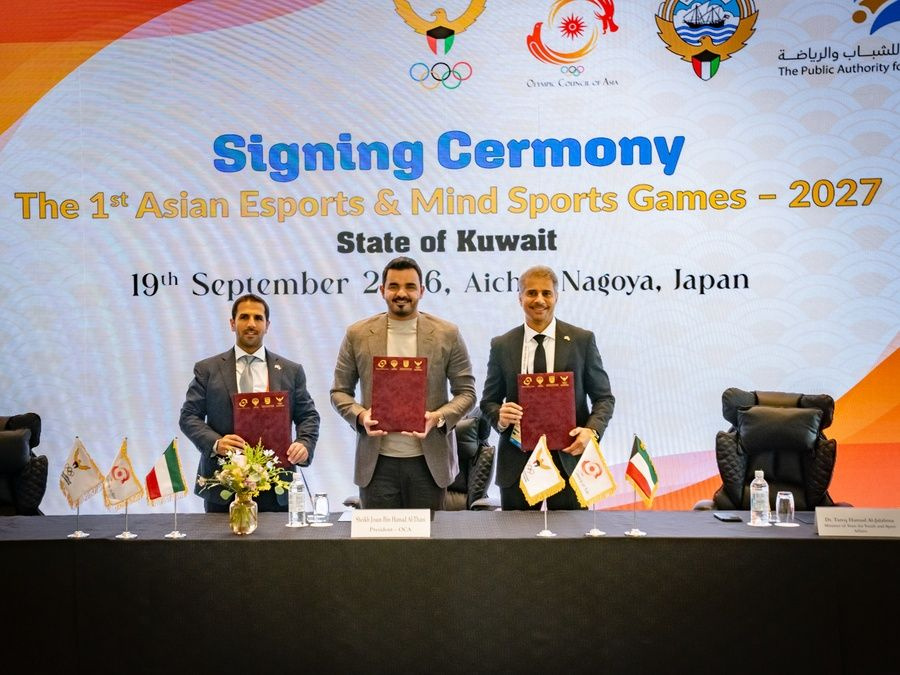
Esports is leaving the Asian Games — by design, not by demotion. On September 19, while the Nagoya Asian Games was still running, the Olympic Council of Asia signed a hosting agreement with Kuwait's public authority for youth and sports to stage the first Asian Esports and Mind Sports Games in 2027, Chinese sports media reported over the weekend. The new event will run every two years, expects close to 4,000 athletes, and will seat esports alongside chess, go and bridge. Esports will not be back on the Asian Games programme: Nagoya is the last Asian Games at which it counts as an official medal sport.
The signing was a photographed ceremony — three officials behind a draped table raising red folders in front of a backdrop reading "The 1st Asian Esports & Mind Sports Games – 2027, State of Kuwait" — and within a day the news had looped back into Chinese feeds, carried by a translated screenshot of the breaking post from Sheep Esports, the international reporting account that first put it out.
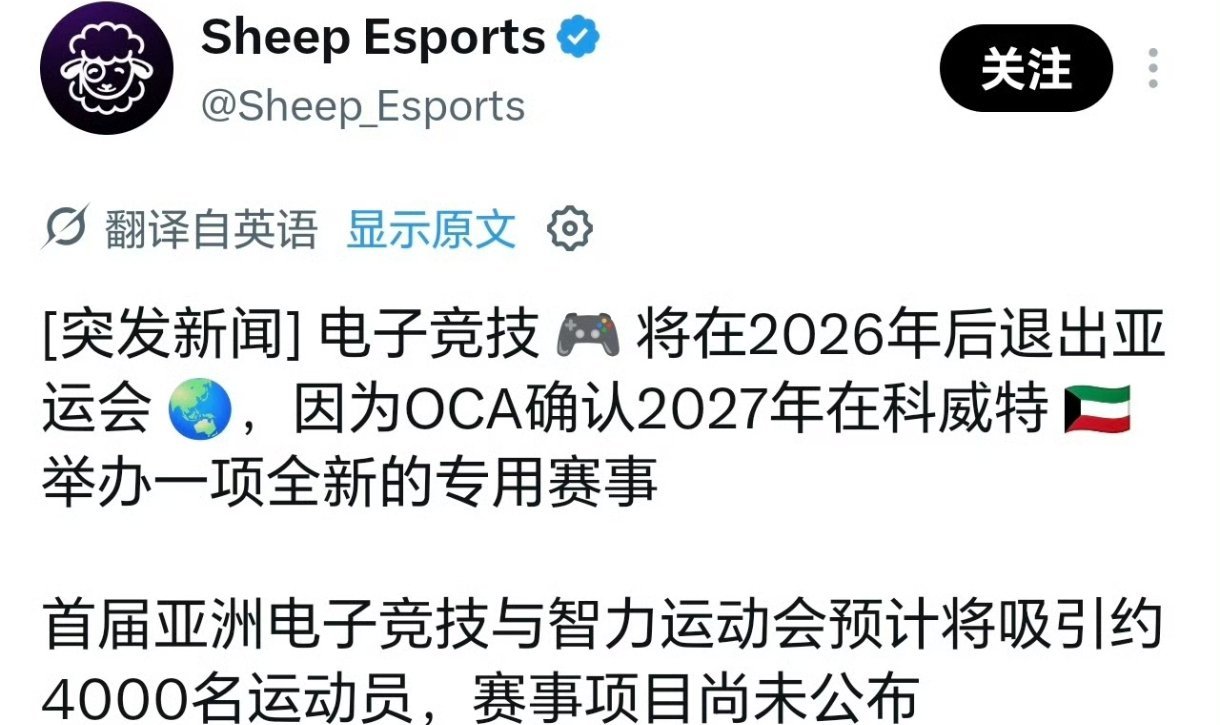
Chinese fans took it harder than the rest of the world, for two reasons. The first is this year's programme: League of Legends, the title that defined esports' Asian Games moment, was not on it at all. "This Asian Games is the last to include esports as an official event," one esports account wrote in the post that anchored the discussion. "From 2027 esports moves to this standalone competition, expected every two years. The more I think about it, the more I miss Jakarta 2018."
The second reason is what the Asian Games had come to mean. Esports appeared as a demonstration event in Jakarta in 2018 and returned as a full medal sport at the Hangzhou Games, where Chinese teams finished atop the esports medal table on home soil; an Asian Games gold made a professional player a national-team champion, received like an Olympic one. That legitimacy now moves to Kuwait. The OCA's design folds the mind sports into the same tent — chess, go and bridge, which disappeared from this year's Asian Games programme entirely, prompting their own round of "why was this cut?" questioning on Zhihu.
There is a logic to the split: a dedicated biennial Games gives esports and the mind sports more medal events than a multi-sport programme can afford, and gives federations a calendar to plan around. Whether it carries the same meaning is the open question. Dates and titles for Kuwait 2027 have not been announced, and Manila has already signalled interest in hosting the 2029 edition. What nobody in the discussion claims to know yet is whether governments and national teams will commit to a standalone esports Games the way they did to the Asian Games podium — the state-level reception that made a virtual sport feel, to Chinese audiences, like a medal sport in every sense that mattered.