Feud Rekindles on Chinese Variety Show: Haoyue Zhang Accuses Yu Shuxin of Bullying Amid Fan‑Driven Online Clash.
Haoyue Zhang, a young Chinese entertainer best known for her stint on the popular variety series “Grade One” (一年级), has found herself at the center of a renewed online controversy that pits her against fellow cast member Yu Shuxin, whose English name is often rendered as Esther Yu. The dispute, which resurfaced on China’s dominant social platform Weibo this week, revolves around accusations of cliquish behavior, bullying, and the manipulation of public personas during the show’s filming.
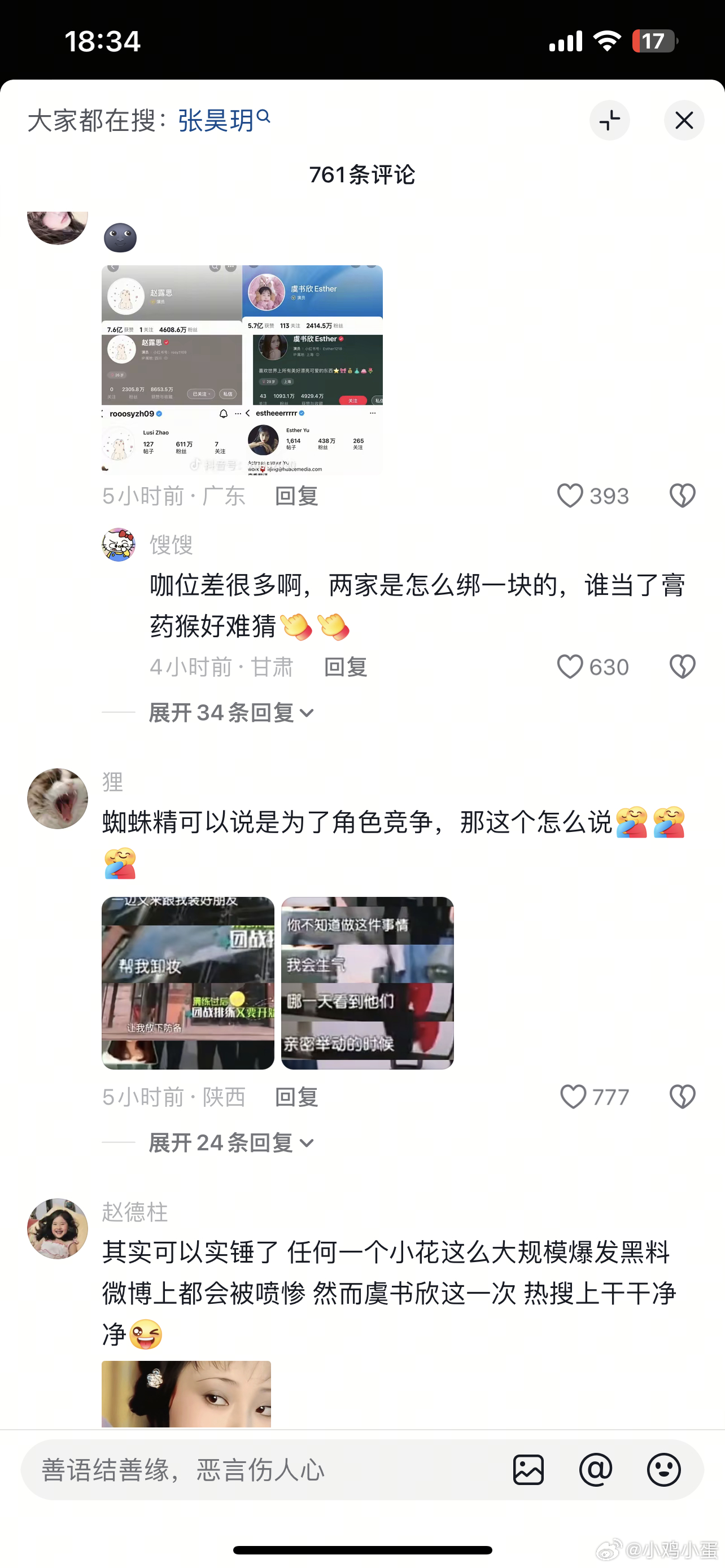
The spark for the latest flare‑up came when Zhang posted a seemingly innocuous anecdote about trying to obtain an autograph from a senior artist. Within hours, Yu Shuxin’s fan accounts flooded the comments section, demanding that Zhang publicly apologize and “forgive” Yu for alleged mistreatment. Rather than acquiesce, Zhang responded with a pointed rebuttal, alleging that she had been subjected to systematic exclusion and verbal attacks by Yu and a group of supporters who had formed a tight‑knit clique on set.
According to Zhang’s own words, the tension dates back to the early episodes of “Grade One,” where she recalls Yu making disparaging remarks about her appearance and criticizing her wardrobe and performance. Video clips from the series, which have been replayed by netizens, appear to show Yu confronting Zhang about her clothes and questioning her “true” personality versus the image she presented to viewers. Those moments have been framed by some commenters as evidence of a “bullying” dynamic, while others argue that they simply reflect the candid, often abrasive nature of reality‑show interactions.
The debate has quickly polarized the online community. Supporters of Yu argue that the actress’s outspoken demeanor is part of a carefully cultivated persona—what Chinese net‑speak calls “营造人设,” or the construction of a public image. They contend that Zhang’s claims are an attempt to rewrite the narrative after the fact. Conversely, Zhang’s defenders invoke the slogan “抱团从来都是弱者行径,王者向来都是独行” (“Huddling together is always the act of the weak, while kings always walk alone”), casting Yu’s fan base as a bullying “clique” that unfairly targets a perceived underdog.
Industry observers note that the episode underscores the volatile mechanics of celebrity image management in China’s entertainment sphere. The rapid spread of the story illustrates how fan accounts—often referred to as “大V” for their influential reach—can amplify disputes, shaping public perception in real time. Moreover, the strategic silence of some high‑profile accounts on the issue hints at a calculated approach to damage control, where certain narratives are deliberately left unaddressed to avoid further escalation.
Beyond the micro‑level drama, the incident reflects broader societal preoccupations with authenticity versus performance in the age of social media. Chinese netizens frequently dissect whether a star’s on‑screen demeanor aligns with their “真性情” (“true nature”), and the line between genuine behavior and crafted persona remains a contested space. The Zhang–Yu clash serves as a case study in how quickly these discussions can turn into a public litmus test for character, loyalty, and resilience.
While no formal statements have been issued by the producers of “Grade One,” and no legal action has been suggested, the controversy has already left an imprint on both performers’ reputations. For Zhang, the episode has propelled her from relative obscurity into broader public scrutiny, positioning her as a vocal critic of intra‑industry power dynamics. For Yu, the backlash may prompt a recalibration of her public image, especially as she navigates the fine line between candidness and perceived aggression.
As the conversation continues to unfold on Weibo and other platforms, the episode serves as a reminder of how swiftly a moment from a reality show—once aired and forgotten—can be resurrected, reshaped, and weaponized in the digital age. In a landscape where fan loyalty can turn into collective action overnight, the stories of Haoyue Zhang and Esther Yu illustrate the precarious balance entertainers must maintain between authenticity, audience expectation, and the ever‑present specter of online judgment.