An Israeli Plumber Grabbed the Controls: The New Details in the Flydubai Cockpit Stabbing
Israel has identified the wounded captain of Flydubai flight FZ1073 as Indian national Smit Machchhar, and the passenger credited with saving the plane as a plumber who had never flown but had watched enough aviation-disaster documentaries to know what to do — as Trump retells it, 'maybe a terrorist, maybe a madman' was in the cockpit.
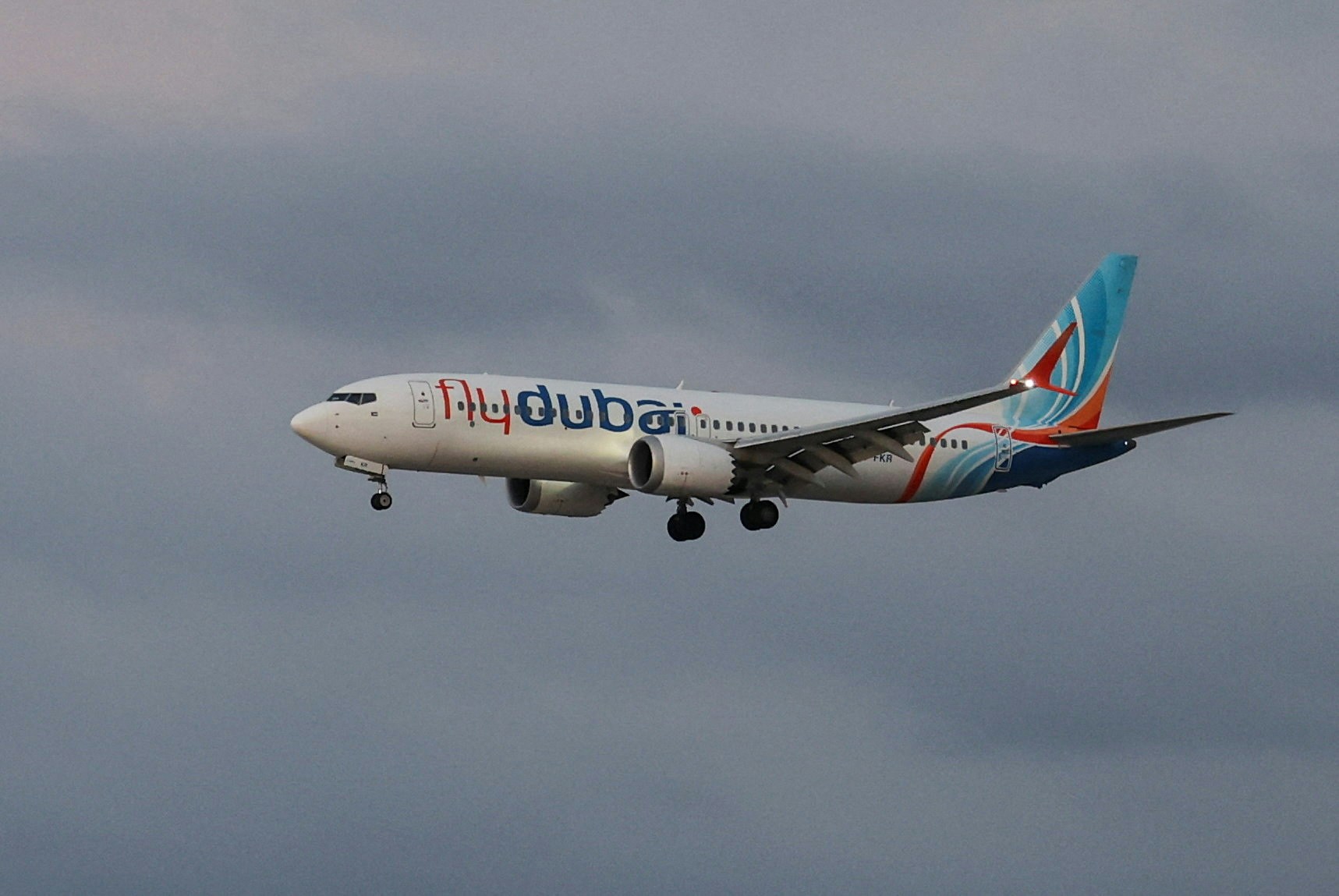
The Flydubai flight whose emergency landing ended a violent struggle in the cockpit continued to dominate Chinese feeds on National Day, with each hour bringing a new detail to a story that now has a cast: a wounded Indian captain, an Omani co-pilot accused of trying to crash the jet, an Israeli plumber turned rescuer, and two heads of state trading accounts of what happened. The outline was already on the site yesterday; what the last day added is who did the saving, and a political frame around it.
Israel named the captain on Thursday: Smit Machchhar, an Indian citizen, seriously wounded but stable in hospital. Caixin's report carries the detail that has become the story's centrepiece: wounded, Machchhar still opened the cockpit door before collapsing — which is what let passengers and crew rush in and subdue the co-pilot. Israeli prime minister Netanyahu publicised his account on X, crediting him with saving more than 170 lives.
The passenger story arrived via Washington. President Trump told reporters he had spoken at length with Netanyahu about the flight, and retold the episode of the passenger who ended up holding the controls: a plumber with no flying experience who heard screaming, forced his way into the cockpit, grappled the attacker and then pulled the stick to raise the nose. "Maybe a terrorist, maybe a madman," Trump said of the co-pilot; of the plumber's heroics, "I don't know if it's true, but that's what Bibi told me." The plumber has been named in Israeli accounts as Yaniv; Netanyahu received him at Ben-Gurion airport that night, still in his bloodstained t-shirt — "I asked ten times, they wouldn't let me change" — and called him a hero and a lion. The detail Chinese posters relished most: Yaniv says he knew to pull the stick back because he had watched the aviation-disaster documentary series Air Crash Investigation (《空中浩劫》), a programme so familiar in China that it is practically a genre label.
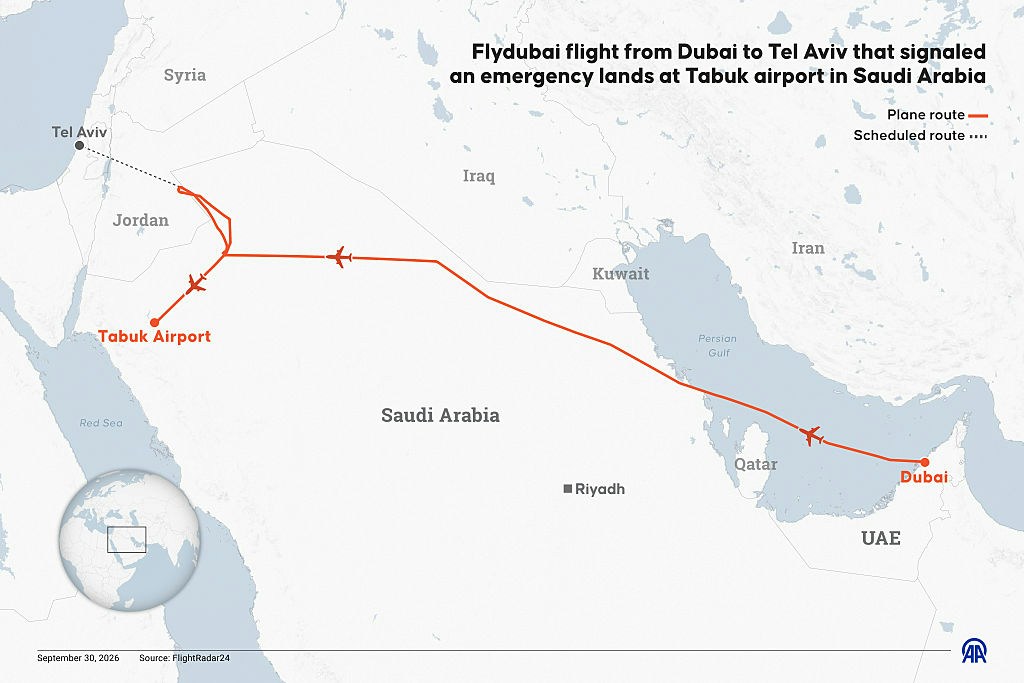
The official interpretation escalated in parallel. Defence minister Israel Katz called the attack an attempted "jihadist terror" act aimed at downing the plane with all aboard; Israel's consulate in Hong Kong framed it as an assault on the Abraham Accords framework the Dubai–Tel Aviv route embodies. The attacker, reported by Chinese trackers of the story as an Omani co-pilot, is being questioned by Saudi authorities, who took custody when FZ1073 — about 174 people aboard, down some 17,000 feet in minutes after emitting first a distress code and then the hijack code — landed at Tabuk.

Chinese observers also connected the dots to the Israeli calendar: the country goes to the polls on October 27, its first election to run a full four-year term since 1988, and Netanyahu — campaigning as the man who keeps Israelis safe — was at the airport within hours, hugging a bloodstained passenger for cameras. Whether the episode becomes an election asset is, as one widely shared timeline post concluded, for voters to decide; what is already settled is the narrative's shape on Chinese social media, where the hero is the man who watches crash documentaries and the route itself is the geopolitical footnote.