A 143-Year-Old Town Hall in Flames: How Chinese Social Media Watched France's Unrest
Hundreds of thousands of people marched across France on October 17 to protest the cost of living, and the day ended with shops looted, more than a thousand arrests and a 143-year-old town hall gutted by fire. On Chinese social media, where the unrest trended three times at once, the burning of the Limoges town hall became the image that defined the day.
The violence that followed France's nationwide cost-of-living protests on October 17 produced images that even a country long practised at street demonstrations found shocking. Hundreds of thousands marched in cities across France against rising prices and deteriorating public services; by evening, shops had been looted in Paris, Lille and Marseille, police vehicles attacked, and masked groups had fought running battles with officers. Prime Minister Lecornu said that night that around 1,200 people had been arrested and more than 150 police officers injured.
The turnout was disputed but large either way — the interior ministry put it at roughly 550,000, the CGT union at 800,000 — and French media were calling it one of the country's most violent episodes of unrest in years.
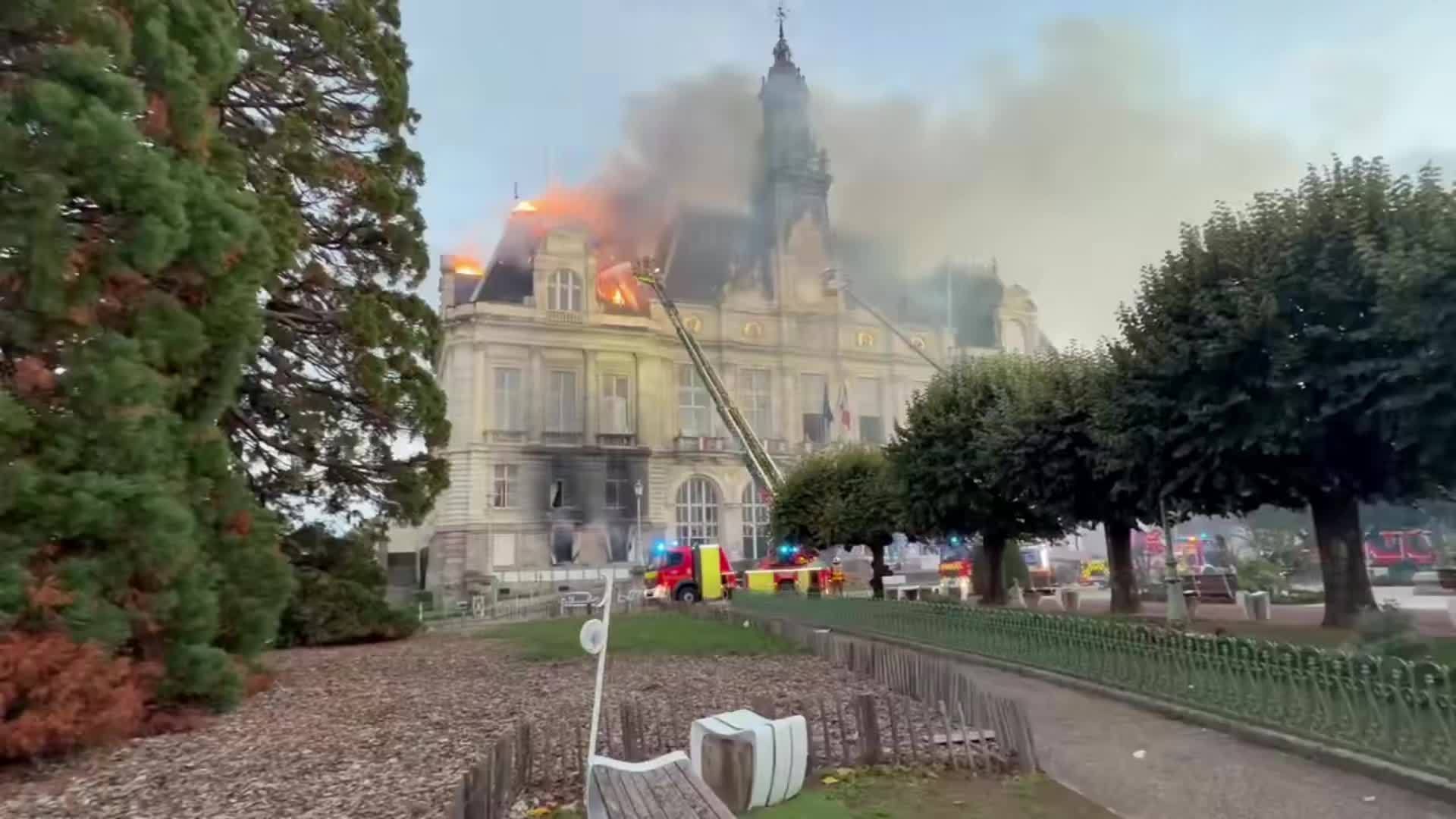
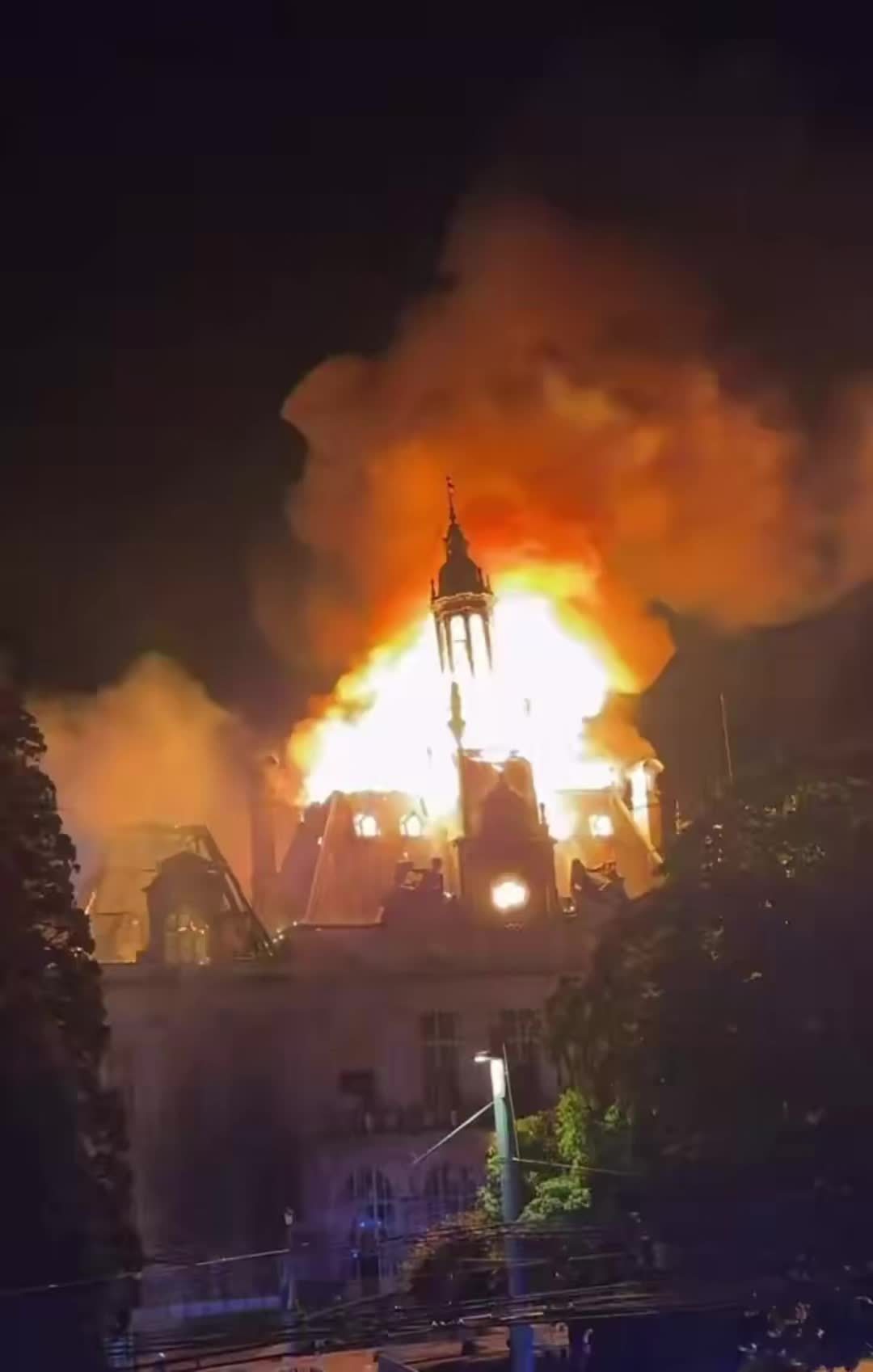
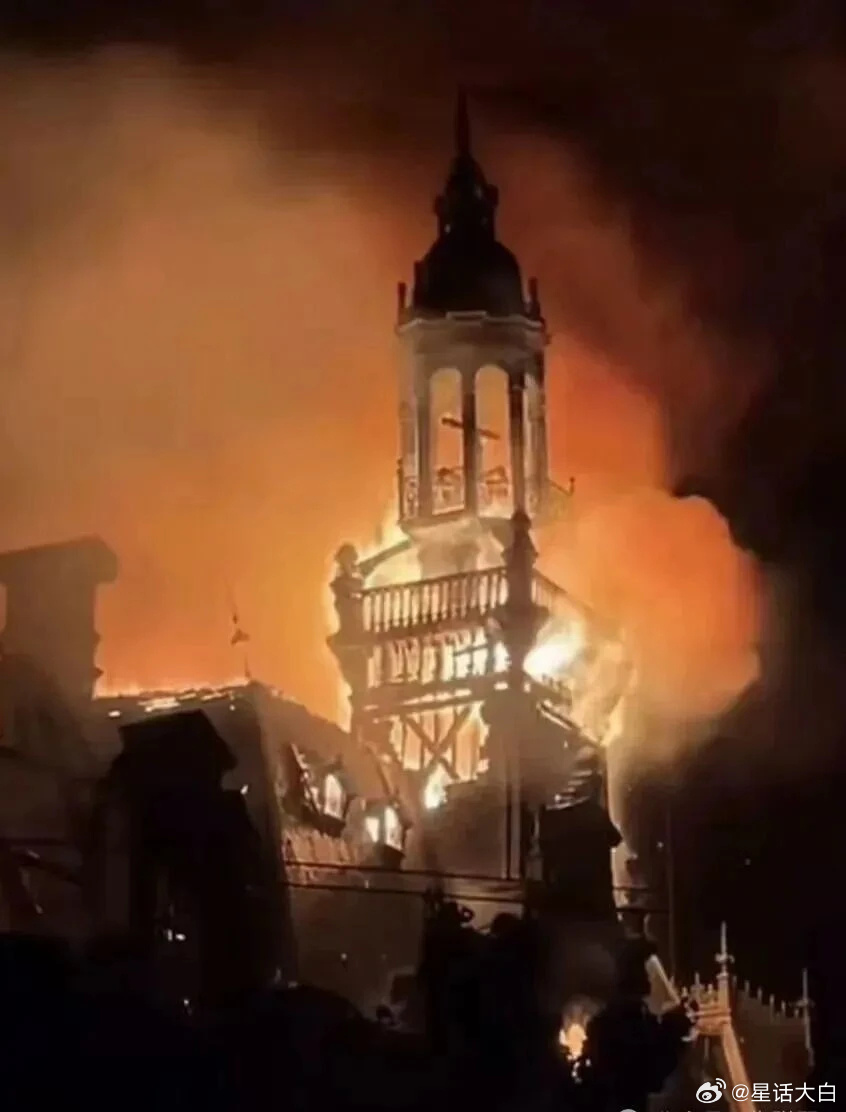
The most shocking scene came in Limoges, a small city in central France. Masked protesters burned a police car outside the town hall, smashed its windows and forced their way in, setting the 143-year-old building alight. Its 43-metre clock tower collapsed; local officials described the hall as essentially destroyed and the loss as a "historical heritage disaster," according to state broadcaster CCTV News.
President Emmanuel Macron responded within hours: the violence, he said, would not be tolerated. Whether firm words will calm the streets is the question the next protest day will answer.
On Weibo, the unrest held three spots on the trending list at once: "France has lost control" (法国失控了), "the century-old town hall burned" (法国骚乱百年市政厅被烧毁) and "Macron speaks out on the unrest" (马克龙就骚乱发声). The story broke out of the Weibo bubble the same day: it led Baidu's search board as "France erupts in its most serious violent unrest in years", moved a Yicai news brief citing Xinhua, and opened a Zhihu question thread on why the confrontation had sharpened.
Much of the reaction circulated as images. A widely shared photo thread ran through the day's spectacles: tens of thousands on the streets of Paris, a police car under attack, luxury stores stripped bare, a tourist train carried off — and, the detail that travelled furthest, a figure dressed as Batman standing in the burned-out tourism office of Lyon. One Chinese commentator, a police-affairs blogger, called France's habit of unrest an "old base-area tradition" (老区) — the phrase for the Communist wartime strongholds — before conceding that "even the French think France may really have lost control this time."
Others had a practical stake in the news. Chinese carmakers were exhibiting at the Paris Motor Show as the unrest burned, and one auto blogger asked whether the riots would reach the show, noting that Xpeng's "command centre" had already left France.
For Chinese readers, France's periodic eruptions are a familiar spectacle and a standing argument about the trade-offs between generous welfare states and public order. What made this round travel further than most was the town hall: a building that had outlived two world wars, gutted in an afternoon.