GAC and FAW Sign Landmark Restructuring Deal as China's State Carmakers Consolidate
Guangzhou-based GAC will issue shares to buy assets from Changchun's FAW, and the northern giant will become its second-largest shareholder — the clearest sign yet that China's brutal auto price war is pushing the country's state-owned carmakers together. The announcement came on Monday night, after GAC's shares were suspended for up to ten trading days.
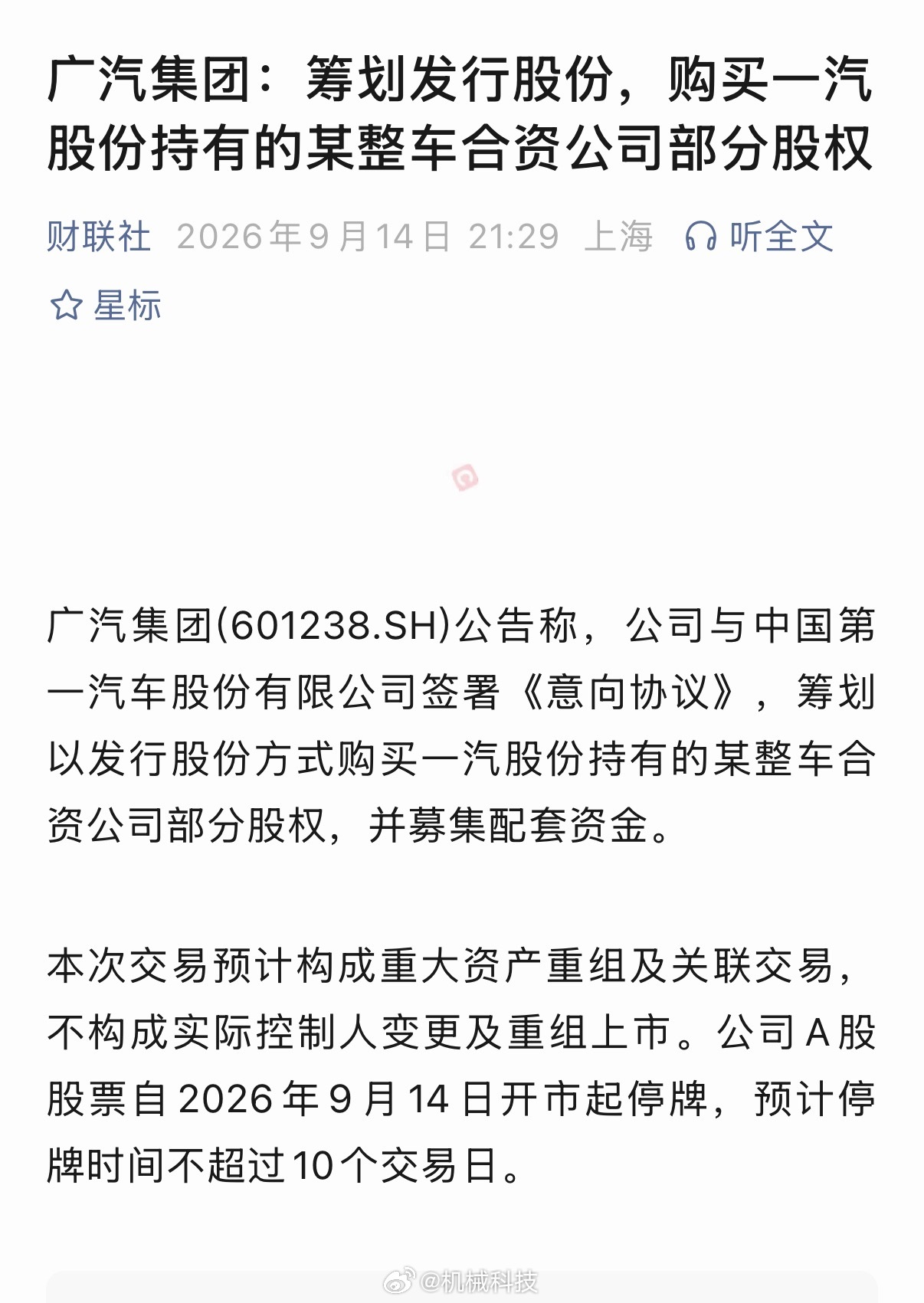
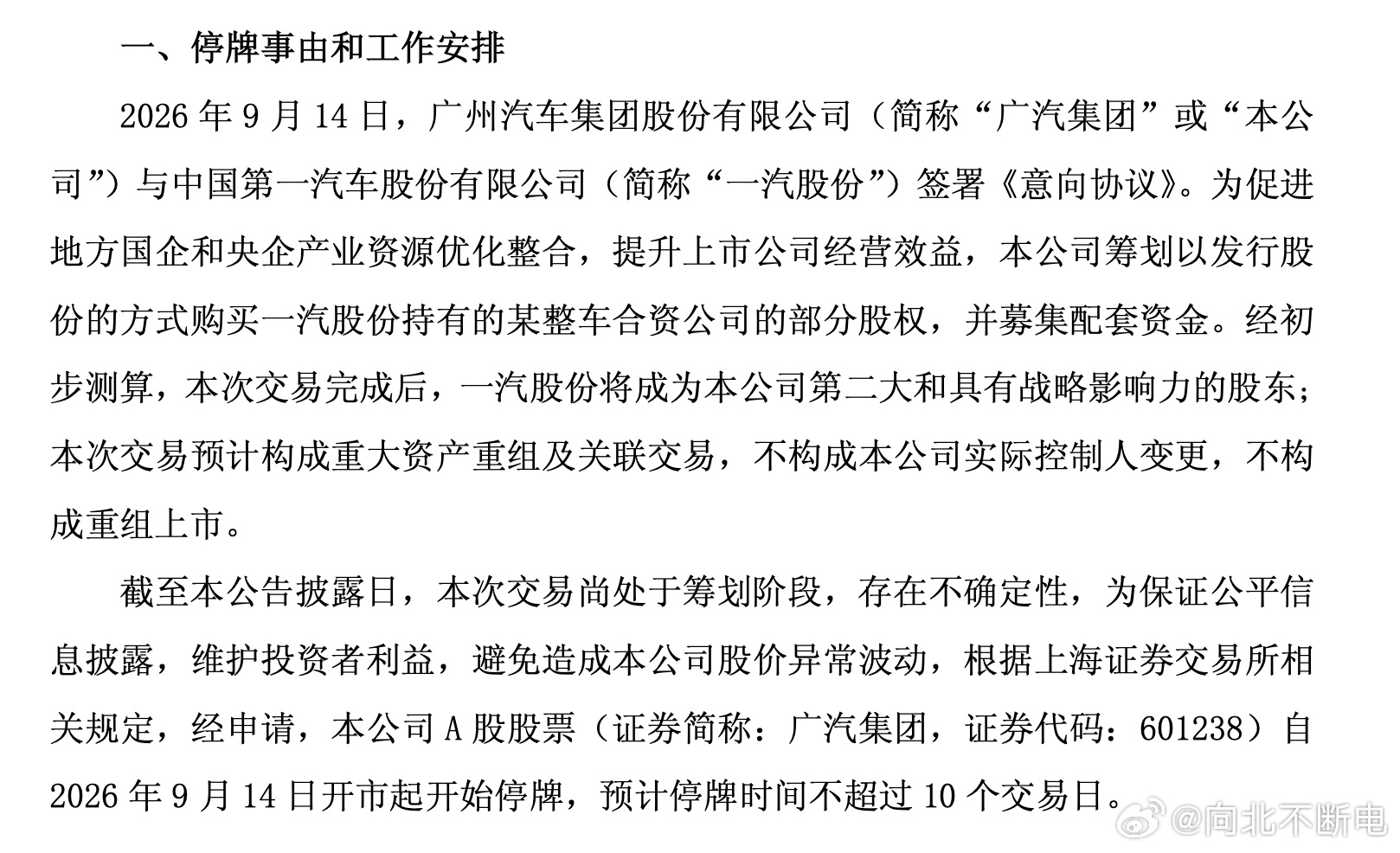
China's two-state carmaking establishment took a step toward each other on Monday evening. Guangzhou Automobile Group, the southern coastal city's flagship automaker, announced it had signed an intent agreement with FAW, the state car giant of China's industrial northeast, to issue new shares and buy part of FAW's holding in a vehicle joint venture, alongside a raise of matching funds. If the deal closes as sketched, FAW will emerge as GAC's second-largest shareholder, with what the company called strategic influence — a cross-shareholding between two of the country's biggest state-owned car groups that had until now been competitors in everything from sedans to joint ventures with Toyota.
The filing itself was unusually cagey. The target is identified only as "a certain vehicle joint venture company," and GAC's A-shares had already been suspended that morning — an urgent halt, as the company's investor-relations staff put it to a reporter from Yicai who called: "The suspension happened suddenly this morning, because an important announcement will be made after today's market close." By evening the transaction was classified as a major asset restructuring and a related-party transaction, with no change of actual controller. Within hours the news was the number-one question on Zhihu and the number-two topic on Baidu's hot search — corporate finance rarely breaks out of the business pages in China the way this did.
The unnamed target set off immediate speculation, and one detail fed it: First Financial reported the same day that GAC Toyota's executive deputy general manager and a deputy general manager had both been transferred away. GAC builds Toyotas with the Japanese automaker in the south, FAW builds them in the north, and a combination of the two ventures would redraw the map of Toyota's production in China. That reading remains speculation — the filing names no brand — but the market read the executive moves as a tell.
The deeper logic is the one Chinese automakers have been living with all year. The price war that has consumed the industry has hit the state groups and their joint ventures with foreign brands hardest, precisely as combustion-engine sales collapse; GAC's shares were halted this morning in circumstances covered on this site just days into the squeeze. Regulators in Beijing have spent the summer telling the industry to stop "involution-style" competition, and consolidation between state champions is the classic answer — fewer, larger groups with the scale to survive a market that is shedding brands.
For now the agreement is an intent, not a done deal: GAC's statement carries the standard warning that the transaction is at the planning stage and faces uncertainty, and its shares are to stay suspended for as many as ten trading days while terms are worked out. But issuing shares to make FAW a strategic shareholder of its former rival is a deeper form of integration than a joint announcement — and, if it completes, the clearest signal yet that China has decided its car industry has too many players.