Game Skins and Streaming VIPs: What China's Youngest Wedding Guests Put in the Gift Ledger
Cash still leads China's wedding gift ledgers, but guests of post-2000 couples are increasingly giving Switch consoles, game skins, streaming memberships and prepaid property fees — practical gifts for a practical generation, entered in the same old ledger and owed back in kind.
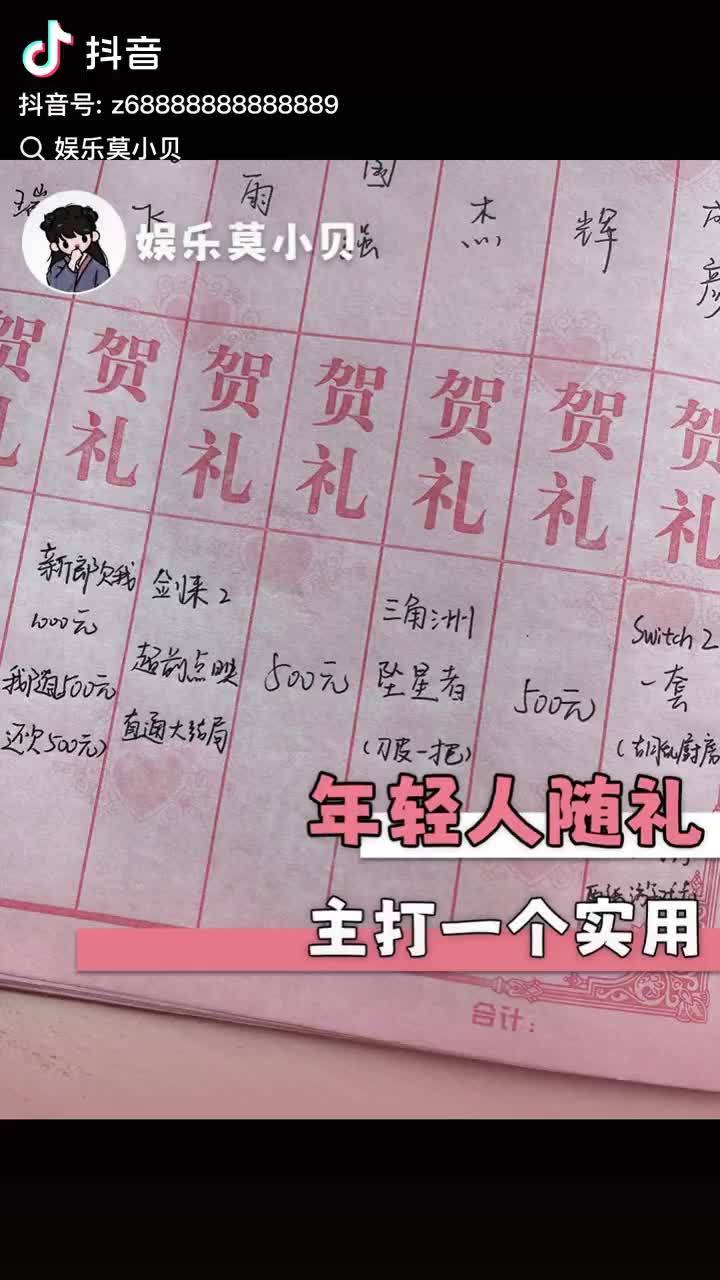
At a wedding in China this autumn, the gift ledger recorded the following, in neat handwriting under red stamps reading 贺礼 — "congratulatory gift": 888 yuan paid by Alipay; two gold bars; a Nintendo Switch 2, still to be collected; and a "Starfall" skin for the mobile shooter Delta Force. A video post riffing on the new custom — what wedding gift-giving looks like when the couple were born after 2000 — was liked more than 9,000 times in a day, and screenshots of gift ledgers like this one have been circulating all week under the hashtag 00后结婚随礼现状有多离谱, roughly "how absurd post-2000s wedding gifts have become."
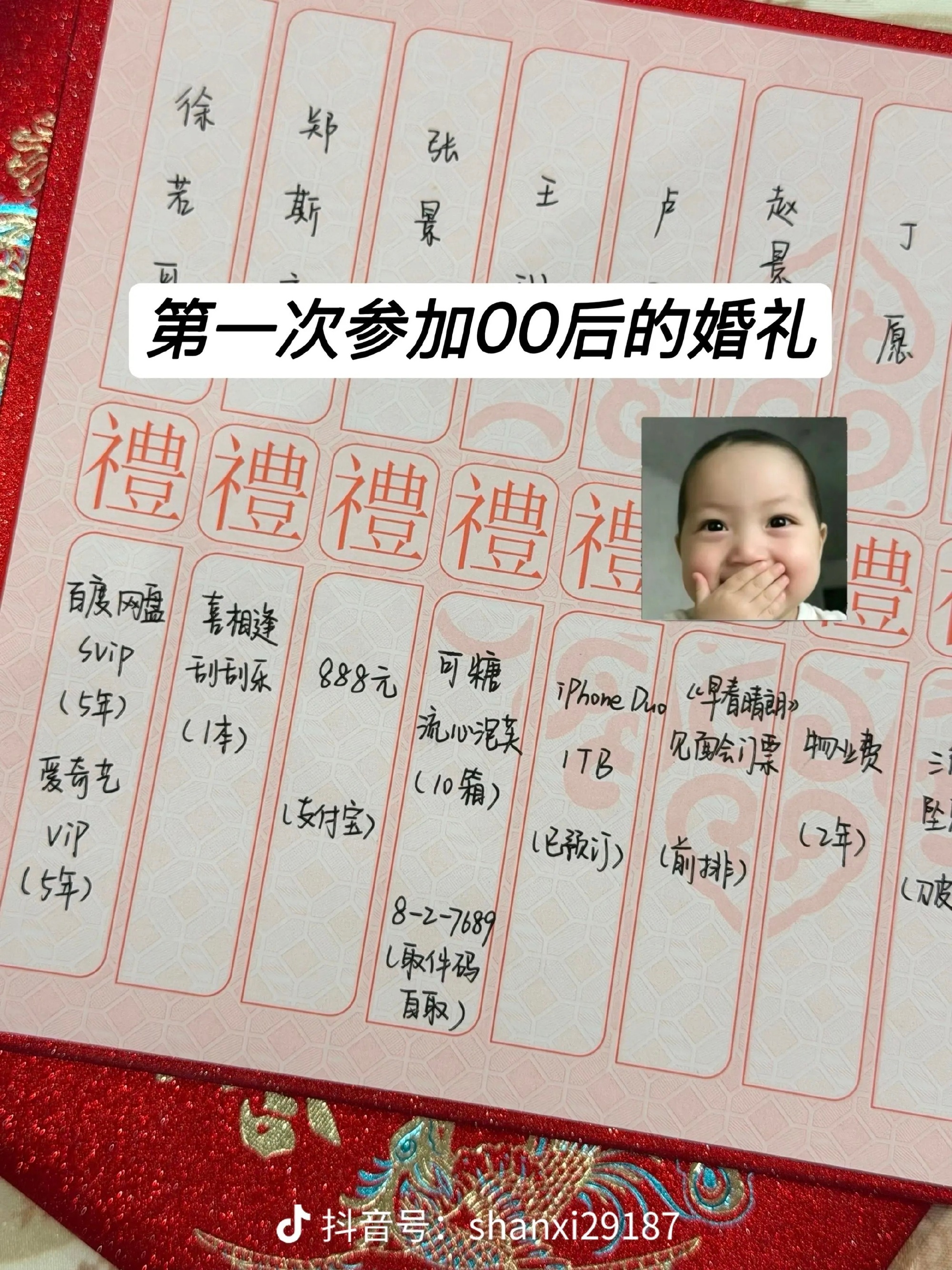
The custom underneath is centuries old and entirely unchanged: guests give 随礼, cash gifts, to the newlyweds, every gift is entered in a ledger before the banquet, and the ledger is memory as much as record. When the couple later attend their guests' weddings, they are expected to give back at least what they received. What has changed is what lands in the ledger. One guest's board listed, beside the cash rows: five years of Baidu Netdisk premium, five years of iQiyi streaming, a one-terabyte iPhone placed on pre-order, and two years of the couple's apartment property-management fees, paid up front.
The reasoning, as one guest put it in a post that itself drew thousands of likes, is that practical gifts "solve the problem of receiving money the couple can't bring themselves to spend." Young Chinese couples often have subscriptions, gadgets and rent before they have savings; a relative who pays a year of property fees is covering a bill that genuinely exists. Cash still dominates — the amounts stay auspicious, 888 yuan and the like, eight sounding like "prosper" — but the ledger now records utilities as readily as envelopes.
The ledgers fit a wider holiday picture. October 6 was the season's most auspicious wedding date, and one hotel photographed that morning had six wedding arches stacked at its entrance with ten banquets under one roof. But the couples inside are streamlining: the "three-nothing wedding" — no motorcade, no bridal send-off, no groomsmen and bridesmaids, often no master of ceremonies, no tear-jerking video montage, sometimes no banquet at all — has become common enough to earn a name. A bride in Shandong described her ceremony as "just a big party"; one couple cut the ritual to ten minutes and saved at least 10,000 yuan; others held a lawn picnic in place of a stage. Sociologists quoted in state media read it as a values shift, toward the couple's own experience and away from performance for the guests.
There is a quieter backdrop, too: in small-town China the banquets themselves are thinning out, as our earlier reporting on county towns found. Where weddings do happen, though, the ledger is still kept, and still expected to balance — a five-year membership given today is five years' worth owed back whenever the favor comes due.