What a German Schoolbook Tells Children About China, and Why It Angered Chinese Readers
A German primary-school reader still used in classrooms tells children that many Chinese have no car and greet each other with a bow. Chinese readers, looking at a page frozen somewhere in the 1980s, have made it one of the week's biggest arguments.
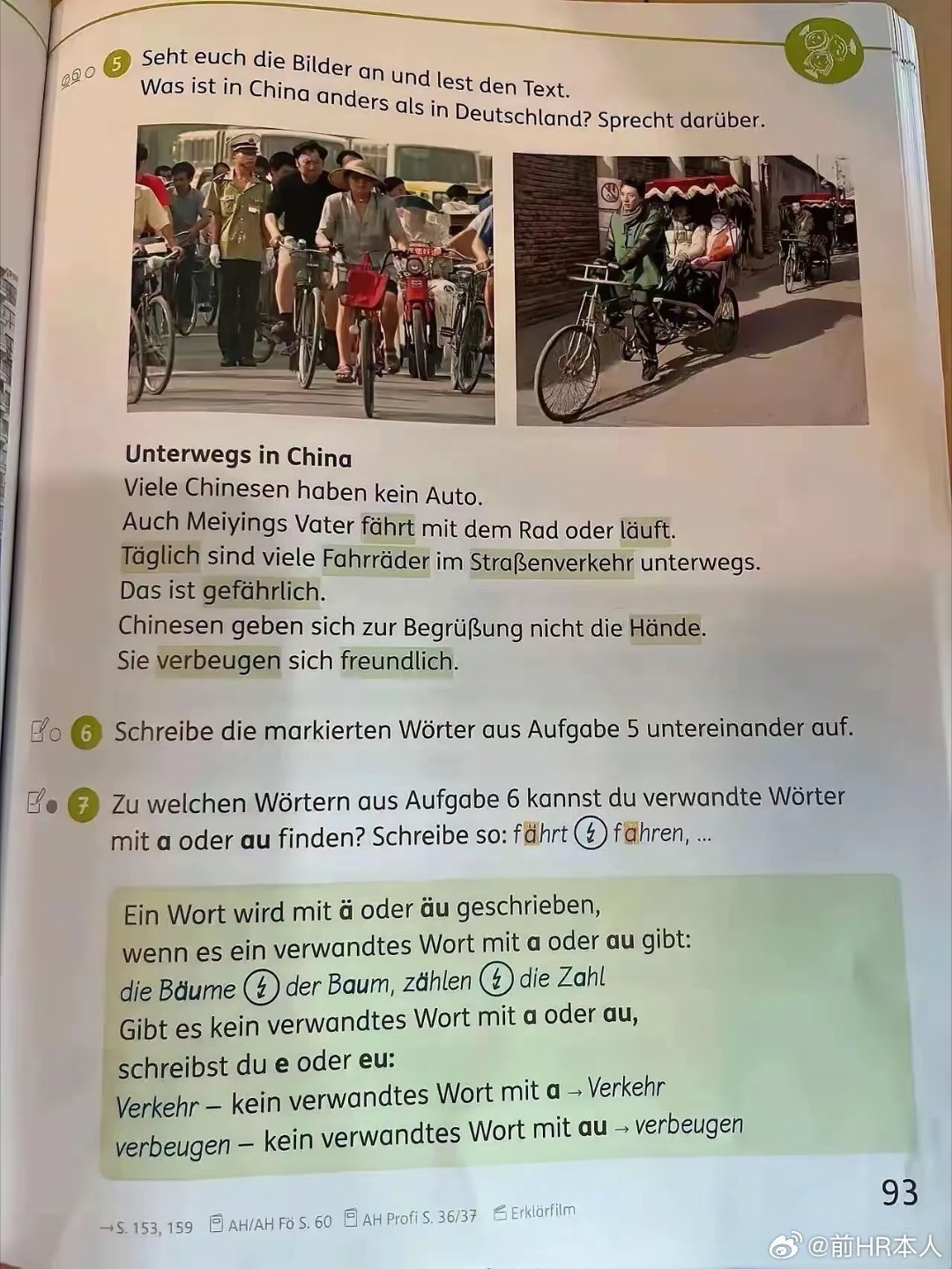
The offending page comes from "BAUSTEINE Sprachbuch 3", a German-language reader for primary schools published in 2021 and still in classroom use. Under the heading "Unterwegs in China" — "On the move in China" — it tells pupils that many Chinese people have no car, that a girl named Meiying's father goes everywhere by bicycle, and that Chinese people do not shake hands: they bow. Accompanying photographs show a street crowded with cyclists and a cycle rickshaw.
A Weibo post photographing the page drew nearly 11,000 likes and more than 1,000 comments in a day. "This is what an information cocoon produces," its caption concluded: "arrogance and stupidity." Other posters went further, noting that the passage appears to confuse China with Japan — bowing is the greeting in the latter, not the former — and asking how material this stale survived a 2021 print run.
That is the detail that stings. A textbook published in 2021 postdates China's rise to the world's largest car market, the spread of high-speed rail and the electrification of its city streets; the country it describes is, as one commenter put it, "stuck in the 1980s." A widely shared reply from an account presenting itself as a Chinese expat in France argued the gap had in fact been narrowing — since China opened visa-free entry to many European nationals, foreign tourists' travel videos from Chinese cities have updated the picture faster than any textbook — but print cannot refresh itself, and, the reply added, some audiences "would rather stay immersed in the past." 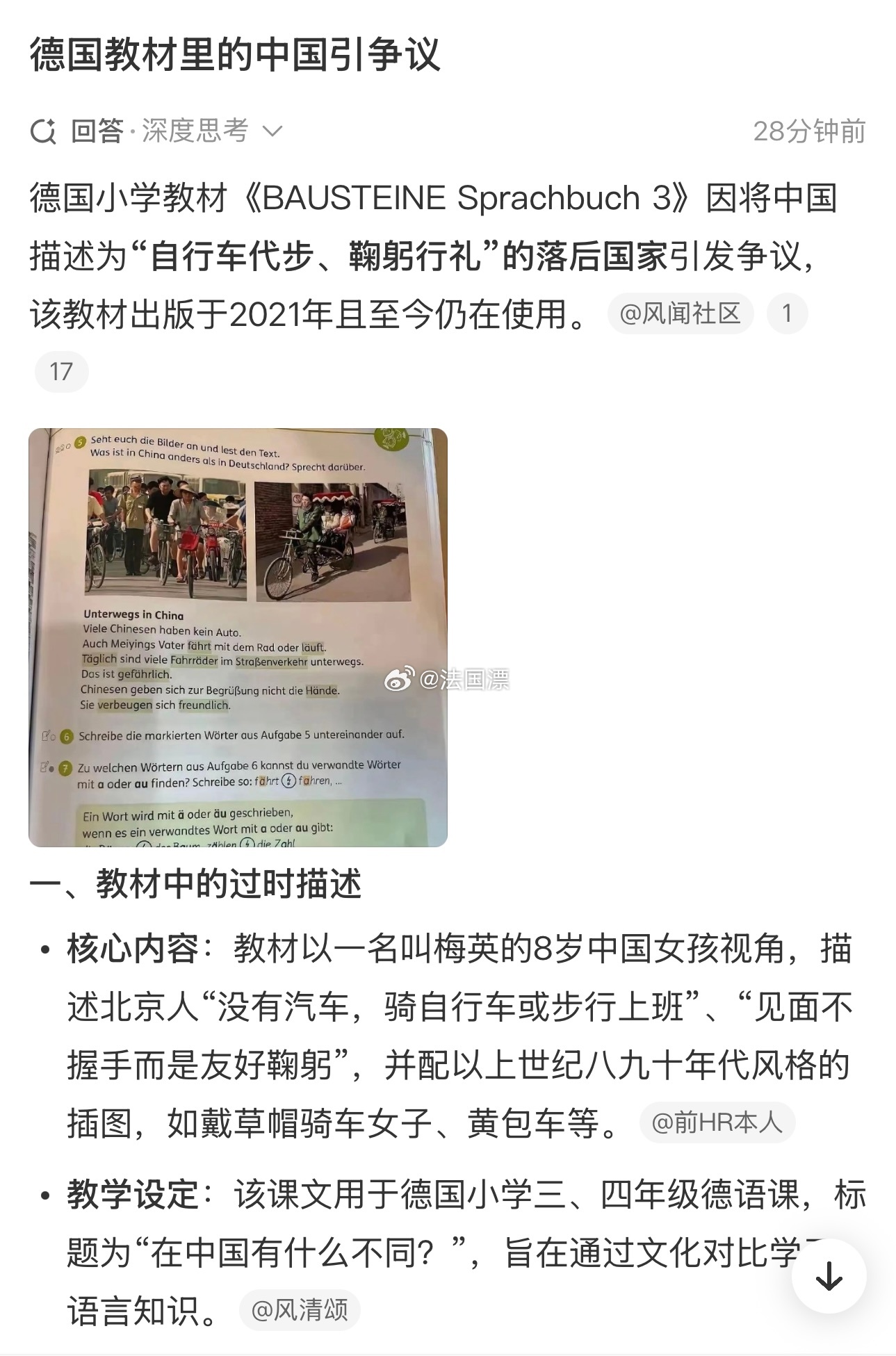
The row says as much about Chinese readers as about German classrooms. How the country is portrayed abroad is a sensitive subject in China, and Weibo's comment sections routinely audit foreign depictions; a schoolbook aimed at eight-year-olds landed in the middle of that vigilance. It also supplied the debate's sharpest irony, which posters were quick to point out: thousands of Chinese readers mocking a bicycle-and-bow China from phones in cities their parents would not recognise are themselves the best evidence that the printed China and the lived one have drifted apart faster than curricula can follow.
Whether German classrooms will ever carry an updated China is not yet answerable — the book at the centre of the row has been in print for five years.