Guo Degang Show's Organizer Fined Over 600,000 Yuan for Altering Wartime Classic
Regulators in Wuhan have fined the organizer of one of Guo Degang's stage shows more than 600,000 yuan in combined penalties for distorting a beloved wartime song, turning a comic riff on a red classic into a nationally followed test of where China's performance boundaries lie.
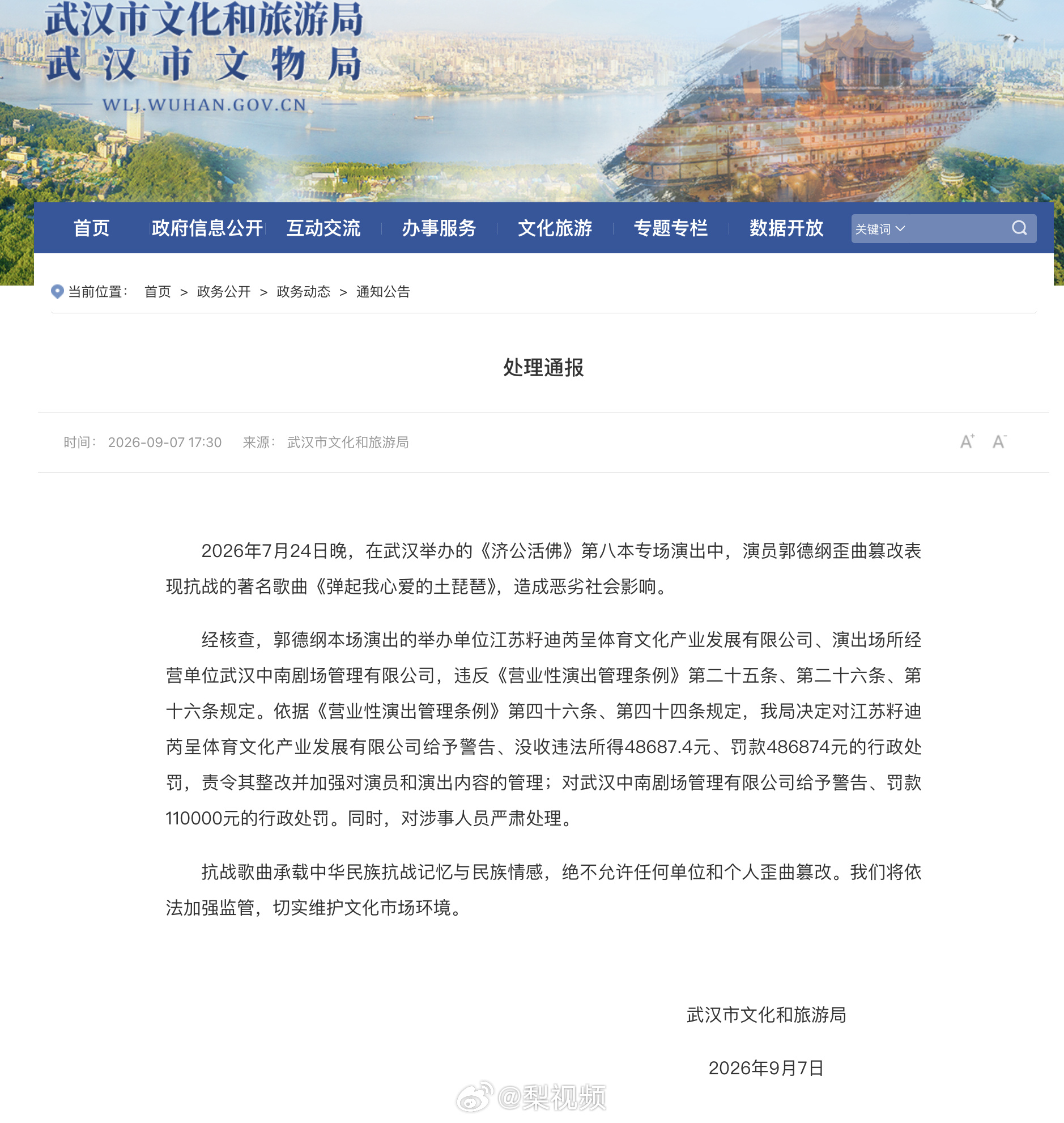
China's best-known comedian has become the latest test case for where the boundaries of live performance lie. On Monday the Wuhan Municipal Bureau of Culture and Tourism published a penalty notice against the companies behind a July 24 stage show by Guo Degang, the crosstalk superstar, for a transgression with a very particular name: the production was judged to have "distorted and altered" a beloved wartime song, causing an adverse social impact. The organizer was fined more than 480,000 yuan on top of confiscation of about 48,000 yuan in ticket proceeds, the theater that hosted the show was punished as well, and the combined penalties exceeded 600,000 yuan. (Pear Video's report of the notice)
The song at the center of it is one of the most recognizable melodies in China. "Strumming My Beloved Earth Pipa" comes from the 1956 film Railway Guerrillas and belongs to the canon of "red classics" — wartime-era songs taught in schools, sung at galas, and treated less as pop heritage than as something closer to a memorial. Guo, whose specialties include full-evening comic performances in the guise of Jigong, a trickster monk, had worked the song into his act; the notice found that the show's organizer, a Jiangsu-based culture company, and the venue, the Wuhan Zhongnan Theater, had violated three articles of the country's regulations on commercial performances, which forbid content that distorts works with historical significance. The legal instrument matters as much as the fine: the state's response to a bad joke is not a censor's memo but a citation of numbered clauses, confiscations and itemized penalties. (The notice, as discussed on Zhihu)
The case shot to the top of Baidu's board within hours of the notice — second only to the day's state announcements — and the discussion underneath was less about one comedian than about the line the penalty draws. "Stage work needs innovation, but innovation has boundaries, especially when the material carries history," as one widely read comment put it, warning the whole entertainment industry to treat the ruling as a reference point. (That comment)
Two details give the case its wider shape. The first is that the penalties named the organizer and the venue, not the performer: the regulatory system disciplines comedy by squeezing the businesses around it, which is why self-censorship inside China's live-comedy industry has a corporate quality — managers, not artists, carry the ledger. The second is that the enforcement came months after the performance, a reminder that a show that sails through its first weekend in July can still be measured against cultural red lines in September, once a clip has circulated and been judged.
Guo himself has not publicly responded. His troupe's next show dates were still on sale Monday night.