Machines Can't Provide Compassion: A Nobel Laureate Explains Why AI Won't Replace Doctors
Nobel neuroscientist Thomas Südhof told a Shanghai conference that synapses aren't transistors and medicine is 'always about the individual' — while students on the same day's hot list learned to spot the 'AI flavor' in essays, the same verdict from the bottom up.
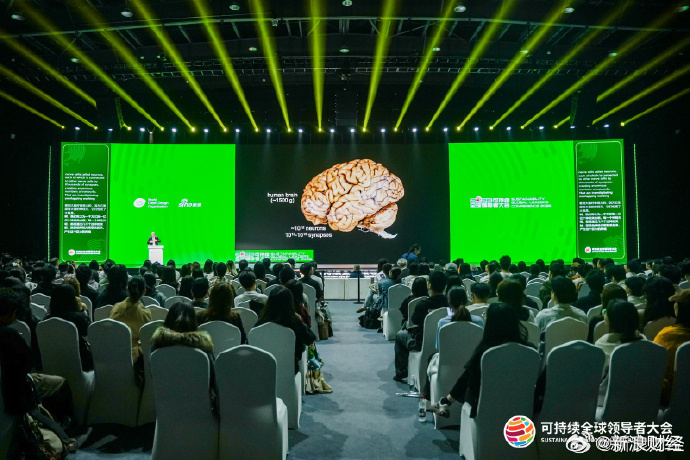
"Machines cannot provide compassion." With those words, the Nobel Prize-winning neuroscientist Thomas Südhof gave Shanghai's 2026 Sustainable Global Leaders Conference the bluntest judgment of the week: AI will not replace doctors. Sina Finance's report of the keynote raced up the hot-search list, not because the conclusion is new but because of who was making it and how precisely he made it.
Südhof, who shared the 2013 Nobel Prize in Physiology or Medicine for work on how brain cells communicate, argued from the wiring up. A synapse is not a transistor: its properties shift with its location, its history of activity and its timescales, and the brain has no isolated module for any one function — cognition is the work of distributed networks remaking themselves continuously, over milliseconds and over days. A patient, in other words, is not a standardized data set but a moving target, and medicine is always "about the individual."
None of this, he was careful to say, makes AI useless in the clinic — quite the opposite. His own example came from China: DeepRare, a rare-disease diagnostic agent built by a Chinese team, reaches 57.18 percent top-one accuracy on phenotype-only diagnosis, outperforming rare-disease specialists with ten years of clinical experience, and over 70 percent once genetic data is added. The catch is everything that happens after the model answers. AI output, Südhof said, "is often wrong" — models absorb low-quality information without questioning it, and every conclusion must be traced back to its source before it is acted on. In research that means paying a large "verification tax"; in medicine, skipping the verification before a prescription reaches a patient could cost health or life. The genuinely hard part is no longer generating a plausible answer, but judging whether it fits "this specific person, with allergies, with other medications, with liver and kidney function at some critical value."
Practicing doctors did not disagree. "The trust, comfort, empathy and communication between doctor and patient have never been decoration on top of medicine — they are medicine itself," wrote Dr. Jiang Peiru, replying under the same hotword. "AI can tidy up test results, assist judgment, and optimize the workflow, but it cannot replace the bond between people. Sickness is not just indicators and data."
The same day's hot list supplied the undergraduate version of the argument. Under the trending tag 原来用AI写论文是会有痕迹的 — "so AI-written essays really do leave traces" — students traded the tells they have learned to spot. "The AI gives me a stiff, inhibited feeling, and a pretend-profound speculative air," wrote one user, who said she could never see the "AI flavor" in her own feed until she compared machine text with human academic writing side by side. "Seemingly well-argued, actually producing filler." She still uses AI — to press her topic from new angles, she said, "at least it opens up my thinking."
Two hot-search topics a day apart, then, arriving at the same dividing line from opposite ends: generation has become nearly free, and judgment has not. The laureate's "verification tax" and the student's AI radar are the same discipline at different stakes — someone still has to answer for whether the answer is right, and that someone is still human. Where China lands on the question matters beyond its borders: it is building the diagnostic agents and hospital chatbots faster than almost anyone, and its loudest scientific voices are drawing exactly the boundary where those tools stop.