Weibo Physicists Challenge the Official Speed in a Fatal AITO M9 Crash
A driver died when his AITO M9 struck a lamp pole and caught fire on a road in Shenmu, Shaanxi. The automaker's account — 139 km/h, a driver at the wheel, no battery fault — now has an unlikely rival: frame-by-frame reconstructions posted on Weibo that come out at a third of the speed.
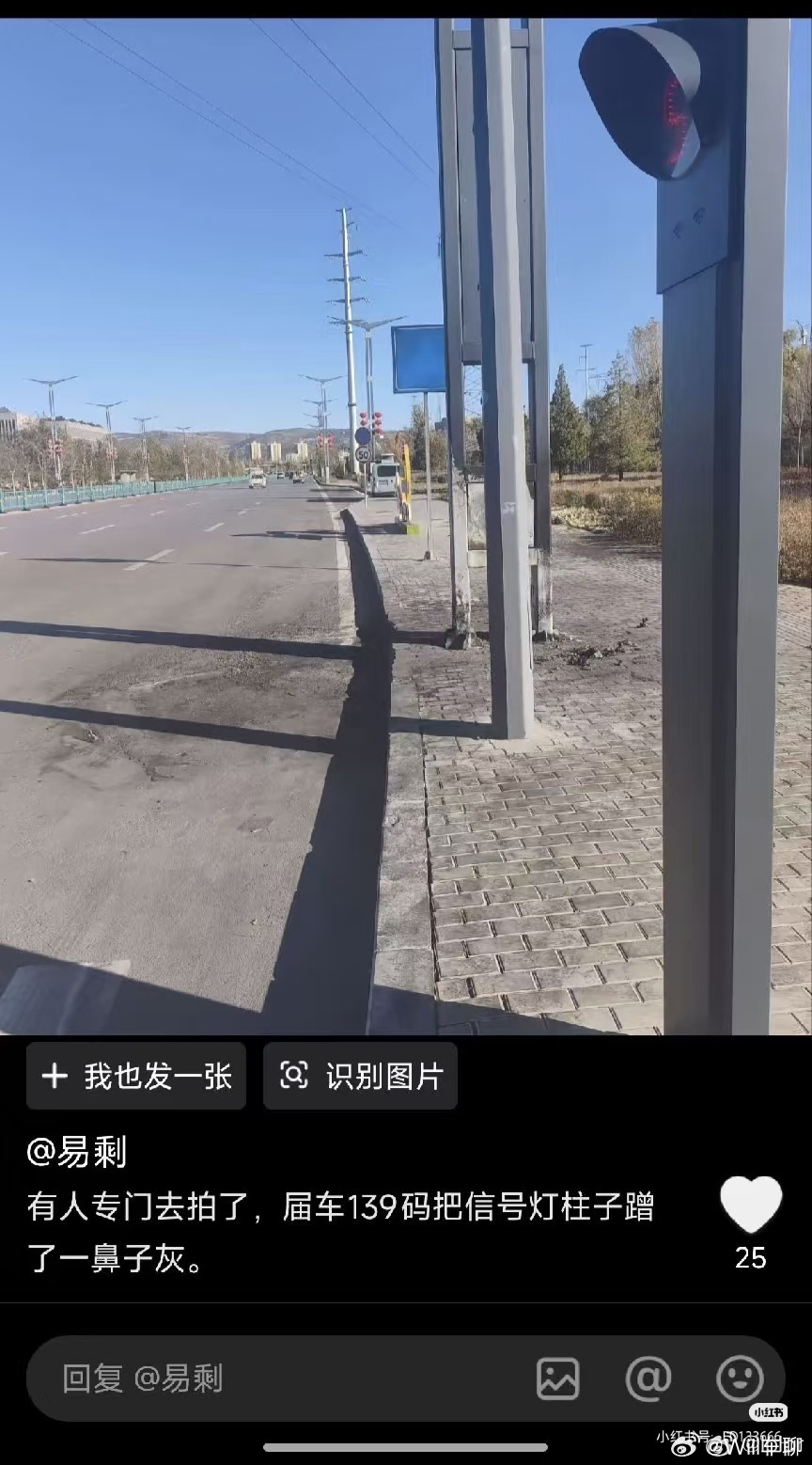
The crash happened days before the response did. An AITO M9 on a road in Shenmu, in Yulin, Shaanxi, collided with a lamp pole and caught fire; the driver died; the clips that spread were taken down. On October 21 the company answered: the car was under manual control, travelling at 139.1 km/h on a road posted at 50, and the impact had short-circuited the engine bay and leaked flammable fluids — it was not, as rumours had it, a battery fire. The statement reached Baidu's trending board the same day.
It did not close the case. "Netizens derive the AITO M9's speed with physics" (网友物理推导问界M9车速) trended within hours, and the derivations are exactly that: measurements, not vibes. Working from traffic-surveillance footage, users counted frames at what they take to be thirty per second and measured distances off the road's top-down view, producing a speed for each leg of the car's path — about 74 km/h entering the frame, dropping through a turn, twenty-something by the time one annotated curve chart reaches the collision. A reconstruction circulating on another blogger's timeline lands at 59 km/h at the crosswalk.
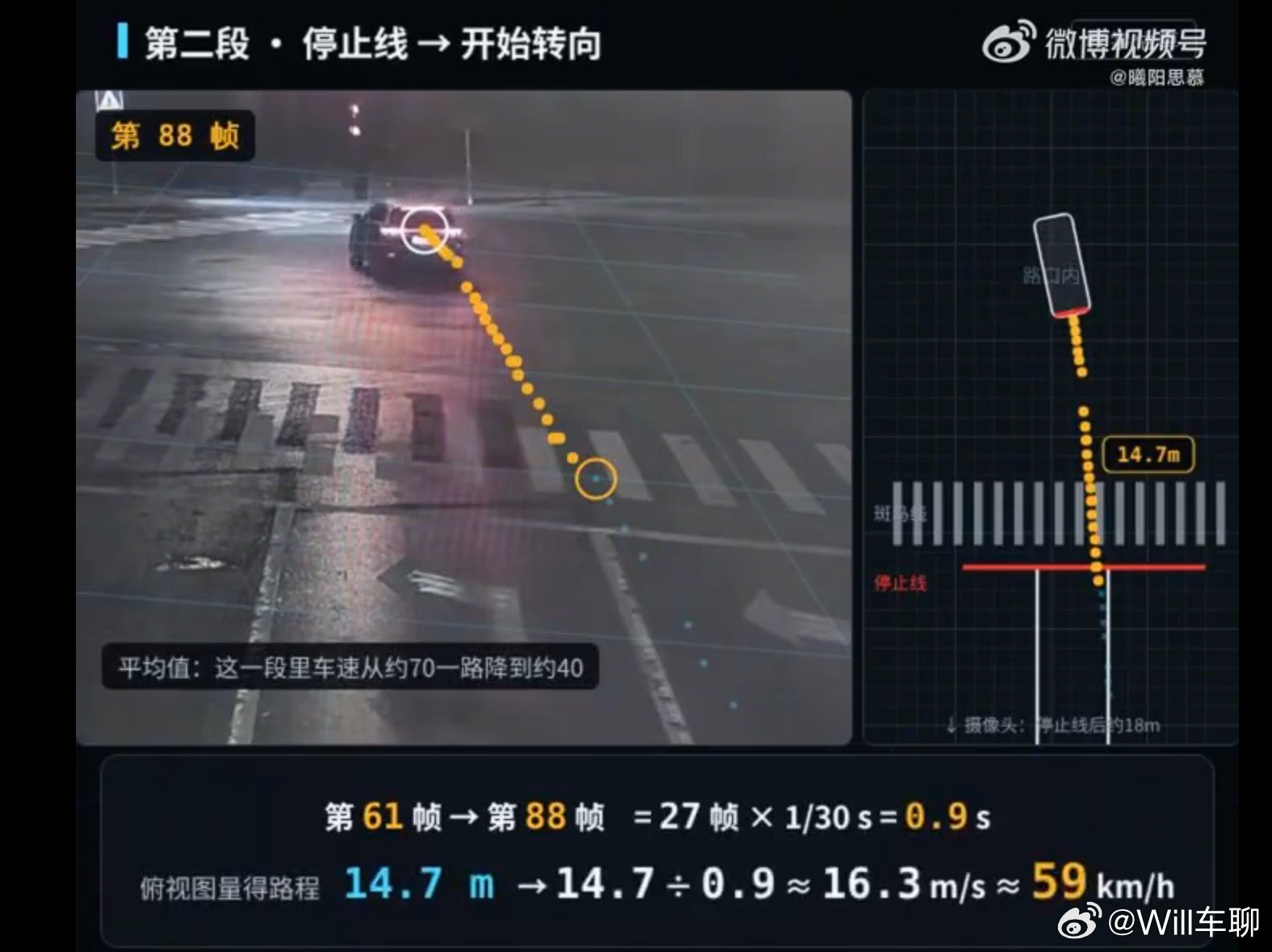
The car blogger Will Che Liao, who has been collecting the versions, wants the one number nobody has published: the crash recorder's. The estimates, he noted, have drifted downward as each new analysis appears — "from 45 to 30, and now 20" — and he invited someone to do the obvious, go and measure the scene in person. "Once the real distance is out," he wrote, "the speed — and the truth — will come out."
The official figure has defenders running the same arithmetic. One widely liked post timed the car crossing roughly sixty metres of road in 1.6 seconds — about 135 km/h, close to the company's number — and drew the weary conclusion that at that speed no car guarantees a survivable fire, while adding that the pile-on replicates a previous fatal Xiaomi crash: fury at the brand, fury at the victim's driving, and a public that no longer defaults to believing either side.
The stakes reach past one wreck. AITO is the flagship brand of Huawei's automotive alliance, renewed only weeks ago in a new five-year deal with Seres, and it sells into the world's most competitive car market, where a safety narrative can move sales overnight. Regulators are already moving: the day before AITO's statement, the industry ministry published draft rules that would keep "unreasonable innovative design" and under-tested products off the market. The number that settles this argument sits in the car's own recorder. AITO has not published it, and until it does, Weibo's physicists will keep measuring.