Young Chinese Are Moving Into Nursing Homes — and Paying Their Rent in Companionship
Nursing homes in Nanning and Beijing are offering young people cheap rooms in exchange for hours of volunteer time with elderly residents — an experiment in 'intergenerational co-living' that speaks to China's twin pressures of youth housing costs and a rapidly ageing population.
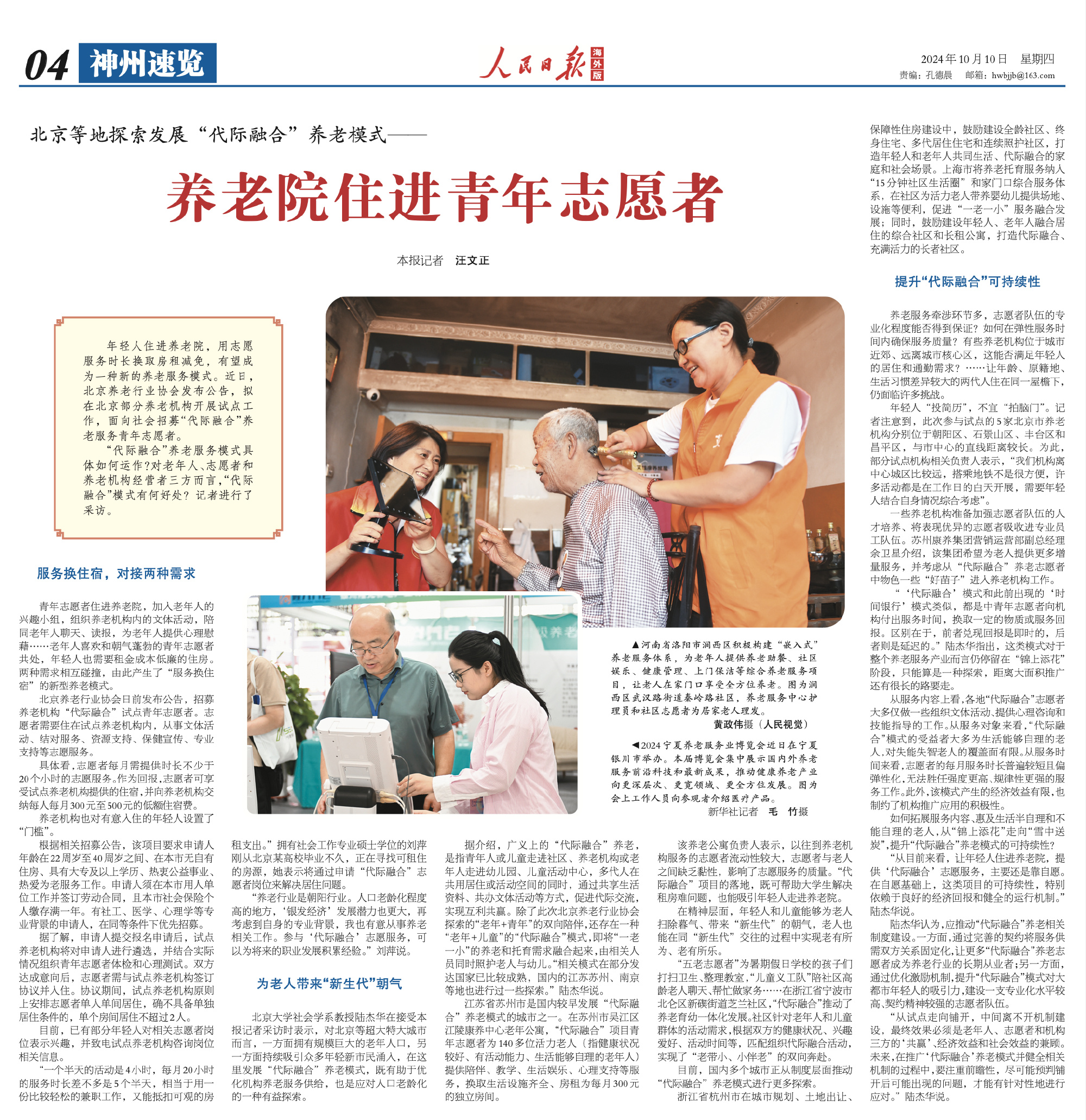
Nursing homes in the southern city of Nanning have found a way to fill their empty rooms and their residents' afternoons at the same time: they are renting them to young people, and accepting payment partly in companionship.
The scheme, reported by local outlets in early July, is open to anyone aged 22 to 40 who lives in the city, has no home of their own, and has paid social insurance for at least a year. A single room at one of the participating homes costs 1,000 yuan a month — well below market rent — and completing 30 hours of volunteer service a month can reduce that to nothing. The work itself is deliberately undemanding: chatting with residents, teaching them to use their phones, organizing games and activities. The homes advertise full medical and nursing facilities on site, so both generations have professional care within reach.
A model Beijing wants to scale
The idea is not new, but it is moving from experiment to policy. In 2024, the Beijing Elderly Care Association announced that the capital would pilot the same model, recruiting "intergenerational integration" volunteers for selected nursing institutions. There, the terms were slightly different: a minimum of 20 hours of service a month, and a nominal 300-to-500-yuan monthly fee for the room. Volunteer duties included joining residents' hobby groups, reading newspapers aloud, and providing what the official framing calls "psychological comfort."
The People's Daily has since profiled similar programs in Luoyang and Chongqing, where municipal authorities and universities pair student volunteers with elderly residents in exchange for reduced rent. As its overseas edition put it, the model arises from "two needs colliding": older people want to live around youthful energy, and young people in big cities need affordable housing.
The economics on both sides are stark. China's population has been shrinking since 2022, and the proportion aged 60 and above is climbing fast — nursing homes in many cities have vacancies not because demand is weak but because affordable supply lags. Meanwhile, young urban workers face some of the world's worst rent-to-income ratios, and many are already delaying marriage and children over housing costs. A 1,000-yuan room that also solves loneliness, in the eyes of the program's designers, addresses both problems with one arrangement.
What the online debate says
The public reaction has been largely warm, with a practical edge. One widely shared comment captured the appeal: even if a young volunteer does nothing but sit nearby scrolling their phone, an elderly person watching them "feels happy in their heart" — because, the commenter wrote, no elderly person wants to spend their last years surrounded only by other elderly people.
Skeptics have raised fair questions. Thirty hours a month is a real commitment on top of a full-time job, and critics of earlier versions of the scheme asked whether "emotional labor" can be meaningfully verified, or whether homes might come to rely on cheap young labor for tasks that should be staffed professionally. There is also the question of what happens when the novelty fades on either side.
For now, the model is spreading city by city, from first-tier Beijing to smaller hubs like Nanning, and each new program adjusts the terms — hours, fees, eligibility — based on what the last one learned. For the young people signing up, the arithmetic is simple enough; what the nursing homes are really buying, and what the residents say they most value, is a change of air in a place where every day looks much like the last.