Haidilao Sparks Public Outcry After Online Staff Sends Vulgar Insults Over Simple Meal Substitution Request
A routine request for a dietary tweak turned into a viral scandal for one of China’s most celebrated hot‑pot chains last week. On August 24, 2025, a woman identified only as Ms. Yue, a resident of Hohhot in Inner Mongolia, placed a take‑away order with the local Haidilao outlet. When she asked whether the meat items in the set could be swapped for vegetables, the reply she received was anything but polite. The restaurant’s online customer‑service representative responded with lewd, sexually charged insults that resembled the “yellow jokes” (黄腔) often censored on public forums. The exchange, captured in screenshots shared by Ms. Yue on social media, sparked a torrent of outrage that has forced Haidilao to confront a crisis that threatens the polished reputation it has cultivated for years.
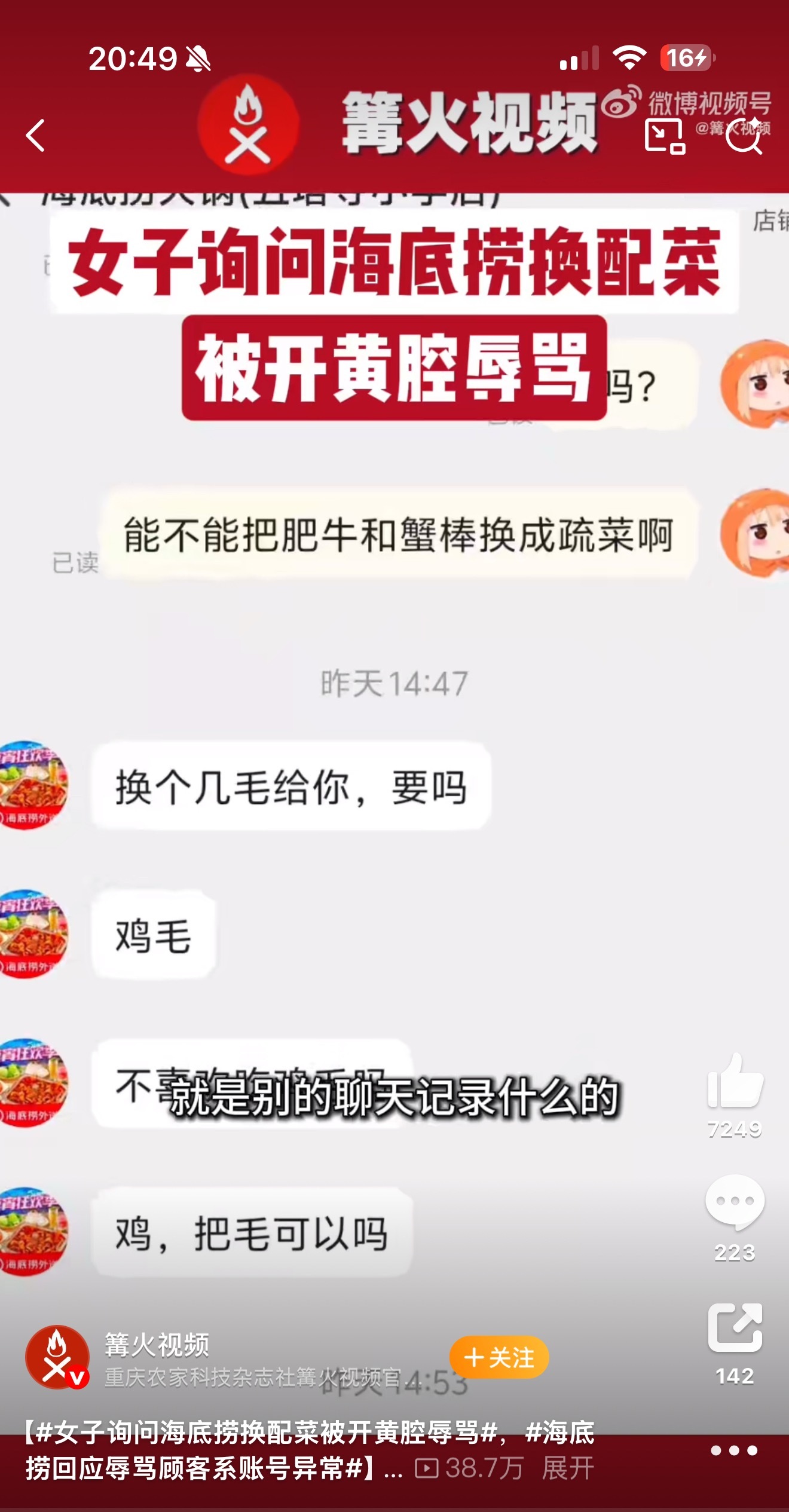
Haidilao’s brand has become almost synonymous with meticulous service in China. From complimentary hand‑massage stations to free snack bars and rapid table turnover, the chain has been lauded as a benchmark for hospitality. That image made the incident all the more shocking. Netizens quickly seized upon the contrast, posting comments such as, “Haidilao’s offline service is quite good, aren’t their online customer service trained?” (海底捞线下服务挺好的啊,线上客服没培训吗). The sentiment was a mixture of disbelief and disappointment, with many questioning whether the famed in‑store experience could be replicated in digital interactions.
The restaurant’s initial response was swift. Within hours of Ms. Yue’s complaint, a Haidilao manager arrived at her home bearing milk, fruit and flowers, and the company refunded the entire cost of the meal. In a press release the chain explained that the incident stemmed from an “account anomaly” – a hacked online account that allowed an unauthorized user to log in and hurl the offensive messages. Haidilao said it had reported the breach to the police and launched an internal investigation, while the implicated branch – identified as the Wutasi Primary School (五塔寺小学店) location in Hohhot – temporarily suspended its take‑away service on the ordering platform.
The “hacker” explanation did little to appease an increasingly skeptical public. Online commentators pointed out the improbability of a cyber‑intruder spending effort solely to insult a single customer. One user wrote, “A hacker bothers to log into an account just to curse customers? The motive doesn’t make sense” (黑客费劲儿登账号就为骂顾客?动机说不通). Many accused Haidilao of “passing the buck” (甩锅), interpreting the statement as an attempt to dodge accountability rather than a genuine admission of a security lapse. The episode has inadvertently highlighted a gap in the chain’s risk management: while its in‑store staff undergo rigorous training, the same standards appear to have been neglected for the digital front end.
The backlash is not limited to this singular episode. Some netizens recalled earlier grievances – from privacy concerns over an incident in which a breastfeeding mother was photographed without consent, to reports of hygiene lapses at certain locations – suggesting a pattern of service shortfalls that contrast sharply with Haidilao’s glossy advertising. “If the offline experience is great, why can’t the online side be professional?” one commenter asked. The recurring theme in the online discourse is a demand for transparency. Users are calling on Haidilao to release the findings of its investigation, whether it turns out to be an employee’s misconduct, a technical flaw, or an actual cyber‑attack.
Legal authorities have been drawn into the matter. The company confirmed that it has lodged a police report and is cooperating fully with the investigation. By August 25, Ms. Yue – also referenced in some reports as Ms. Li – had reiterated through the news platform Jiupai that the individual responsible exhibited “a very bad attitude” and should face severe punishment to prevent further harm. The police response has not yet been disclosed, but the public expects a definitive outcome.
For many observers, the incident underscores a broader issue in the service industry: the necessity of basic respect, regardless of whether a request can be accommodated. Even when a customer’s ask – in this case, a simple substitution of meat for vegetables – is beyond a restaurant’s policy, the appropriate response should be a courteous explanation, not a vulgar rebuke. The episode serves as a reminder that digital customer service, increasingly the first point of contact for modern diners, must be held to the same standards as face‑to‑face interactions.
Haidilao’s next steps will likely determine whether the chain can weather the storm. Its swift apology, refund and gesture of goodwill have bought it some goodwill, but the lingering distrust may require more than a statement. A transparent release of investigative results, concrete measures to tighten online account security, and perhaps a renewed training regime for all customer‑facing staff could help restore confidence. Until then, the phrase that has dominated Chinese social media – “woman asks Haidilao to change side dish, gets verbally abused with lewd remarks” – remains a cautionary tale of how a single moment of disrespect can unravel years of brand capital. The episode is still unfolding, but one thing is clear: in an age where a complaint can go viral in minutes, even industry titans cannot afford to overlook the basic tenet of treating every customer with dignity.