Hit Song Sparks Ownership Dispute, Exposing Deep-Seated Issues in China's Music Industry
A recent controversy in the Chinese music industry has sparked a heated debate about copyright ownership, artist rights, and professional ethics. At the center of the storm is a dispute between singer Zhang Bichen and songwriter Wang Sulong over the hit song "年轮" (Nian Lun), which was originally performed by Zhang Bichen for the 2015 TV drama "The Journey of Flower."
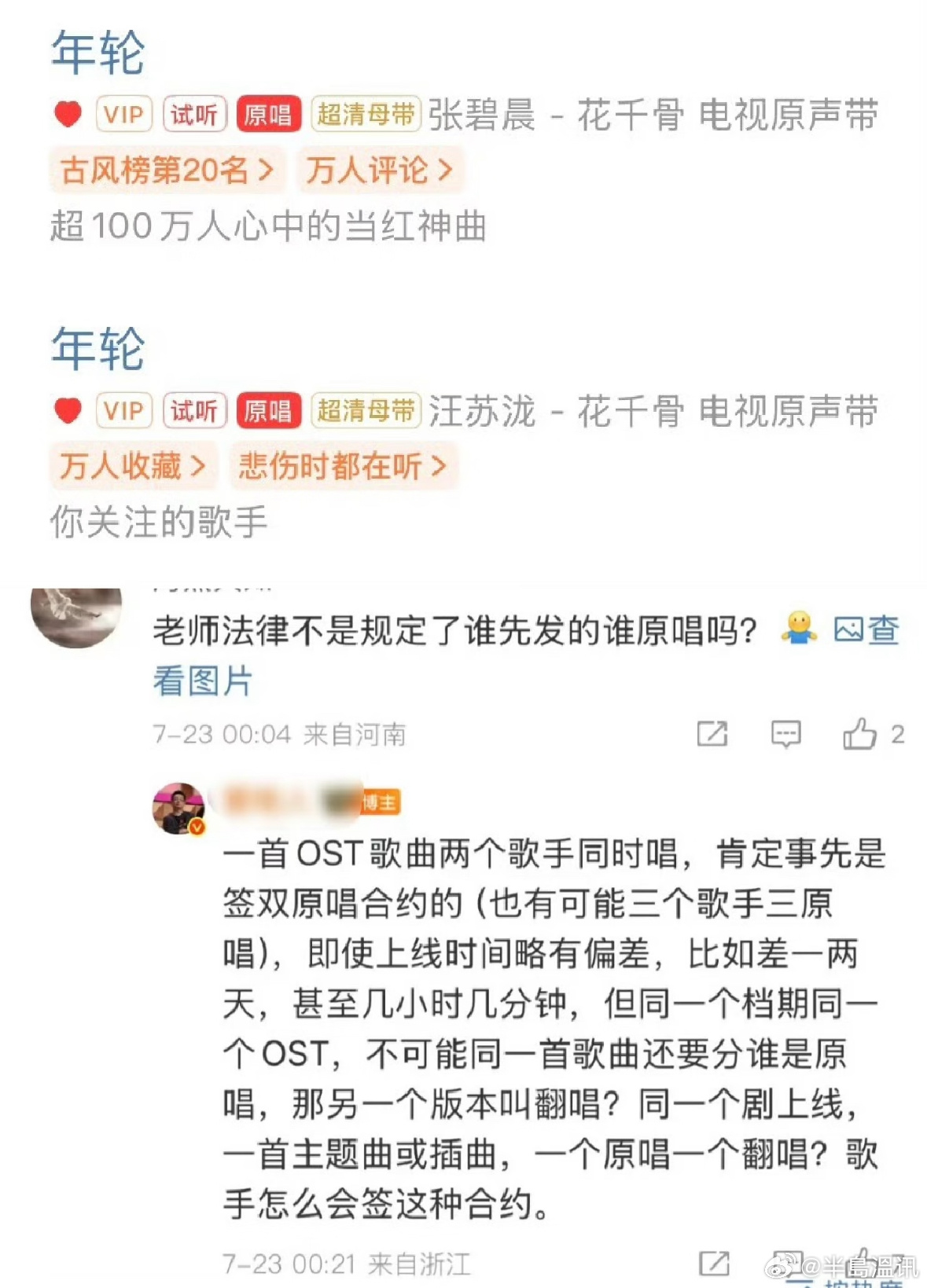
The controversy began when Wang Sulong, the composer and lyricist of "年轮," exercised his right to withdraw authorization for public performance by Zhang Bichen. This move was met with widespread criticism from fans and industry insiders, who argued that Wang Sulong was attempting to undermine Zhang Bichen's success and reclaim credit for the song.
The dispute has also shed light on a broader issue within the music industry, namely the often-overlooked rights of lyricists and composers who are the original creators of the work. Traditionally, the public perceives the singer as the sole "owner" or "originator" of a song, even if they are not the composer or lyricist. However, this case highlights the need for clear, transparent, and enforceable contracts regarding performance rights, recording rights, and intellectual property.
Furthermore, the dispute has sparked a debate about what constitutes an "original singer." Media reports indicate that both QQ Music and NetEase Cloud Music initially listed both Zhang Bichen and Wang Sulong as "original singers" for "年轮," but QQ Music later removed Zhang Bichen's "original singer" tag. This reflects a broader industry and public perception challenge, with many questioning whether the "original singer" is the one who first recorded and popularized the song, or the one who wrote it.
The incident has also exposed three major breakdowns in the music industry chain. Firstly, the creative end, where the rights and recognition of lyricists and composers are often neglected. Secondly, the production end, where record companies hold copyrights but the enforcement and understanding of these rights by performers and the public can be inadequate. Finally, the distribution end, where platforms like QQ Music and NetEase Cloud Music play a crucial role in shaping public perception of "originality."
In addition to the industry implications, the controversy has also sparked a broader societal debate about intellectual property rights, artistic integrity, and cultural memory. The public's emotional investment in songs like "年轮" highlights the deep connection between music and cultural memory, and the need to preserve and respect the original form and intent of cultural products.
Moreover, the incident has led to increased government and regulatory scrutiny of the entertainment and intellectual property sectors. There may be a push for clearer legal guidelines, better enforcement mechanisms, or educational campaigns to prevent similar disputes and foster a healthier creative ecosystem.
The power of fan communities and online discourse has also been evident in shaping narratives and exerting pressure on artists and platforms. The passionate debate among fans and the subsequent actions by artists and platforms demonstrate how quickly public sentiment can shift and influence industry decisions in the digital age.
In conclusion, the controversy surrounding Zhang Bichen and Wang Sulong serves as a flashpoint for critical issues within the Chinese music industry, primarily concerning intellectual property rights, the recognition of creators, and the need for a more equitable and transparent industry structure. Its broader implications suggest a growing societal awareness of IP, and a potential for regulatory evolution to support artistic integrity and innovation.