How Hong Kong Kept Its Vegetables Honest: A Viral Food-Safety Ordinance Explained
A viral Weibo post reduced Hong Kong's food-safety record to a single law: the Food Safety Ordinance, which turns violations into crimes with fines and jail time. The claim is simplified, but the legal teeth behind Hong Kong's clean produce are real—and the contrast with mainland enforcement is why mainlanders share it.
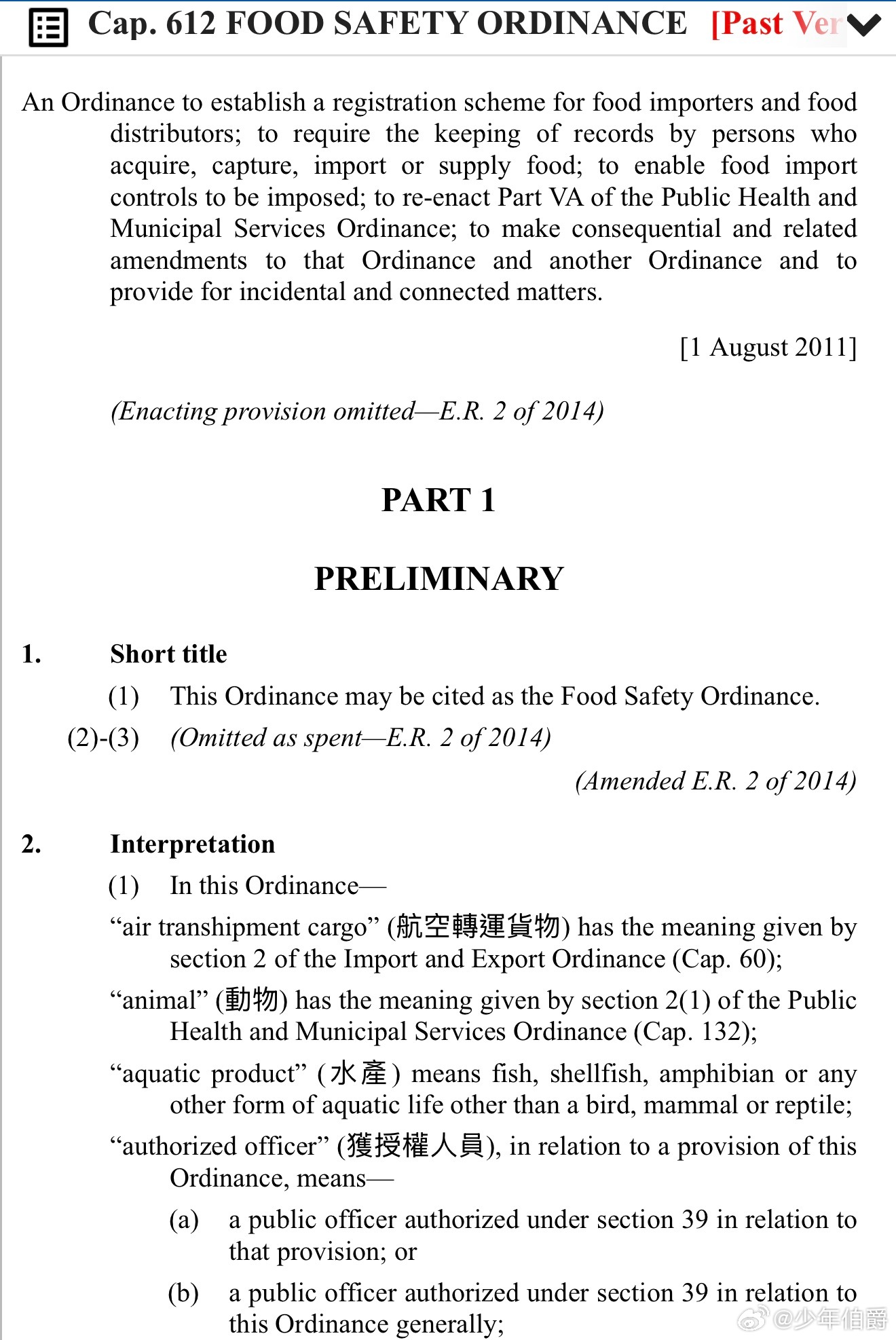
The question was short enough to fit in a hashtag: “Why can Hong Kong eat safe vegetables?” A viral Weibo post had an answer that spread faster than the question, distilled into a screenshot of a legal text. The reason, the post argued, is that Hong Kong does not negotiate with food-safety violations. It criminalises them.
At the centre of the thread is Chapter 612 of Hong Kong's Food Safety Ordinance, sections of which were copied out and underlined for emphasis by the account behind a post liked more than 6,000 times. The key passages impose duties on anyone in the food trade, from farmers to wholesalers to restaurants, to keep records of where their produce came from and where it went. Breach an order made under the law, and the penalty is a fine of up to several hundred thousand Hong Kong dollars and up to 12 months in prison—not a warning, the posters stressed, but a crime.
The legal teeth, spell out
The screenshots circulating are genuine excerpts of the ordinance. Section 24, for example, requires wholesalers to record the date, supplier and quantity of every food item within 72 hours, on pain of fines and imprisonment. The law's machinery sits on top of Hong Kong's import regime, which tests vegetables at the border and traces them back to their farms in the mainland.
What the viral posts gloss over, of course, is that Hong Kong is a dense port city of 7 million people, not a continent-sized agricultural economy. The systems that allow officials there to trace a head of lettuce back to the farm in the mainland are possible partly because the city is a compact, wealthy hub with a concentrated import pipeline—and because it built that pipeline deliberately around an export-grade standard. Still, the legal framework is the part mainland readers keep zooming in on: not a better lab, but a law that treats violations as offences rather than arguments to be had.
Why mainlanders share it
The post went viral not as a travel tip but as a contrast. For Chinese readers who have lived through formaldehyde-soaked cabbage scandals, gutter-oil cooking, and additives passed off as freshness, the image of a legal text that says “minimum fine, six months” reads as a wish about their own system. As one widely shared post put it: “Some things can only be solved by criminalisation.”
That sentiment is the real story behind the hashtag. Mainland China has its own food-safety law, but enforcement has long relied on administrative penalties and after-the-fact rectification—the “settle it and move on” approach the viral posters mock. Hong Kong's ordinance, whatever its practical limits, became a symbol of what a no-negotiation standard looks like when it is written into the law rather than left to inspectors.