Two Reported Electrocuted at Hongyadong Bus Stop During Chongqing Flooding
Two people were reported dead at a riverside bus stop near Chongqing's Hongyadong after heavy rain flooded the streets, renewing fears about aging urban electrical wiring during flood season.
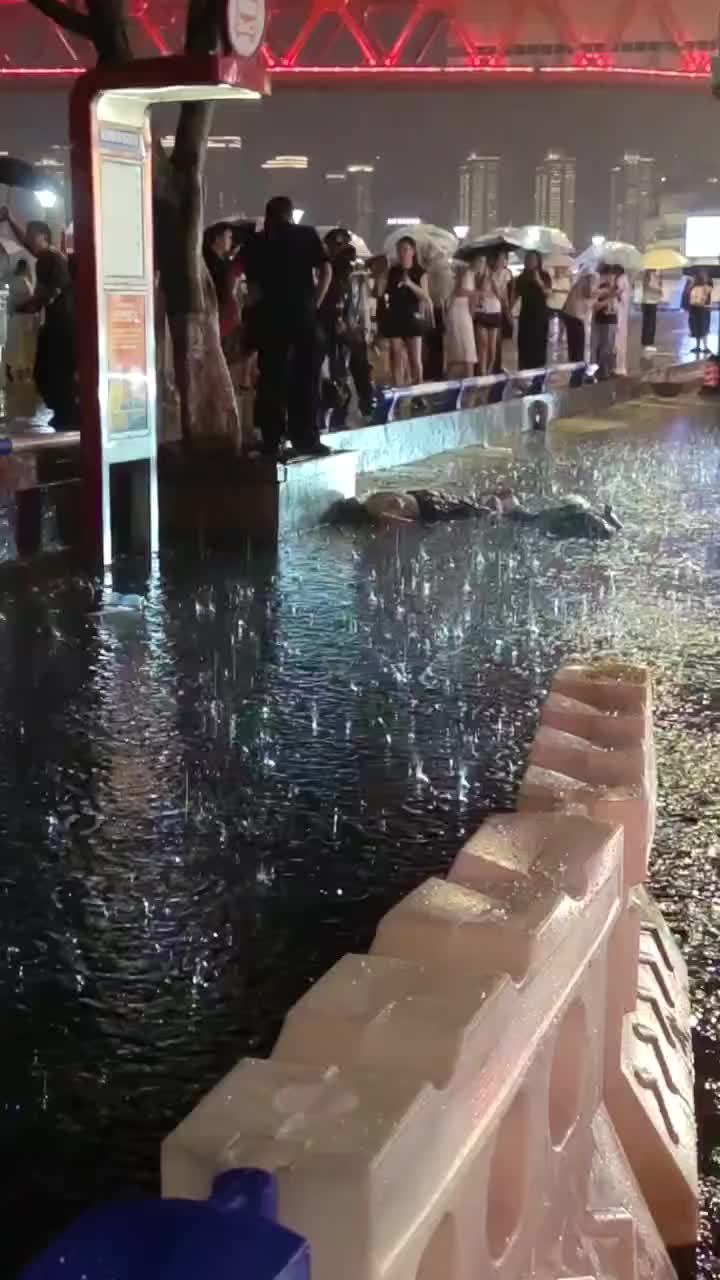
Two people were reportedly electrocuted at a riverside bus stop near Chongqing's Hongyadong complex on Tuesday night, after an evening of heavy rain left the city's riverside roads flooded.
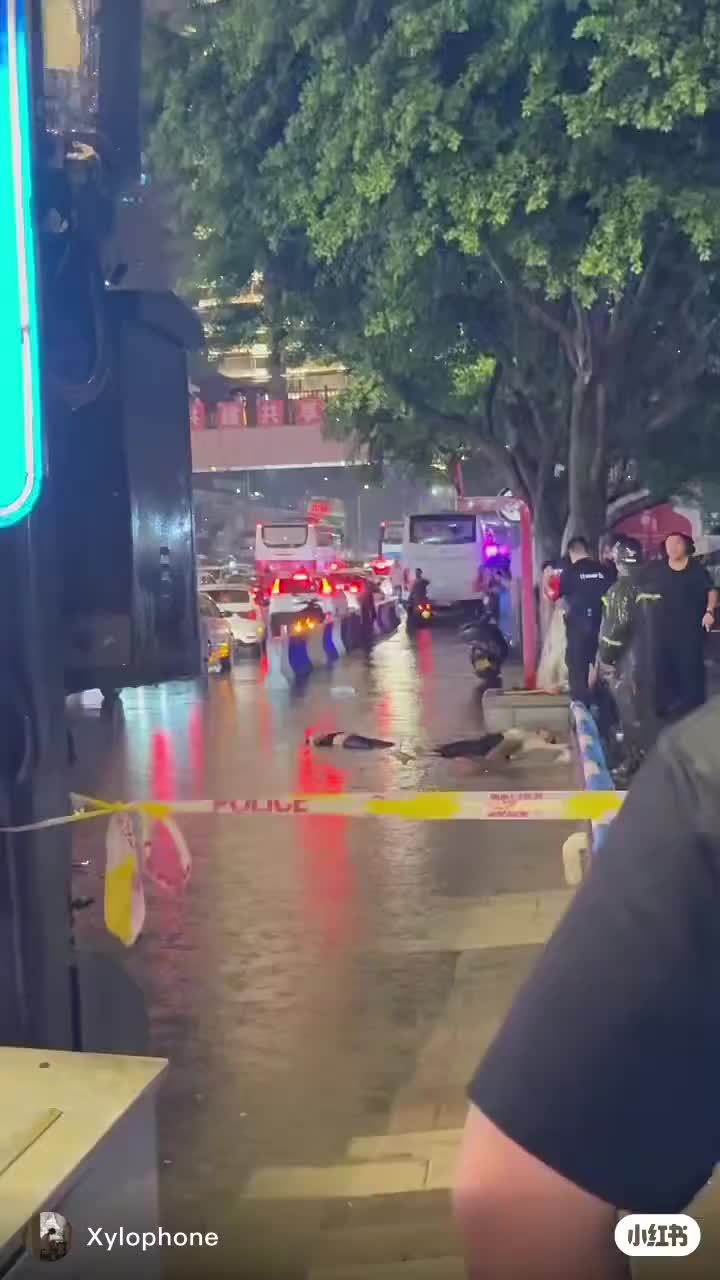
Videos and photographs circulating on Weibo show a person lying motionless in ankle-deep floodwater while onlookers huddle under umbrellas on a raised, illuminated platform that appears to be the bus stop. A second image shows a section of road cordoned off with police tape, two people on the ground, and an ambulance and police cars with flashing lights parked beside the curb.
Hongyadong is one of Chongqing's best-known landmarks — a stilted cluster of restaurants built into a cliff above the Jialing River, thronged with tourists at night. The riverside streets that lead to it sit directly below the city's old town, and they flood routinely during the torrential late-summer downpours that sweep the Yangtze basin.
By early Wednesday, local accounts were coalescing around a single claim: that a live electrical fault at the station had passed current through the standing water. "Every day people leave home healthy in the daytime," wrote one user, "and at night they lie in the cold rainwater, never making it back." Neither Weibo poster offered an official cause, and no authority had publicly confirmed the circumstances by the time the posts went viral.
The talk on Weibo quickly moved past the event itself to a familiar anxiety: the condition of China's aging urban electrical infrastructure during flood season. Chongqing sits at the confluence of two great rivers and is one of China's fastest-growing megacities, but its older districts have a patchwork of above-ground wiring, some of it decades old. Each summer, storms test that wiring, and a leak that would be a nuisance on a dry street becomes lethal when it meets standing water.
The incident drew comparisons online to earlier wet-weather electrical hazards in other cities, with users urging pedestrians to keep away from metal fixtures — streetlights, sign poles, bus shelters — whenever floodwater reaches the curb. Some posted maps of the Hongyadong station and asked whether the same stops elsewhere along the riverfront had been checked.
For Chongqing, the shock cut against the city's carefully tended image as a moody, neon-lit tourism capital. Hongyadong's evening crowds are a point of civic pride, but the same geography that makes the district photogenic — a steep cliff, a river's edge, narrow roads at the waterline — also makes it vulnerable when the rains arrive. What began as a night of riverside sightseeing ended, according to the posts, in water that should have been merely inconvenient, and instead turned deadly.