How an 'Emotional Dispute' Label Kept a Man Who Killed His Ex-Girlfriend Off Death Row
A Hubei court sentenced a man who broke into his ex-girlfriend's home and stabbed her dozens of times to death with a reprieve, citing the killings as arising from a romantic dispute. In a rarely seen challenge, prosecutors have appealed the sentence, arguing that a pattern of threats and a premeditated attack deserve more than leniency.
In September 2025, a 43-year-old man in Xiangyang, Hubei province, let himself into the home of a woman who had already rejected him. He stabbed her dozens of times, cut her carotid artery and windpipe, checked her breathing, then kept stabbing. Her home security camera recorded it all.
This week the case is back in the news because of what happened after. A Hubei court imposed the death penalty but found no need to carry it out immediately: Zhu Mouhu received death with a two-year reprieve for the murder of Zhu Mouqun, the woman he had once pursued and briefly dated. The judges' reasoning rested partly on the case being a dispute born of romance, alongside his clean record and his willingness to confess.
Chinese courts have long treated killings between former partners more leniently than stranger violence, on the theory that a private quarrel says something about the circumstances that a public attack does not. The phrase at the center of the argument is 情感纠纷 (qínggǎn jiūfēn), "emotional entanglement," a label that draws a moral distinction between an anonymous assault and a crime inside a relationship. To the family, it reads as a discount on a woman's life. They told the Yangtze Evening Post that they had opposed the relationship from the start, warning their daughter: "If you date this man, don't come back to this house." Zhu Mouhu, they said, was in his forties, dyed his hair yellow, carried heavy debts, and had a violent temper. After the breakup he harassed them and made repeated death threats — conduct that, in their telling, does not resemble a lover's heartbreak so much as a premeditated campaign.
The prosecution agrees. In an unusual step, the Xiangyang procuratorate has appealed to the Hubei High Court, arguing that mitigation based on "emotional entanglement" does not stand up. Its filing describes a planned killing with an especially cruel method and an especially severe result, and says the sentence to death with a reprieve is lenient by a wide margin. The appeal matters less because of any doubt about guilt — the killer confessed — than because of what it says about how Chinese courts should weigh a man's claim to have acted out of love.
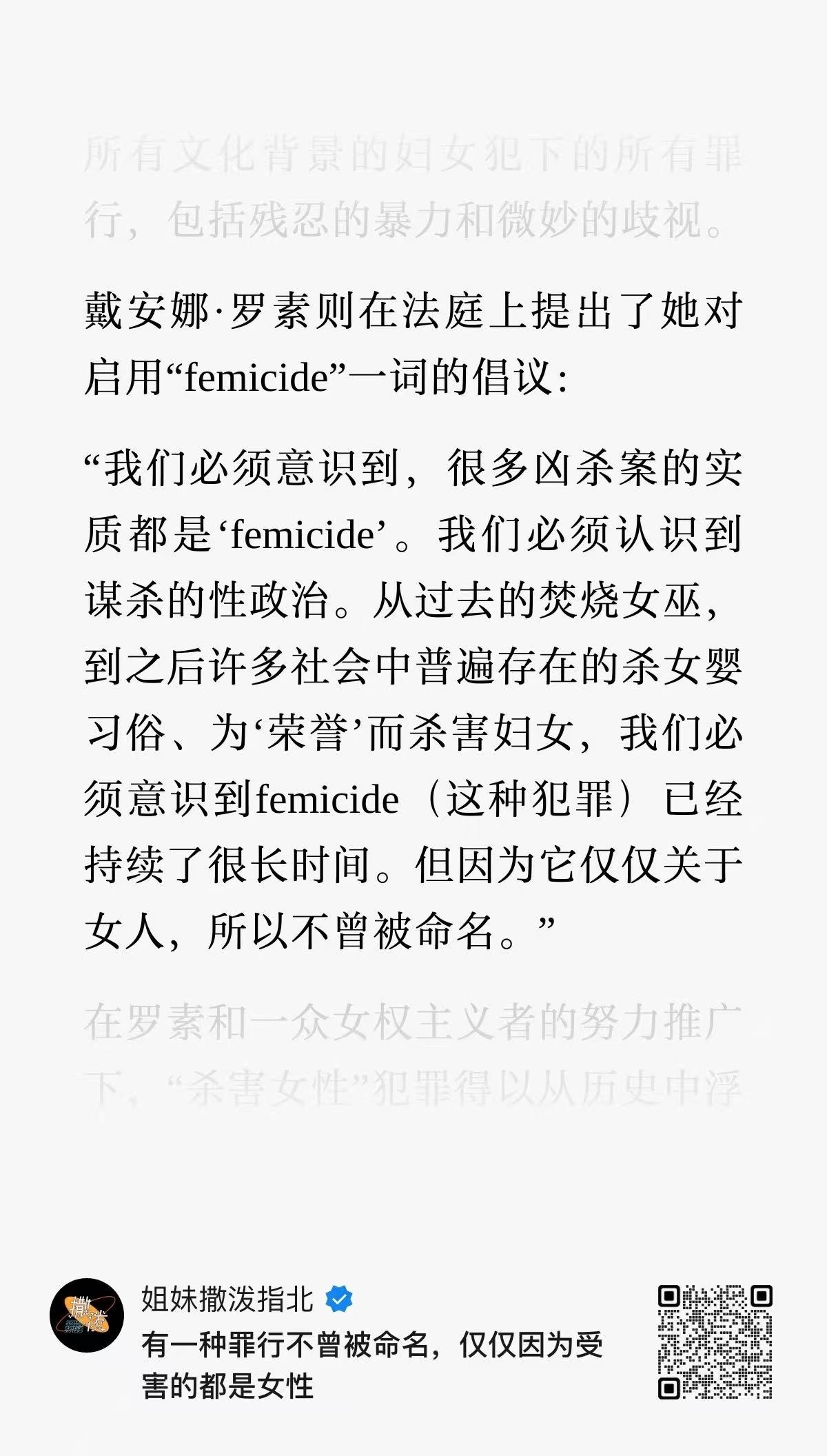
Online, the case has become part of a longer-running feminist argument about naming. One widely shared account posted, next to a translated definition of the word "femicide," that it was tired of seeing killings of women flattened into "emotional disputes" — that such crimes are rooted in structural gender inequality, not in a quarrel gone too far.
What the high court now decides will resonate beyond Hubei. If the appeal succeeds and the sentence is revised upward, it would signal that a history of threats and a violent entry into a woman's home cannot be neutralized by describing the crime as a romance. If the original sentence stands, the label 情感纠纷 will retain its power to soften the harshest penalty — and Chinese courts will have drawn, once more, a line that treats some victims as less protected than others.