La Liga Says the 'Racist' Yamal Post That Spread Across Chinese Social Media Was Forged
A screenshot that appeared to show Ballon d'Or winner Lamine Yamal mocking Asians, and that dominated Chinese platforms, never came from his accounts at all. In a formal letter to China's state broadcaster, the Spanish league says the image was forged and that it is investigating the accounts behind it.
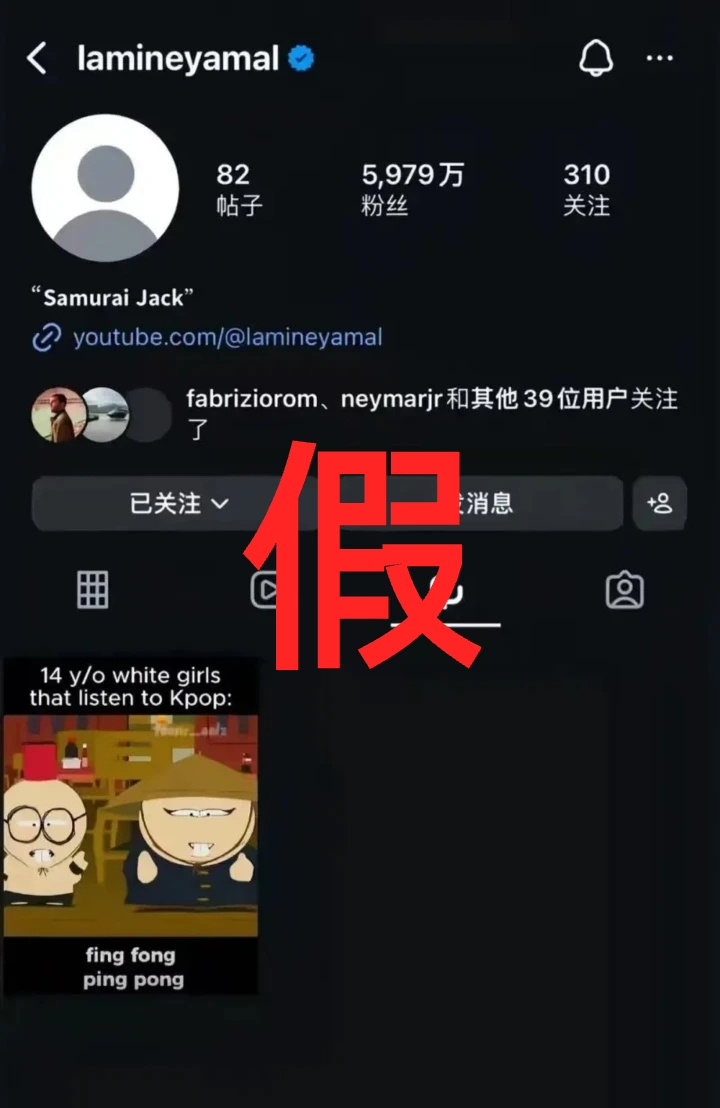
For about a day, much of Chinese social media believed that one of the world's best footballers had mocked them. A screenshot circulating on Douyin appeared to show Lamine Yamal, Barcelona's Ballon d'Or-winning forward, posting on Instagram a video that ridiculed Asian accents and caricatured Asian faces. As our earlier coverage described, the post vanished almost immediately, his account showed no trace of it, and neither the player nor the club said a word — leaving Chinese fans to wait for an apology that never came.
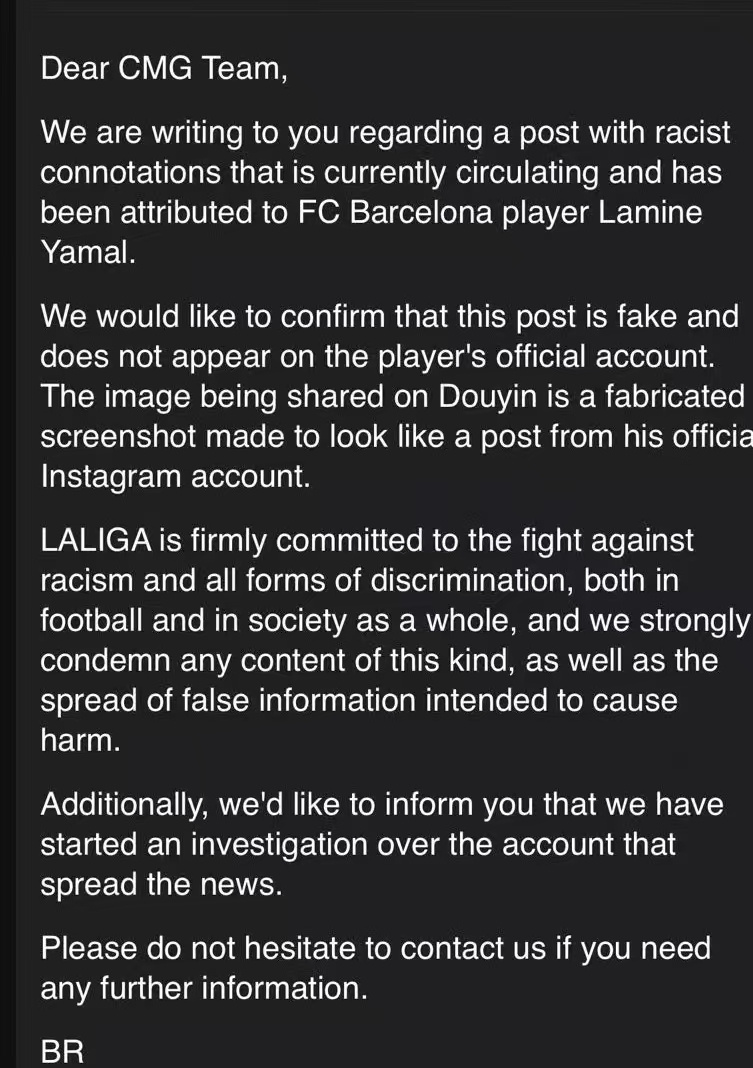
Monday evening, the premise of that wait collapsed. China Media Group's sports centre, which had followed the outcry from its first hours and formally asked La Liga to verify the post, published the league's written reply. "The image currently circulating is a forged screenshot, deliberately made to look as though it had been posted on the player's official Instagram account," the letter states, adding that no such post ever appeared on Yamal's accounts. The league condemned racism and "the spreading of false information with the intent to harm," and said it had opened an investigation into the accounts that pushed the fake.
The reply moved fast by the standards of cross-border verification — the sports desk of CMG, China's state broadcaster, says it launched an emergency procedure and demanded answers from the league, and the letter came back addressed "Dear CMG Team" within the day.
Chinese fans, having spent a weekend of fury on the story, turned their attention to the forgery itself. "Photoshopping a rumour costs almost nothing," one sports blogger wrote. "Debunking one takes an official letter travelling between countries." Others went further inward: a widely shared post from a football fan account argued that criticising a player's football is fair game, but that fabricating ethnic insults — or wading into the row at all without the facts — was "self-belittling," and that even a real offence would not justify the indiscriminate lashing-out the fake had provoked.
The story also slipped out of the Weibo bubble. Baidu's trending board carried the league's clarification, The Paper published the full letter, and a question rising on Zhihu asked what legal consequences the fabricators might face — a distinctly legalistic turn for a football scandal, treating the forgery less as a prank than as a case of mass defamation.
What the letter does not settle is where the fake began. The league is investigating the spreading accounts but has named no one, and the original report of an offensive repost — the premise of the entire controversy — now stands unproven. The question Chinese users are asking on Zhihu, what the people behind the fabricated row will face, is the one the story genuinely leaves open.