Law Enforcement Cracks Down on Obscene Content Shared via Apple AirDrop: Debate Rages on Weibo
The recent news of law enforcement agencies cracking down on the use of Apple AirDrop to share obscene images and videos has sparked a heated debate on Weibo, the Chinese equivalent of Twitter. As reported by several users, the authorities have been successful in identifying and bringing to justice those responsible for anonymously spreading content considered to be of poor taste in public places such as malls and subway networks.
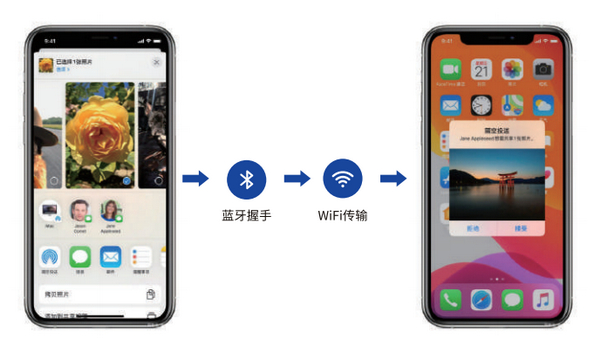
The story unfolded when a Weibo user posted an article on the news, which revealed that the culprits had used AirDrop, a default feature in Apple devices that permits file sharing between multiple devices without the need for a Wi-Fi connection or a shared network. The article also mentioned that the police are now equipped with a tool that can rapidly decode the encrypted email and phone number fields associated with the file-sharing feature.
The post, which quickly went viral, prompted Weibo users to voice their opinions on the matter. Some blamed Apple for not taking enough responsibility to prevent such instances, calling for the company to implement better measures to control the misuse of the feature. Others argued that the users themselves were responsible for their actions, urging them to exercise greater self-control when sharing content online.
One user argued, "People should know what is meant by 'sharing is caring.' The authorities are doing their part, but it's up to us, as users, to decide whether we want to share something or not."
Another user echoed this sentiment, saying, "The real issue here is not Apple's fault but rather the immaturity of some users who think it's funny or cool to share obscene content without considering the consequences."
Many were also concerned about the effectiveness of the law enforcement agencies in handling such cases, considering the difficulty of tracking down individuals who share content anonymously through features like AirDrop. However, the article highlights the success of the Beijing-based cybersecurity firm, Wangshen Information Technology Company, which has developed country's first forensic tool to analyze AirDrop data.
The institute's tool allows them to decipher the encrypted email and phone number fields associated with the file-sharing feature, helping them identify and locate those responsible for the distribution of obscene content. This groundbreaking technology has proved to be a significant step in combating the growing problem of online obscenity and has been instrumental in the arrest of several individuals in recent months.
The use of AirDrop for anonymous sharing of content is not a new phenomenon, but the recent case has raised concerns about the misuse of such tools and led to discussions about how companies can better control the dissemination of content through their products. In response to these concerns, Apple has reiterated its commitment to user privacy and promised to explore ways to prevent the misuse of AirDrop and other features on its devices.
This incident highlights not only the growing problem of online obscenity but also the increasing sophistication of law enforcement agencies in handling such cases. It also underlines the importance of individual responsibility and the need for users to make informed decisions when sharing content online.
In conclusion, the debate on the recent case involving the misuse of AirDrop for sharing obscene content has highlighted the need for a collective effort from both tech companies and users to prevent the misuse of technology-driven features. As the discussion continues, it is crucial for all parties involved to work together and find a balance between protecting user privacy and ensuring the responsible use of online platforms and devices.