China's Men Reach the Asian Games Table Tennis Semis After Lin Shidong's Shock Loss to a Thai 16-Year-Old
Lin Shidong, China's brightest young paddler, lost 2-3 to Thailand's 16-year-old Thitiphat Preechayan in the men's team quarter-final — the first upset of China's Nagoya campaign, debated across three trending topics while the team still won the tie 3-1.
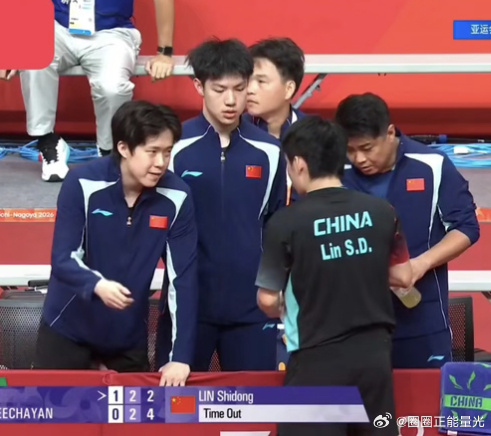
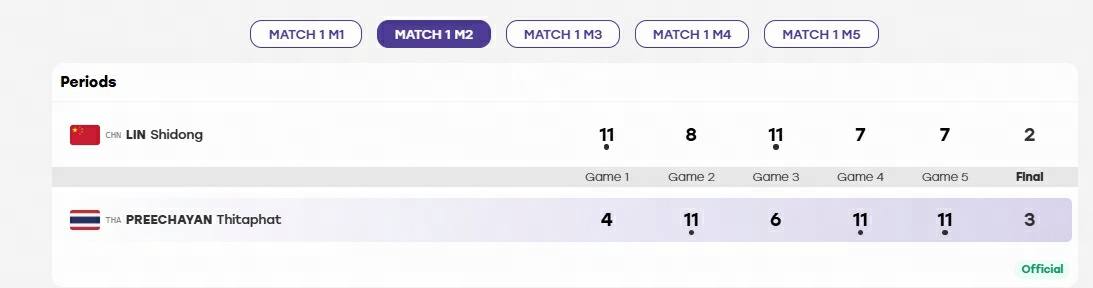
The quarter-final was supposed to be a formality on China's march to another Asian Games table tennis team title. Instead, the second rubber of Monday night's tie against Thailand produced the tournament's first genuine shock: Lin Shidong, one of the youngest members of China's men's squad and its anointed next star, lost 2-3 to Thitiphat Preechayan, a 16-year-old Thai making his name in the biggest match of his life — 11-4, 8-11, 11-6, 7-11, 7-11, after Lin had led a set and held chances in the deciders.
The tie still went China's way, 3-1. Wang Chuqin opened with a 3-0 win over Pakpoom Sanguansin, Xiang Peng restored the lead with a 3-1 over Thitiphat's team-mate, and Wang Chuqin then closed out the same teenager who had beaten Lin, 3-0 and brutally so. "[Beating Lin] exceeded everyone's imagination," Wang said afterwards, explaining that he had prepared for the fourth rubber with unusual care because the team could not afford a fifth match: "I wanted to end it there, so I kept every point tight."
Chinese fans did not treat the result as a footnote. The match charted under three separate trending topics at once — the team's 3-1 win, the upset itself, and a third asking bluntly about "Lin Shidong's form" — and a Zhihu question on the defeat drew 1.37 million views within hours. "How do you lose to a Thai player?" ran one typical comment, before softening: "Little Stone was too tense today; in the last few points he looked completely lost." Even Wang Chuqin was seen courtside telling his young team-mate to make some noise and snap out of it (打起来嗷,别蔫儿唧).
The defence came from an unexpected place. Cheng Jingqi, the retired international now commentating, argued on a table-tennis talk show that the pressure was structural: it was Lin's first Asian Games, he had surged through the early rounds, and the squad's depth problems meant there was no alternative selection. "Even if he loses two points, tomorrow I'd still have to send him out — there's no one else," Cheng said, before asking fans to accept that the criticism, like the selection, comes with the job. In Chinese table tennis, a system that has produced decades of near-unbroken team golds, a single lost rubber to Southeast Asia is treated as a national event, and the player who concedes it absorbs the alarm of the entire ecosystem.
The schedule gives Lin an immediate answer round. The men now meet Chinese Taipei in the semi-final, and on Wednesday morning Lin and Kuai Man open their mixed-doubles campaign against the North Korean pair that took Olympic silver — a draw, and an opponent, that leave little room for anything but the response everyone is waiting for.