At 503.17 km/h, a Chinese Electric Hypercar Sets the World Speed Record on a Closed Road in Abu Dhabi
BYD's Yangwang brand pushed its U9X electric hypercar to 503.17 km/h, the fastest speed ever recorded by a production car, on a closed desert road outside Abu Dhabi — a figure that resets what outsiders assume Chinese electric vehicles can do.
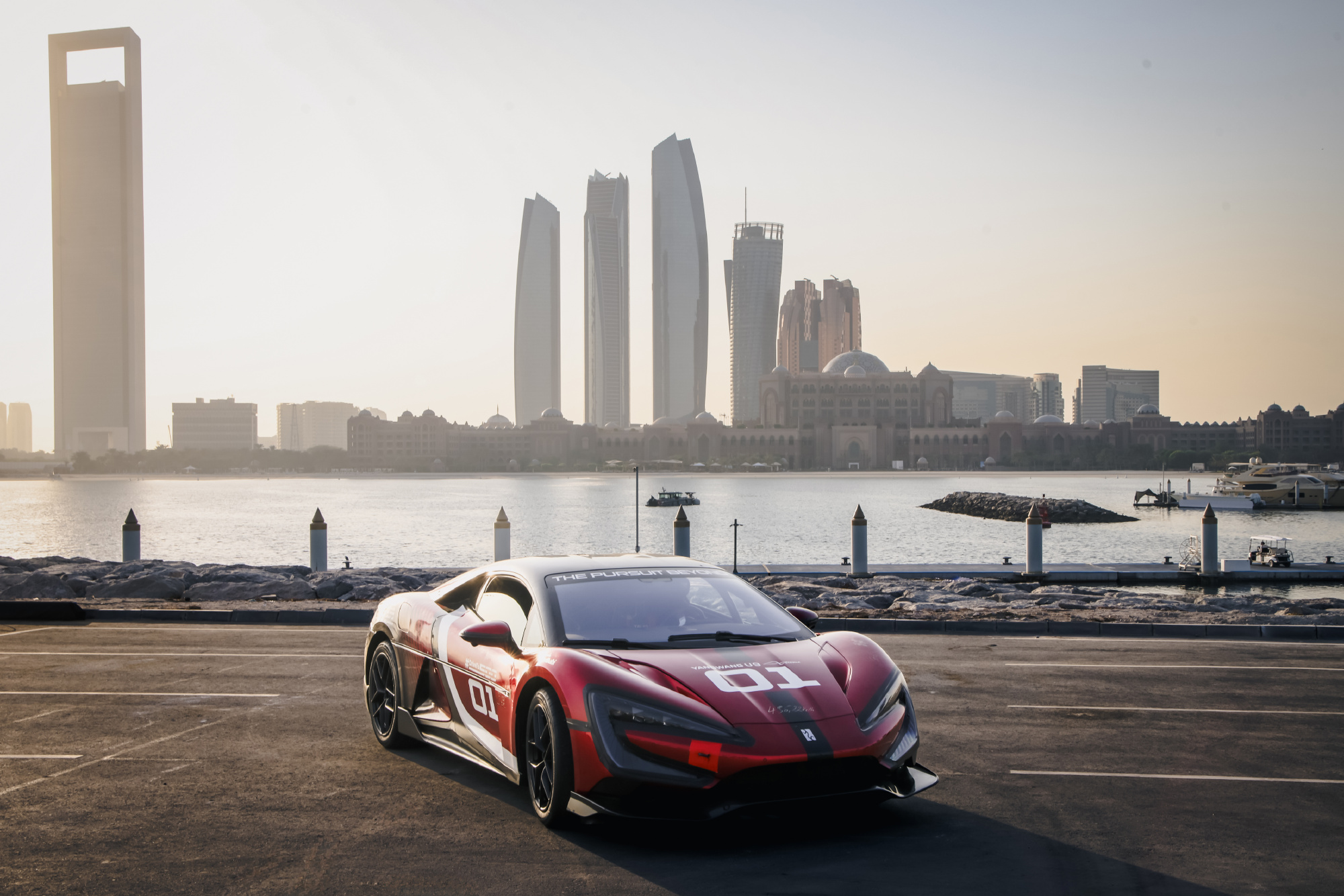
On a closed stretch of desert highway outside Abu Dhabi, a Chinese electric hypercar has set a new benchmark: 503.17 kilometres per hour.
The run was made by the Yangwang U9X, the flagship of Yangwang, the performance sub-brand BYD created in 2023 to prove its engineering can reach beyond mass-market sedans. The brand's own camera crew filmed the attempt, and the figure has since swept Chinese platforms under the shorthand "503" — a number that matters because of what it is chasing. In November 2024, a Yangwang U9 Track Edition driven by Marc Basseng ran 496.22 km/h at the Papenburg test track in Germany, a speed certified by Guinness World Records at the time. The Abu Dhabi run pushes that same car family past the 500 km/h line — a threshold no electric production car had publicly crossed before.
For a brand that did not exist three years ago, the trajectory describes how quickly China's EV industry has compressed the distance between itself and the traditional supercar establishment. Sustaining 503 km/h is not only a question of power: aerodynamics, cooling and battery discharge all have to hold together on a surface hot enough to soften rubber, and the car has to stay stable at speeds where a gust of wind can end in catastrophe.
Chinese social media read the record in exactly that register. On Weibo, Yangwang's announcement of the Abu Dhabi run drew a wave of comments celebrating "中国速度" — China speed — alongside footage of the car in its red-and-white record livery. On Zhihu, where a question about the record drew broad discussion, commenters were more forensic, debating tyre technology and whether "production car" status survives with a heavily modified prototype. The scepticism, like the celebration, is itself a sign of how the conversation has moved: five years ago the question would have been whether a Chinese EV could reach 300 km/h at all.
The record lands at a moment when China's car industry is testing exactly how fast it can go, in every sense — as Chinese brands from BYD down push their vehicles into markets from Southeast Asia to Europe. A speed record is marketing before it is anything else, but it is also a data point: the engineering floor for Chinese electric cars keeps rising, and the new floor for an electric production car sits where no electric production car had gone publicly before.
Whether the record survives scrutiny matters less than what it signals. A country that spent decades catching up on engine technology has stopped trying to catch up on the thing that replaced it.