Tencent Opens Penguin Island: A Campus for 80,000 on Landfill in Shenzhen Bay
Tencent's new Shenzhen Bay headquarters — a reclaimed-island campus built for tens of thousands of employees — is having its public unveiling, and the state-endorsed hashtag riding it is a window into how Chinese tech wants to be seen: as AI infrastructure, not apps.
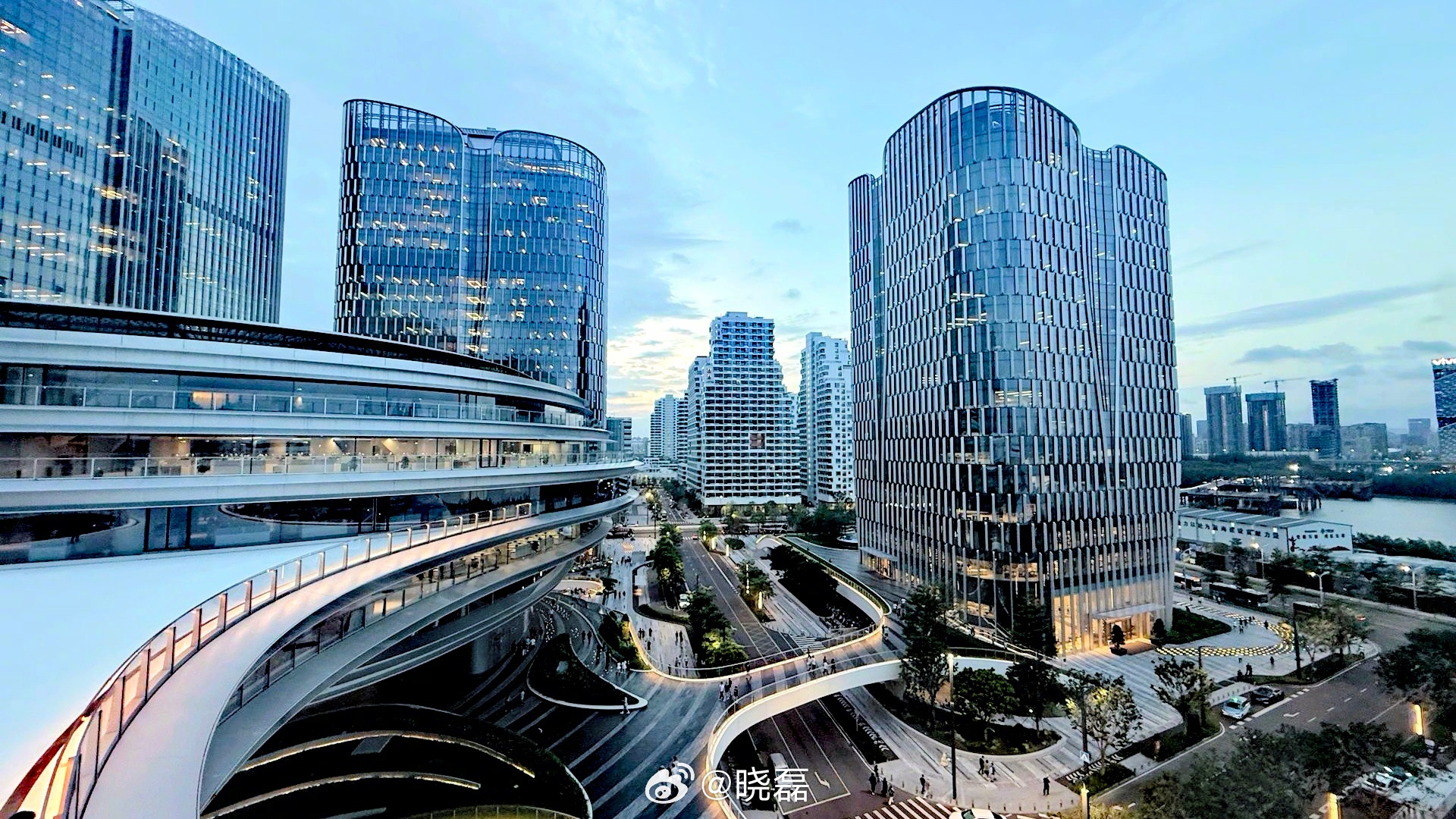
The buildings first, because that is what visitors actually see: a row of glass towers crouched along the Shenzhen Bay shoreline, joined by walkways that arc over landscaped ground. One Weibo visitor's account compares them, from across the water, to shells washed up by the tide or giant birds bending to drink — then notes the sharper point, that twenty years ago Tencent's entire operation was one room of people eating boxed meals in front of computers. The company's new home sits on Dawan Bay, a district of Shenzhen so closely identified with Tencent that its nickname is Penguin Island, on land reclaimed in Dachan Bay at a reported cost of more than 30 billion yuan.
What the campus is for has changed along with the company. The publicity push, under the campaign hashtag "Seeing Guangdong's Myriad Transformations," is not about WeChat but about hardware. Posts from a press tour describe an "AI Street" on the island where more than 150 companies are showing some 400 AI products — glasses, watches, rings, and an exoskeleton that supposedly makes walking effortless — alongside what is billed as the world's first robot "6S store," its doorway staffed by humanoid machines. An earlier open day, documented by a visiting reporter, drew crowds to demo halls where visitors had AI write poems, paint, and translate in real time.
The numbers attached to the project are of the scale Chinese tech campuses specialize in: when complete, capacity for around 80,000 employees, with the current phase already housing staff and rising toward twice that. Plans circulated in earlier tours describe sea views from most workstations and apartments, a 15-minute living circle of schools and parks, and shuttle buses — the campus is designed less as an office than as a company town, on a manmade island with the sea on three sides.
There is an obvious comparison for readers who know their corporate campuses: this is Shenzhen's answer to Cupertino, built in a fraction of the time and handed an AI mandate instead of a product one. What the tour posts are quietly demonstrating is where Tencent wants the story to sit. A company that spent two decades being described as a games-and-social-apps giant is presenting itself, to the public and to the campaign machinery amplifying it, as the landlord of China's AI hardware future — the place where 400 gadgets by 150 companies get shelf space. The first employees are in. Whether the island's promised city life materializes around them is the part no tour can show.